Flexible expenses are the costs in a budget that a person has direct control over and can change from month to month, like dining out or entertainment. In flexible budgeting, these costs move with activity, and a common formula is Flexible Budget = (Variable Cost per Unit × Actual Activity Level) + Fixed Costs.
A familiar scene plays out near the end of the month. One partner opens the banking app, sees a lower balance than expected, and asks where the money went. The other thinks the spending looked normal. Nobody bought anything outrageous, yet the month still feels tighter than it should.
That tension often comes from lumping every expense together instead of separating the spending that can be adjusted from the spending that can't. Once a household can spot its flexible expenses, the budget stops feeling like a lecture and starts feeling like a control panel.
Table of Contents
- The Key to Controlling Your Budget
- Flexible vs Fixed Expenses Explained
- Common Examples of Flexible Spending
- How to Track and Manage Your Flexible Spending
- Simple Tips for Reducing Flexible Expenses
The Key to Controlling Your Budget
A shared budget usually doesn't fall apart because of one giant mistake. It slips through dozens of small choices. An extra grocery run, two takeout nights, a rideshare instead of the bus, a household purchase that felt necessary in the moment. Each one looks harmless on its own.
That's why the definition of flexible expenses matters so much. These are the parts of spending where a household still has room to choose. Rent is usually set. Insurance is usually set. But food, fun, convenience, and many day-to-day purchases can be dialed up or down.
For couples, this creates a useful shift in the conversation. Instead of asking who spent too much, it becomes easier to ask which categories need clearer limits. That small change reduces blame and increases clarity.
Practical rule: A budget becomes easier to manage when a household separates non-negotiable bills from spending that can still move.
Flexible budgeting in finance follows the same logic. It focuses on costs that change with activity level rather than staying fixed, which is why it gives a clearer view of expected spending at the activity level that occurred, not just the level first forecast in a static plan, as explained in this guide to a flexible budget.
A dimmer switch, not an on off switch
Fixed expenses act more like an on off switch. A household usually pays the rent or mortgage, the insurance premium, or the phone bill that was already agreed to. Those costs may change eventually, but they don't usually change much in the middle of the month.
Flexible expenses act more like a dimmer switch. Grocery spending can be modest or generous. Entertainment can be quiet one month and busy the next. Transportation can stay basic or expand with convenience spending.
That distinction gives people an immediate “aha” moment. The budget doesn't need to control every purchase. It needs to shine a light on the areas where choice is still active.

Why flexible and variable aren't the same
Many readers get tripped up by these definitions. A lot of guides use flexible and variable as if they mean the same thing. They overlap, but they aren't identical.
A variable expense changes with usage or circumstances. A flexible expense is one that can be reduced or postponed. That difference matters a lot in real life.
According to SoFi's explanation of flexible expenses, many guides treat flexible and variable expenses as the same, but they aren't. A cost can be variable without being easily cut, like heating fuel in winter, while a flexible expense is discretionary and can be reduced or postponed.
A few examples make this easier to spot:
- Winter utilities: The bill may rise and fall, but a household can't always choose to avoid heat.
- Groceries: Food is necessary, but brand choices, snack spending, and convenience items create a flexible layer.
- Dining out: This is usually both variable and flexible because it can often be reduced quickly.
A fluctuating expense isn't automatically a negotiable expense.
That distinction helps a household focus energy in the right place. There's no point trying to “cut” the weather. It makes more sense to cut the optional add-ons around essential spending.
Flexible vs Fixed Expenses Explained
People usually understand fixed and flexible expenses fastest when they see them side by side. A comparison removes the fuzziness that causes bad categorizing.
What fixed expenses do
Fixed expenses form the base of a budget. They tend to arrive on a regular schedule, and the amount is often stable for a period of time. These are the bills that create structure.
Flexible expenses sit on top of that base. They may be essential, partly optional, or fully discretionary, but the amount can shift from month to month. That makes them the first area a household can adjust when money feels tight.
A deeper look at this category can help when fixed costs are hard to spot. This explanation of the definition of fixed expenses is useful for households that need cleaner labels before building a shared budget.
Fixed Expenses vs. Flexible Expenses
| Attribute | Fixed Expenses | Flexible Expenses |
|---|---|---|
| Amount | Usually stays similar for a period of time | Can change from month to month |
| Timing | Often due on a set schedule | Happens as spending decisions happen |
| Control in the short term | Usually limited | Usually higher |
| Typical driver | Contract, commitment, or recurring obligation | Usage, habits, and choices |
| Examples | Rent, loan payment, insurance premium | Groceries, dining out, entertainment, household supplies |
| Best use in budgeting | Set the baseline cost of living | Adjust to stay aligned with income and priorities |
For couples and families, some categories don't fit neatly into one box. Groceries may have a core amount that functions almost like a fixed need, while premium items and extra trips behave like flexible spending. Transportation can work the same way.
That's why rigid labels often fail in shared budgeting. A household usually needs cleaner subcategories, not stronger opinions.
Common Examples of Flexible Spending
Real budgets are built from ordinary transactions, not textbook examples. Flexible expenses show up in the categories that absorb daily habits and convenience decisions.

Flexible expenses gained prominence in modern finance because they move with activity levels, which is why they are central to flexible budgeting that compares spending to what was expected at the actual level of activity rather than a static forecast, as described by IBM's overview of flexible budgets.
Food and everyday choices
Food is one of the clearest examples because it contains both necessity and choice.
- Groceries: A household needs food, but total spending changes based on brands, meal planning, delivery fees, and how often items are bought on impulse.
- Takeout and dining out: These costs are usually easy to recognize as flexible because they can often be reduced or postponed.
- Coffee and snacks: Small purchases tend to hide in plain sight because each one feels minor.
Lifestyle and household categories
Other flexible spending often spreads across comfort and convenience.
- Entertainment: Movies, events, gaming purchases, and recreational spending can expand or shrink based on the month.
- Utilities: These may vary with usage, though not every part is easily cut. That makes them a good example of a category that may be partly flexible rather than fully optional.
- Household supplies: Cleaning products, decor, and non-urgent home items often slide into the cart without much planning.
- Transportation extras: Fuel for extra trips, parking, rideshares, and convenience spending often fluctuate.
A practical way to manage this is to break broad buckets into smaller ones. “Food” is less useful than “Groceries,” “Takeout,” and “Coffee.” That level of detail helps a person see what changed without guessing.
How to Track and Manage Your Flexible Spending
Most households don't need a stricter budget first. They need a clearer one. Tracking flexible expenses works best when categories reflect how people live, especially when more than one person is spending from the same pool.

Start by splitting the category
The biggest mistake in shared budgets is using labels that are too broad. “Groceries” may include staples, premium snacks, cleaning items, and last-minute dinner solutions. “Transportation” may include commuting, car maintenance, and convenience rides.
A better setup is to split mixed categories into parts such as:
- Base groceries: staple food and routine household basics
- Extra groceries: specialty items, convenience foods, unplanned top-ups
- Shared transport: commuting or regular family movement
- Optional transport: rideshares, parking for leisure, extra driving
This is especially useful because some expenses are semi-variable. They include a base amount plus a variable portion. That's common in everyday life and helps explain why a category can feel fixed and flexible at the same time.
Shared budgets need shared labels
Couples often argue less about money once the category labels become more precise. The issue usually isn't that one person doesn't care. It's that both people are looking at the same category and seeing different things inside it.
According to Vena's glossary on flexible budgeting, a common challenge in shared households is that a single category like groceries or transportation can include both a fixed base amount and a discretionary portion, so splitting and labeling those shared expenses is important for fair budgeting and more accurate forecasting.
Shared budgeting works better when a household labels the base need separately from the optional layer.
That idea is simple, but it changes the tone of budget conversations. “Groceries went up” feels vague. “Staples were steady, but convenience food and extra top-up trips increased” is something a couple can discuss.
Use a tracker that fits real household life
Once the labels are clear, the tool matters. A household needs a place to record expenses, search transactions, and keep both people looking at the same information. That's where a tracker becomes useful instead of annoying.
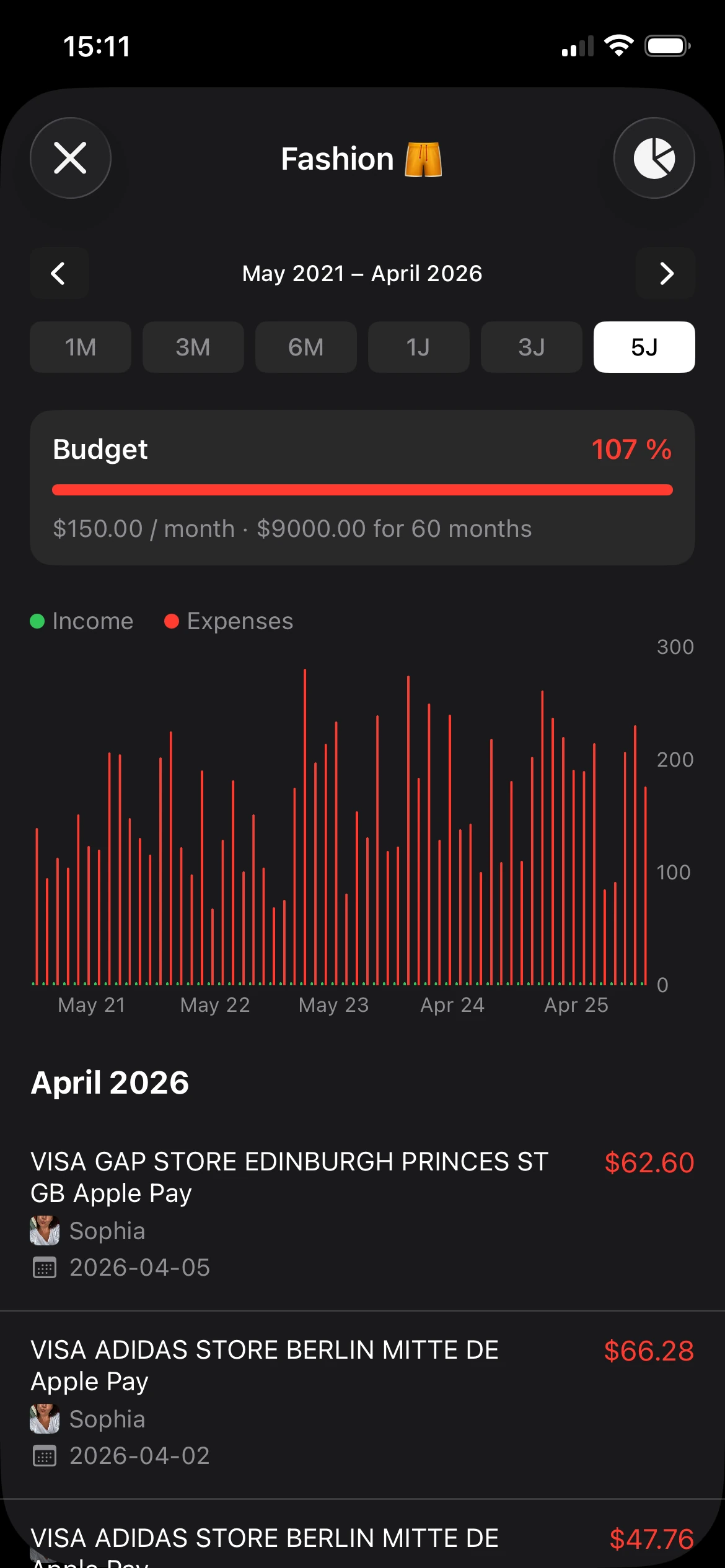
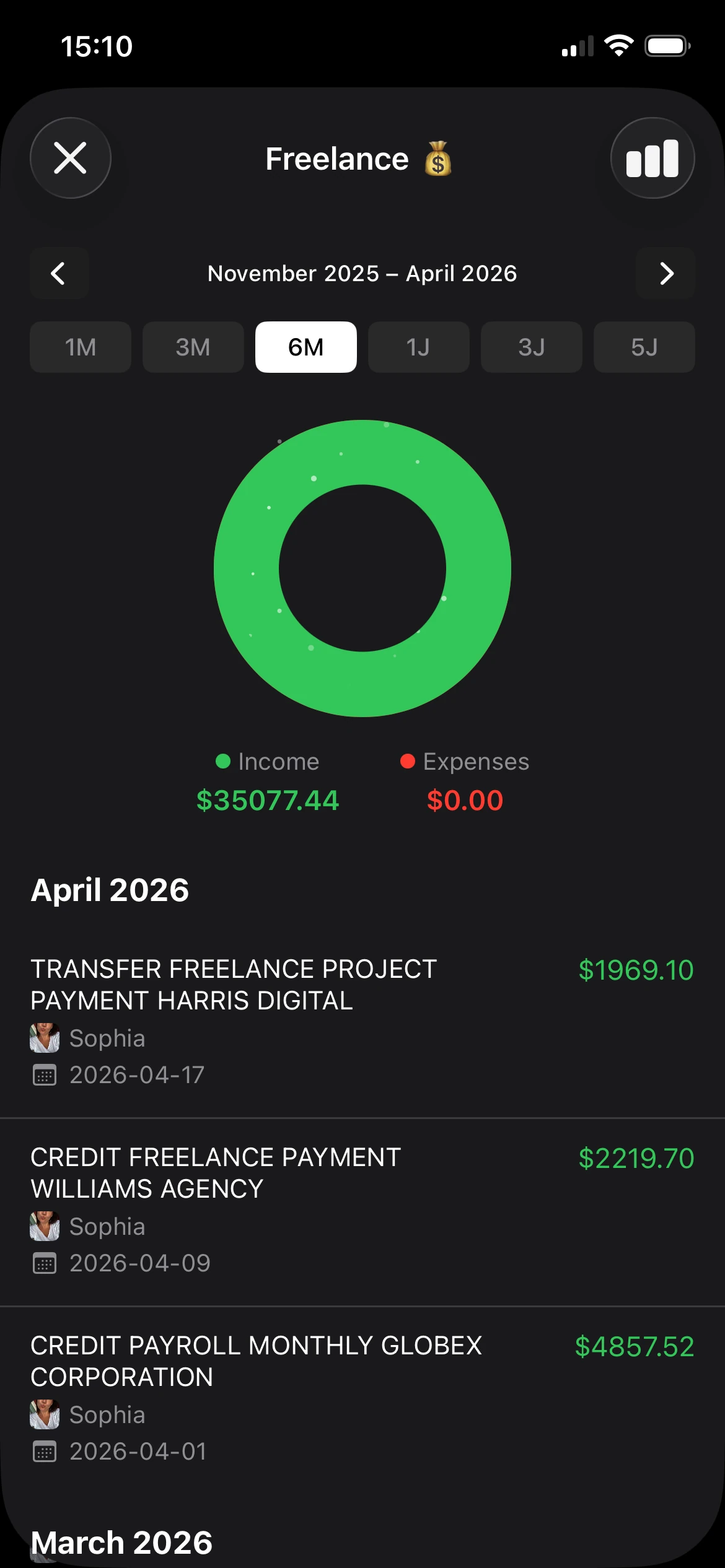
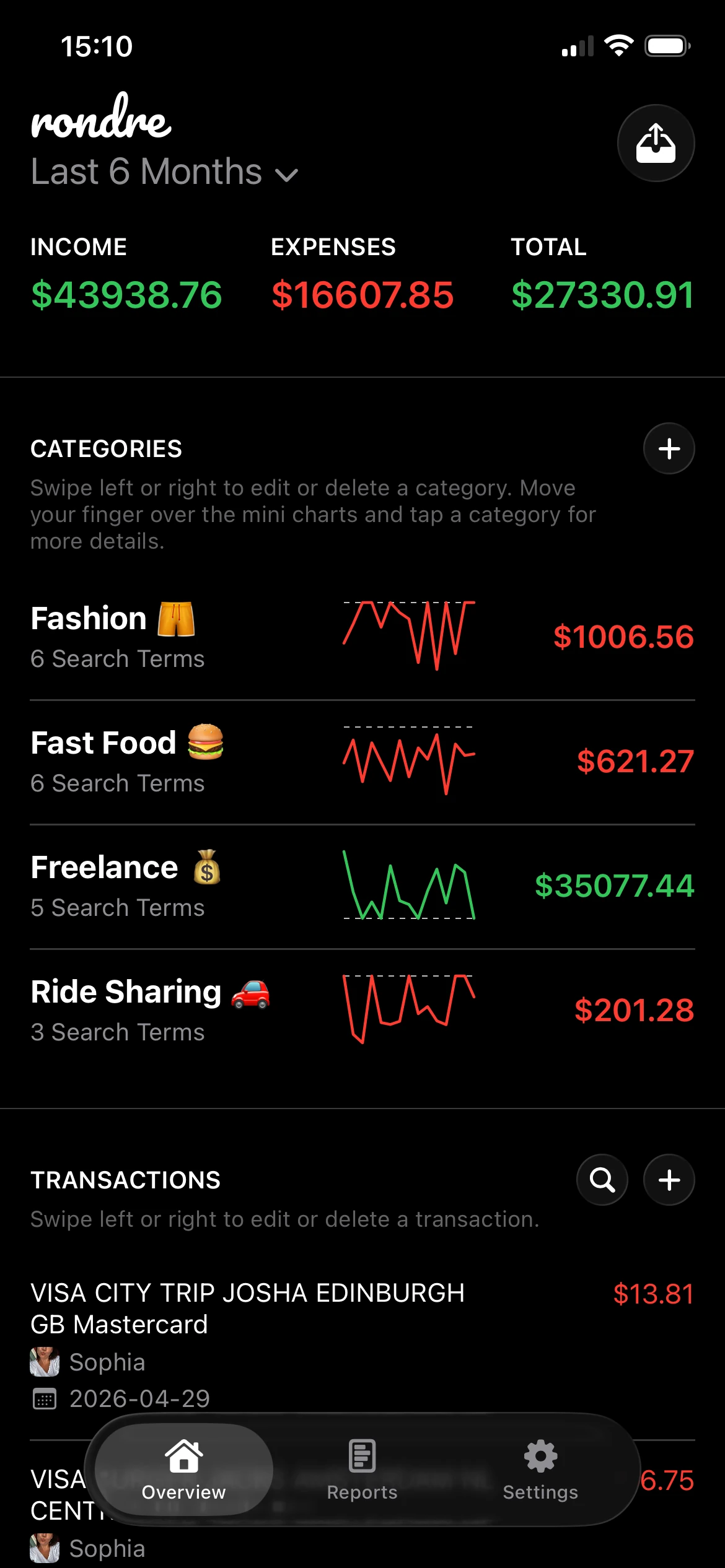
One option is rondre's expense tracker app, which lets users track income and expenses, create custom categories with search terms, import CSV files and PDF bank statements, and share a book with a partner or family. For flexible expenses, those features help separate broad categories into practical ones and keep shared spending visible without turning the budget into a spreadsheet project.
A workable rhythm looks like this:
- Record purchases regularly. Imported data can help, but household members still need categories that match real spending patterns.
- Review by category, not by emotion. Looking at grouped transactions lowers the chance of turning the conversation into blame.
- Tag shared flexible costs clearly. Groceries, household supplies, and transportation often need a “base” and “optional” split.
- Check trends before changing rules. One odd month doesn't always mean the category is broken.
A budget becomes much easier to manage when both people can search a transaction, see how it was categorized, and agree on whether that purchase belongs in the flexible part of the plan.
Simple Tips for Reducing Flexible Expenses
Cutting flexible expenses doesn't have to mean cutting all the fun out of a budget. The cleaner approach is to review what happened, question whether it matched the household's priorities, and adjust one thing at a time.
Review, question, adjust
This three-step habit works because it stays practical.
- Review: Look at recent spending by category and find the areas that changed most.
- Question: Ask whether that increase came from a real need, convenience, habit, or impulse.
- Adjust: Make one small change that the household can maintain.
A useful test: If a category can shrink without causing real disruption, it probably belongs on the flexible side of the budget.
Small cuts work better than dramatic rules
Large overhauls sound productive, but they often don't last. Most households do better with smaller adjustments that remove friction instead of adding it.
A few examples:
- Swap one takeout night for a home meal. That changes the pattern without requiring a total reset.
- Separate essentials from extras in groceries. This keeps the discussion focused on choices, not on whether food spending exists.
- Pause one low-value subscription or entertainment habit. The goal is to trim the part that adds the least satisfaction.
- Set a shared rule for convenience spending. That might mean agreeing when rideshares, delivery, or impulse household buys are worth it.
The practical takeaway for today is simple. Open the spending record for the last month, find the single largest flexible category, and decide on one adjustment that can happen this week.
A household that understands the definition of flexible expenses has a much better chance of staying calm and coordinated around money. For readers who want a private way to track those categories, split shared spending, and search transactions quickly, rondre is a simple option to try.