TL;DR: A flexible budget adjusts your spending targets to match the income you receive that month. For personal finance, the idea is simple. Keep fixed bills steady, then scale flexible categories like dining, shopping, and extras based on what really landed in your account. In business terms, the formula is Flexible Budget = Fixed Costs + (Variable Cost per Unit × Actual Activity Level). At home, that translates into a budget that reacts to real life instead of a number you hoped to earn.
A common pattern looks like this. Rent, insurance, and loan payments stay the same, but freelance work comes in late, commission income drops, or side-hustle sales swing up and down. A static budget treats every month like a copy of the last one. A flexible budget gives you a rule for adjusting before overspending starts.
That shift matters.
A budget can look organized on the first day of the month and feel useless by the fifteenth if income changes and the plan does not. That usually points to a bad system, not bad discipline. For freelancers, self-employed workers, and families with uneven paychecks, a flexible budget is often the more honest way to plan. It creates clearer spending limits, lowers guilt, and makes it easier to stay in control with a simple, private tool that updates with your real numbers.
Table of Contents
- Why Your Monthly Budget Might Be Broken
- Flexible Budgets vs Static Budgets
- How a Flexible Budget Actually Works
- Key Benefits and Drawbacks for Your Finances
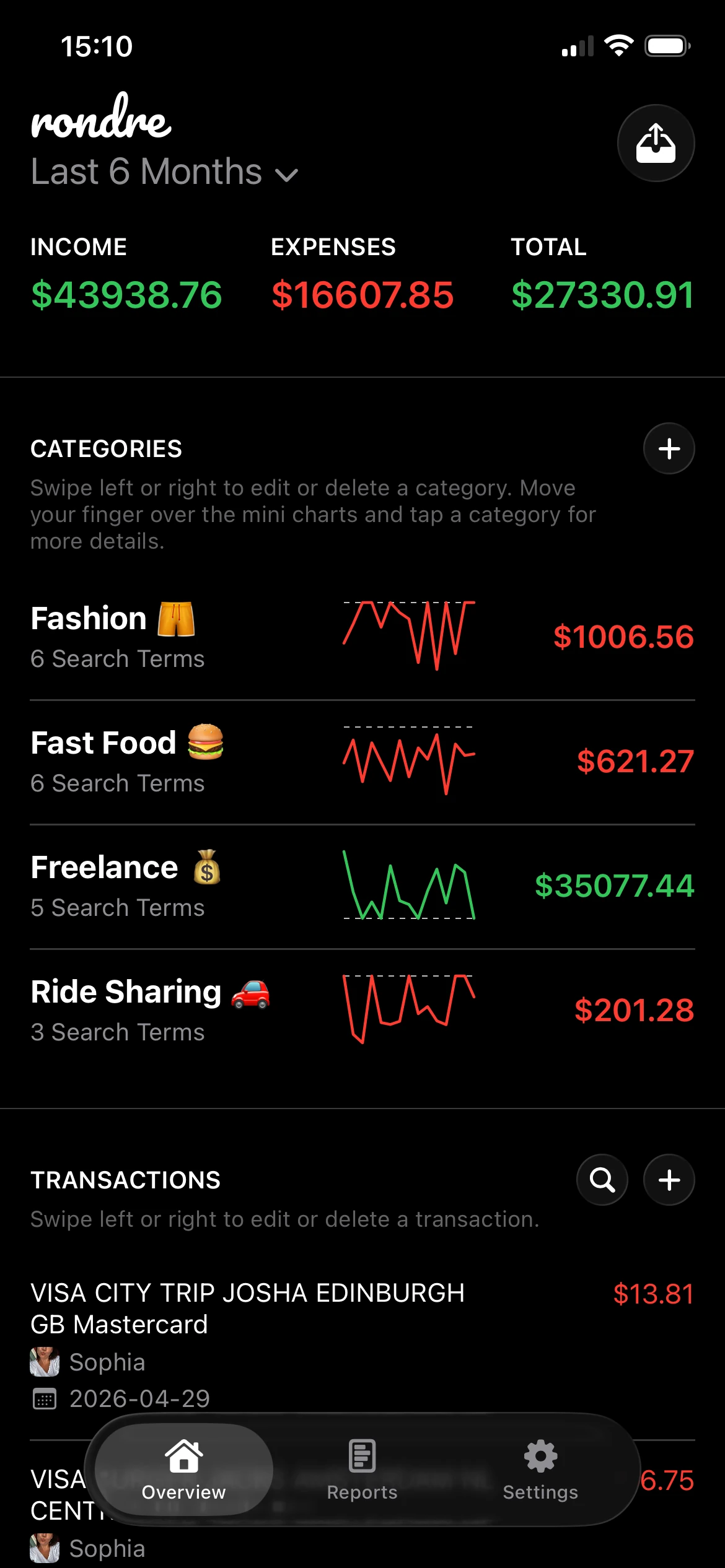
- How to Build Your Flexible Budget in Rondre
- Your Practical Takeaway Today
Why Your Monthly Budget Might Be Broken
A common pattern looks like this. Someone plans the month around an expected paycheck, assigns amounts to groceries, transport, dining out, subscriptions, and savings, then watches the plan unravel when income comes in lower or later than expected.
The problem gets worse because a traditional budget treats every miss like a discipline problem. If the original plan assumed a bigger month, then normal spending can suddenly look reckless. If income comes in higher, the same budget can become strangely restrictive and disconnected from reality.
When a fixed plan meets a variable life
This shows up most often for people with irregular earnings, but it also affects couples and families with changing expenses. One month includes school costs, travel, or home repairs. Another month is quieter. A fixed monthly target doesn't respond well to that.
A static budget locks the plan at the start of the period. It can work when income and expenses barely move. It struggles when pay changes, timing shifts, or variable spending categories rise and fall with life.
A budget shouldn't make a normal month look like a failure just because the month didn't match the forecast.
A flexible budget solves a different problem than most household budgets solve. Instead of asking, "Did spending match the original plan?" it asks, "What should spending have looked like at the income level that happened?"
That shift matters. It separates a planning error from a spending error.
The real issue isn't motivation
People often respond to a broken budget by tightening every category even more. That's usually what doesn't work. More rigid limits don't fix a plan built on the wrong income number.
What works better is splitting expenses into two groups:
- Fixed costs like rent, insurance, and recurring subscriptions
- Variable costs like groceries, dining out, fuel, gifts, and discretionary shopping
Once those are separated, spending can adjust in a way that makes sense. Fixed costs remain steady. Variable costs move with actual income. The budget starts acting like a guide instead of a trap.
Flexible Budgets vs Static Budgets
The clearest way to understand a flexible budget is by contrasting it with a static budget.
A static budget sets one income estimate and one set of category limits for the month. A flexible budget starts with the same plan, then adjusts the variable categories to match the income that came in. For personal finance, that difference matters most in months when pay is uneven, side income changes, or family expenses shift faster than expected.

What each budget is trying to do
A static budget is built to answer one question: did you spend according to the original plan? That works well for salaried households with stable bills and few surprises. If income lands in roughly the same range every month, the simplicity is useful.
A flexible budget answers a different question: given the month that occurred, what should spending have looked like? In business, the adjustment is tied to output or sales volume. At home, it is usually tied to the monthly income received.
That makes the comparison fairer.
If a freelancer expects $6,000 but earns $4,200, a static budget still judges the month against the higher number. A flexible budget resets the variable targets so groceries, transport, personal spending, and other adjustable categories are measured against $4,200 instead. The goal is not to excuse overspending. The goal is to separate a lower-income month from poor spending control.
Flexible Budget vs. Static Budget at a Glance
| Feature | Static Budget | Flexible Budget |
|---|---|---|
| Income assumption | Based on estimated income | Based on actual income |
| Spending targets | Mostly fixed for the month | Variable categories adjust |
| Best fit | Stable pay and predictable costs | Fluctuating pay or changing costs |
| Main strength | Simple to set up | More realistic month to month |
| Main weakness | Can mislabel normal variation as overspending | Takes more setup and review |
| Performance check | Compares actuals to original guess | Compares actuals to a plan scaled to reality |
The trade-off most people miss
Static budgets are easier to maintain. That is their real advantage.
Flexible budgets ask for more work upfront. You have to decide which costs stay fixed, which should scale, and what percentages are realistic for your household. If you need a cleaner way to make that split, this guide to fixed household expenses helps define the categories before you build the rules.
The payoff is better decisions in messy months. I see this most often with self-employed workers, commission earners, and families balancing inconsistent paydays with regular bills. They do not need a stricter budget. They need one that responds to reality without collecting more personal data than necessary or turning every off month into a failure report.
Practical rule: Use a static budget if income is steady and monthly spending barely moves. Use a flexible budget if income changes often or your variable costs swing with real life.
For many households, the choice is not about which method sounds smarter. It is about which one gives a fair read on the month you lived.
How a Flexible Budget Actually Works
A flexible budget works best when the month starts one way and ends another.

A household version is straightforward: fixed costs stay mostly the same, while selected spending categories rise or fall based on what you really brought in that month. In business, that formula is often written as fixed costs plus variable cost times activity level. For personal finance, "activity level" usually means take-home income, and the variable piece is often a percentage.
The first job is sorting expenses into the right buckets. If that split still feels fuzzy, this guide to fixed household expenses can help you classify them before you set rules.
Start with fixed and variable categories
Fixed costs usually include rent or mortgage, minimum debt payments, insurance, phone service, and subscriptions you plan to keep regardless of income. Some childcare and tuition costs belong here too.
Variable costs move with real life. Groceries can swing with a growing family, fuel changes with commuting, and dining out often expands in stronger months and contracts in leaner ones. Gifts, personal spending, household supplies, and parts of utility bills often sit in this group.
Some expenses are mixed. Utilities are a common example. The base charge may be steady, but usage changes. In practice, I recommend splitting those costs into a fixed baseline and a variable portion if you want cleaner targets.
A simple household version of the formula
For personal use, the process usually looks like this:
- Total your fixed monthly costs.
- Choose variable categories that should scale with income.
- Assign each of those categories a percentage or spending rule.
- Apply those rules to the income you received.
- Compare your spending to those adjusted targets.
That keeps the structure stable while the numbers adapt.
Here is the key trade-off. The more categories you make flexible, the more accurate the budget can become. It also takes more maintenance. For freelancers, commission earners, and families with uneven paychecks, a short list of flexible categories is usually the sweet spot.
A practical example
Take a freelance designer. Rent, software, phone service, and minimum loan payments stay fixed. Groceries, transport, dining out, and discretionary spending change with income.
If income comes in low one month, the targets for those flexible categories shrink automatically. Groceries may still need a realistic floor, but dining out and personal spending can drop fast. In a stronger month, those categories can expand without making the budget look broken.
That is what gives the method value. It separates a spending problem from an income problem.
A privacy-focused app can make this easier because it applies the rules without forcing you to rebuild the whole plan every month. The categories stay in place. The targets update from the income you logged, which is a much better fit for household budgeting than copying a business formula into a spreadsheet and hoping it holds.
If income changes month to month, your budget needs rules that change with it.
What tends to go wrong
Flexible budgets fail for practical reasons, not theoretical ones.
Common mistakes include:
- Calling optional spending fixed so there is no room to adjust in slow months
- Creating too many categories and turning the system into admin work
- Changing percentages too quickly before you have enough spending history
- Ignoring minimum spending floors for categories like groceries, medications, or child-related costs
- Forgetting irregular bills such as annual fees, repairs, and school expenses
A good flexible budget is simple enough to keep using and realistic enough to guide the next decision. That is the standard to aim for.
Key Benefits and Drawbacks for Your Finances
A flexible budget helps when your income does not arrive in a neat, predictable pattern. For a freelancer, a commission-based worker, or a household balancing side income, that matters because a fixed monthly target can create confusion fast. You can end up feeling behind even when you already cut back and adjusted responsibly.

Where it helps most
The biggest benefit is that the budget matches real life more closely.
In personal finance, that shows up in a few practical ways:
- Less false guilt: A slow month gets measured against a slower-month plan, not against spending targets built for your best month.
- Better decisions: You can tell whether the problem is lower income, higher spending, or a category that was set too loosely.
- Clearer trade-offs: Couples and families can talk about what to trim, what to protect, and what can wait, using numbers that reflect current income.
- More useful patterns: Over time, variable-income households can spot which expenses rise and fall, and which ones only felt flexible.
That last point matters more than people expect. Many households assume half their spending is adjustable, then discover that groceries, fuel, school costs, and child-related expenses have a fairly stubborn baseline. A flexible budget brings that baseline into view, which makes future planning more honest.
Privacy matters here too. If you are using an app to manage this system, a privacy-focused setup can make regular reviews feel less intrusive while still giving you the transaction history and category rules needed to stay on track.
The drawbacks are real
The method takes upkeep. Someone has to review spending, keep categories clean, and decide how much flexibility each part of the budget should have.
It also asks for judgment. If the income estimate is too optimistic, the budget will still give bad guidance. If every category gets treated as flexible, the plan becomes too loose to be useful. If nothing gets adjusted, you are back to a static budget with extra admin work.
Flexible budgets help people who are willing to check in regularly. They are a poor fit for households that want to set one monthly number and ignore it.
There is also a trade-off between simplicity and accuracy. A very detailed system can reflect reality well, but it can also become tedious. A very simple system is easier to maintain, but it may hide problem areas like takeout, subscriptions, or irregular kid expenses. The right setup is usually the one you will still use three months from now.
When the extra effort is worth it
This approach pays off when income swings enough to make a fixed budget feel misleading. That is common for freelancers, self-employed workers, seasonal earners, tipped employees, and families building around more than one uneven income stream.
For a household with steady paychecks, stable bills, and little month-to-month variation, the extra work may not add much. In that case, a simpler monthly budget often does the job well enough.
The key test is practical. If your current budget keeps looking wrong even when your spending choices make sense, a flexible budget is usually the better tool.
How to Build Your Flexible Budget in Rondre
A flexible budget becomes useful when it moves from theory into a system that can be maintained. The easiest setup is the one that makes reviewing transactions quick, keeps categories clear, and doesn't add friction every week.

Step 1
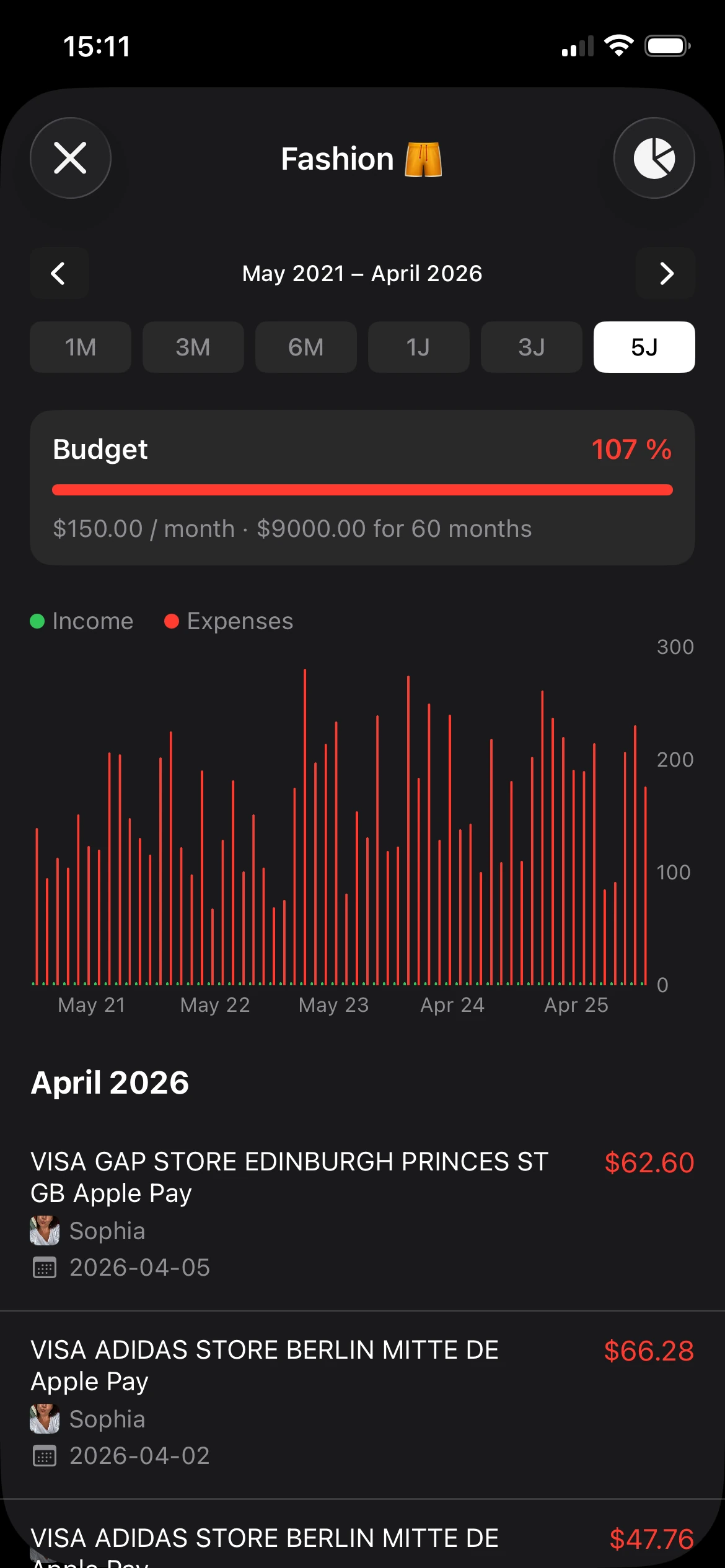
Pull in recent transactions first. CSV uploads and PDF bank statement imports help create a usable starting history, which matters because flexible budgeting depends on real patterns rather than guesses.
A month or two of data can work. More history gives better category decisions.
Step 2
Create a clean category structure. Start broad.
Use one group for fixed costs and another for variable costs. Then add sub-categories under each, such as rent, insurance, and subscriptions under fixed, and groceries, fuel, dining out, and shopping under variable.
Step 3
Review past spending and assign a rule to each variable category. Some categories may need a tighter percentage because they rise too fast. Others can stay loose.
The goal isn't perfect forecasting. The goal is a spending guide that scales with real income.
Step 4
Use search to find recurring merchants and miscategorized transactions quickly. That matters more than people expect. A flexible budget only works when repeated expenses are classified consistently.
This is especially helpful in shared books. If a household tracks expenses together, both people can see whether spending pressure is coming from fixed obligations or flexible categories.
Step 5
Check the month against actual income, not expected income. Once income is known, the variable side of the plan can be adjusted without touching the fixed side.
That one habit changes the tone of budgeting. It turns the review into a decision process instead of a blame exercise.
A stronger setup for freelancers
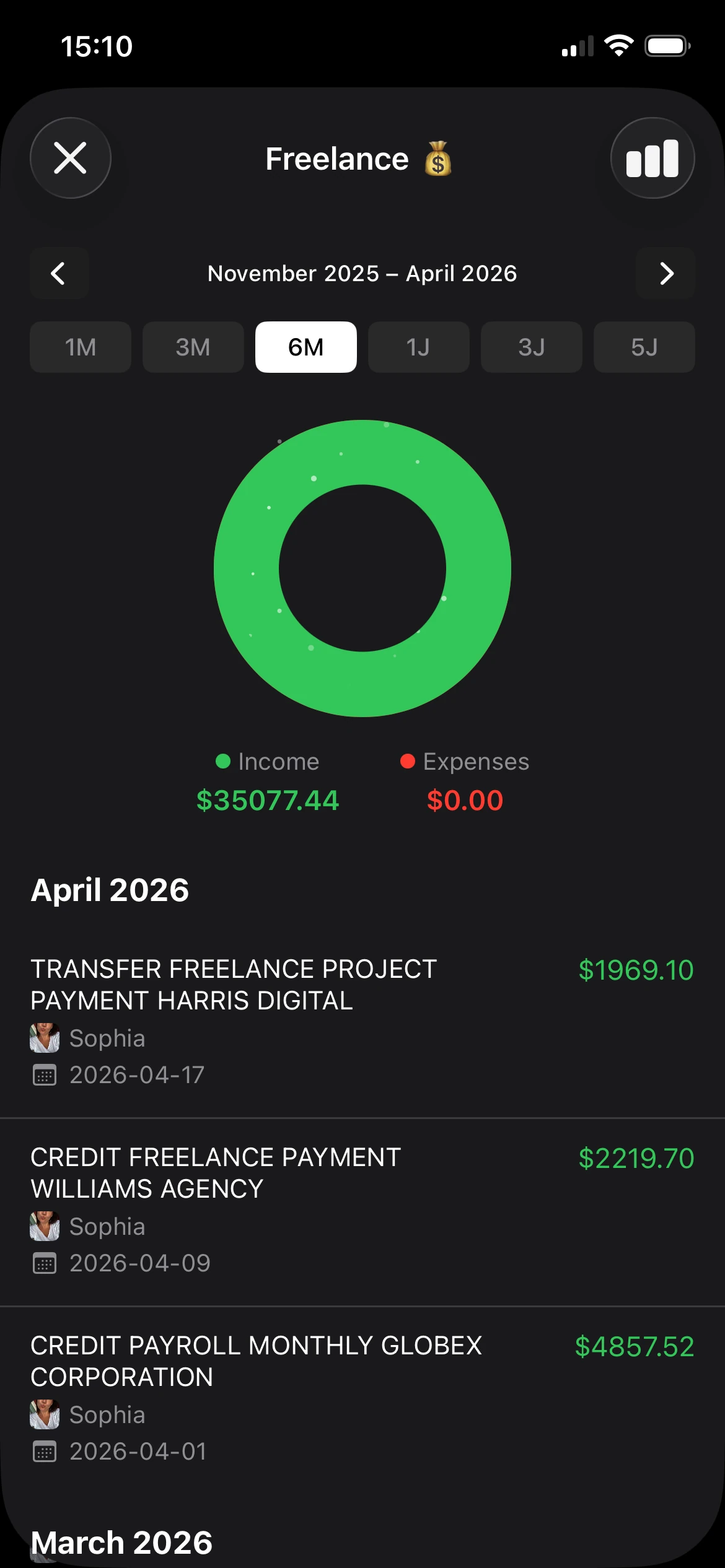
Advanced users can link variable costs to specific drivers. Bill’s guide to flexible budgeting notes that freelancers can track Project Supplies as 15% of revenue from a specific client, and that this kind of driver-based approach can improve forecasting accuracy by up to 35% for project-based work.
That method is useful when one client consistently creates extra software, travel, shipping, or materials costs. Instead of burying those costs inside general spending, the budget ties them to the work that caused them.
A practical setup might include:
- Client-linked spending: supplies or subcontractor costs tied to one revenue source
- Project categories: separate books or categories for temporary jobs
- Shared visibility: a partner can see which spending is household-related and which belongs to freelance work
Your Practical Takeaway Today
Most explanations of what is a flexible budget are written for companies, finance teams, or managers. Ramp’s overview of flexible budgets points out that most content focuses on business use, which leaves a real gap for individuals and families.
That gap matters because households face the same underlying problem. Income changes. Costs shift. A plan built for one version of the month stops helping when the month changes.
A flexible budget isn't about loosening discipline. It's about using a smarter standard. Fixed bills stay fixed. Variable spending adjusts to actual income. That makes the budget more honest, and honest budgets are easier to follow.
For anyone managing freelance income, commission pay, side gigs, or uneven household cash flow, this is one of the clearest upgrades available. It uses a professional budgeting concept to solve a very ordinary personal problem.
The best first step is small. Review recent transactions and identify the largest recurring bill that doesn't change much. Label it as fixed. Then identify one spending category that clearly rises and falls, such as groceries or dining out, and treat it as variable.
That single split is the beginning of a workable flexible budget.
A simple way to put this into practice is with rondre, a free iPhone finance tracker that lets people record transactions, import CSV files and PDF bank statements, organize spending with custom categories, and share a book with a partner or family. It doesn't require an account, doesn't show ads, and doesn't track users, which makes it a clean place to build a flexible budget without extra noise.