Discretionary spending is the money spent on non-essential items after essential needs are covered. In personal budgets, that usually means things like dining out, entertainment, hobbies, travel, and other purchases that can be delayed, reduced, or skipped.
A lot of people notice this category only after scrolling through a bank statement and wondering why the month felt expensive even when the big bills were already known. Rent was expected. Utilities were expected. The surprise usually comes from the smaller choices that felt harmless one by one. A coffee here, takeout there, another subscription renewal, a weekend purchase that didn't seem like much at the time.
That's why what is discretionary spending matters so much. It's not just a finance term. It's the part of a budget where most day-to-day choices live. It's also one of the clearest places to regain control without rewriting an entire life overnight. Recent consumer market tracking shows this category remains important and closely watched. J.P. Morgan reported that as of May 20, 2026, discretionary spending was up about 2.6% month-to-date, while non-discretionary spending rose about 1.2%, and Fiserv found discretionary spending increased 0.2% year over year while essentials grew 2.5% (BEA consumer spending reference page).
Table of Contents
- Your Money Your Choices Understanding Spending You Control
- Wants vs Needs The Two Sides of Your Budget
- Finding Your Number How to Calculate Discretionary Income
- See Where Your Money Goes with Rondre
- Smart Ways to Manage Your Discretionary Budget
- Your Practical Takeaway for Today
Your Money Your Choices Understanding Spending You Control
A familiar budget problem starts like this. Someone checks the account balance near the end of the month and feels confused. The major bills were paid on time, income came in as expected, and yet the leftover cash is smaller than it should be.
The missing piece is often spending that was optional in the moment but significant in total. That's discretionary spending. It's the part of a budget shaped less by obligation and more by choice.
A streaming subscription may be easy to justify. So is lunch out on a busy day. So is a last-minute app purchase, a concert ticket, or a hobby order. None of those items is automatically bad. The problem is that they often hide in plain sight because each one feels small and separate.
Practical rule: If a purchase can be postponed without creating an immediate problem with housing, safety, debt obligations, or core daily living, it usually belongs somewhere in discretionary spending.
That distinction gives people something useful. It turns vague guilt into a category that can be measured. Instead of saying, “Money just disappears,” a person can say, “A large share of monthly flexibility is going to takeout, subscriptions, and impulse shopping.”
Why this category matters so much
Discretionary spending is where a lot of financial behavior shows up first. It reflects stress, habits, convenience, rewards, social life, and personal priorities. That's why two people with similar incomes can feel completely different about money at the end of the month.
A budget becomes much easier to manage once expenses are divided into two buckets:
- Obligations: bills and essentials that are hard to avoid
- Choices: spending that has more flexibility
- Gray areas: purchases that aren't essential for survival but still support work, health, or family stability
That last category matters. Not every “want” is silly. Some flexible spending supports a better routine, better work, or better resilience. A key skill is learning which choices are adding value and which ones are draining attention and cash.
Wants vs Needs The Two Sides of Your Budget
One of the easiest ways to understand discretionary spending is to compare a household budget to the federal budget. In U.S. budgeting, discretionary spending is the part Congress approves through annual appropriations bills, while mandatory programs run by underlying rules and eligibility. Brookings notes that in 2022 discretionary spending was a little over one-quarter of all federal spending, while programs like Social Security, Medicare, and Medicaid were not funded through annual appropriations in the same way (Brookings explanation of discretionary spending).
A personal budget works in a similar way. Some money is already spoken for. Other money gets decided month by month.

A useful budget analogy
Needs are the part of a budget that keeps life functioning. Wants are the part that gives life comfort, convenience, fun, or variety.
That sounds simple until a purchase lands in the middle. Internet access may feel like a need for remote work. Clothing may be essential in one sense, but upgrading a wardrobe for style is a choice. A car may be necessary in one city and optional in another.
That's why the most helpful question isn't “Is this good or bad?” It's “Would this expense still happen if money were tight?”
For readers sorting fixed obligations from flexible ones, this guide on fixed expenses and how they differ from variable costs helps clarify the line.
Common examples side by side
| Non-Discretionary Needs | Discretionary Wants |
|---|---|
| Rent or mortgage | Dining out |
| Utility bills | Streaming subscriptions |
| Minimum debt payments | Movie tickets |
| Basic groceries | Takeaway coffee |
| Essential transportation | Weekend trips |
| Insurance premiums | Hobby purchases |
| Childcare needed for work | Concerts |
| Required medications | Decor upgrades |
| Basic phone plan | Premium app subscriptions |
| Work-required supplies | Luxury shopping |
A category doesn't become a need just because it happens often. Frequency and necessity aren't the same thing.
A simple way to classify tricky expenses is to use three labels in a draft budget:
- Must pay
- Could reduce
- Could skip this month
Most discretionary spending sits in the second or third group. That makes it the category with the most room for adjustment when money gets tight.
Finding Your Number How to Calculate Discretionary Income
Knowing the definition is useful. Knowing the number is better.
Household planning works best when discretionary spending is treated as the money left after mandatory obligations are removed. MaxiFi describes it that way, modeling total spending as fixed spending plus discretionary spending, with discretionary spending left after taxes and specified off-the-top items such as housing, Medicare Part B, and retirement contributions are accounted for (MaxiFi discretionary spending framework).

The simple formula
A practical version looks like this:
Take-home pay
minus essential bills
minus planned savings or debt goals
equals discretionary spending room
This doesn't need to be complicated. It just needs to be honest.
A household can calculate it step by step:
- Start with take-home income: salary deposits, freelance income, side income, or any regular money that lands in the account.
- Subtract essential expenses: housing, utilities, minimum loan payments, insurance, basic groceries, and core transportation.
- Subtract intentional commitments: savings targets, sinking funds, or extra debt payoff if those goals are being treated as priorities.
- What remains is flexible money: that's the amount available for wants, lifestyle upgrades, or extra saving.
Where people get tripped up
Most mistakes happen in classification, not math.
Some people overestimate discretionary room because they forget annual or irregular essentials like insurance renewals, school costs, or car maintenance. Others underestimate it because they label every recurring comfort expense as a need.
The cleaner the categories, the clearer the decisions.
Another common issue is using memory instead of transaction data. That usually leads to undercounting. Small repeated purchases are easy to miss, especially if they're spread across cards, bank accounts, and payment apps.
A worksheet can help at first. For readers who want a simpler starting point before using an app, this free monthly budget spreadsheet template gives a clean way to sort income and spending.
See Where Your Money Goes with Rondre
Definitions help. Visibility changes behavior.
In federal budgeting, discretionary spending must be renewed every fiscal year. In fiscal year 2024, discretionary outlays totaled $1.8 trillion, with nondefense programs making up more than half of that amount (Cato discretionary spending facts). At the household level, the same core idea applies. This category needs regular review because it shifts quickly.

Start with categories that match real life
A lot of people stop tracking because budgeting tools feel too rigid. The useful approach is simpler. Track spending in the language a household already uses.
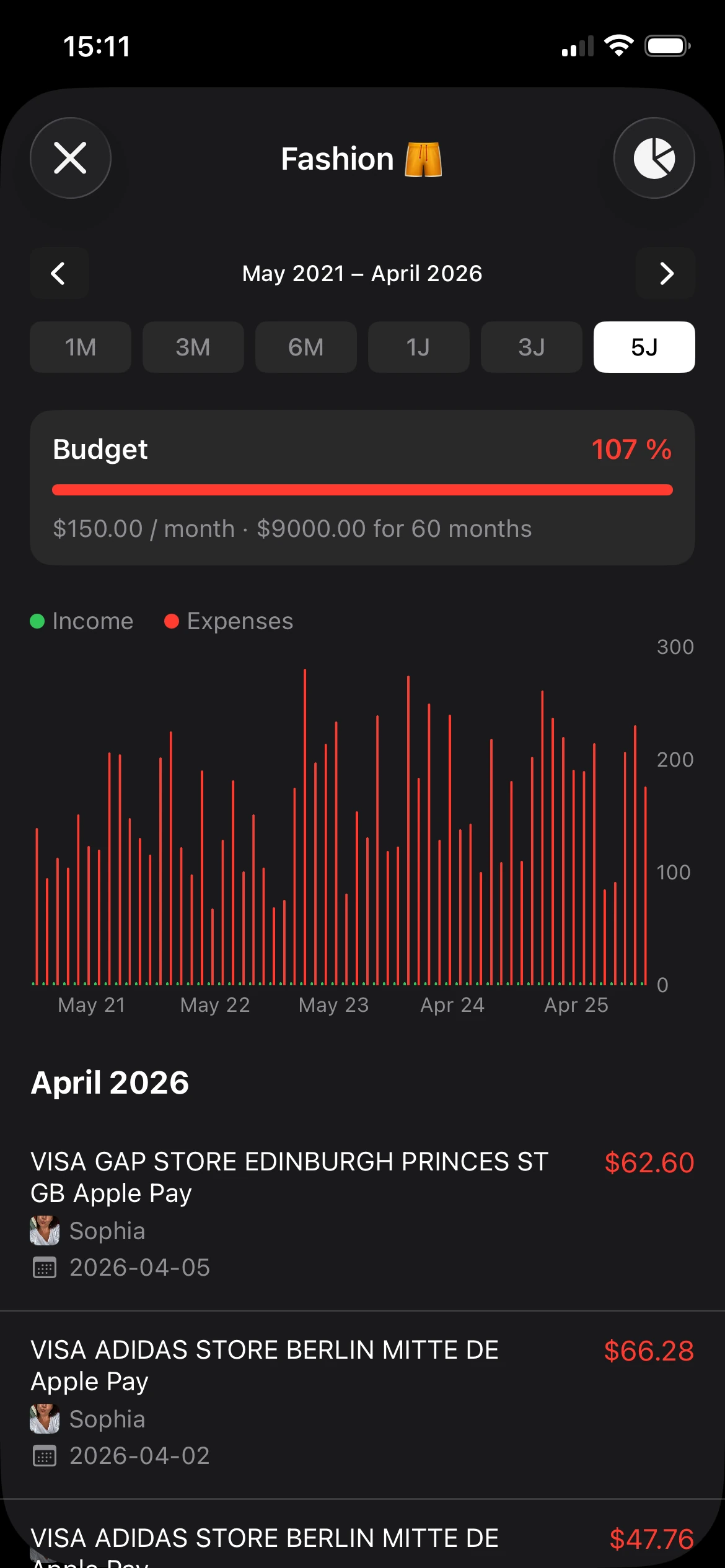
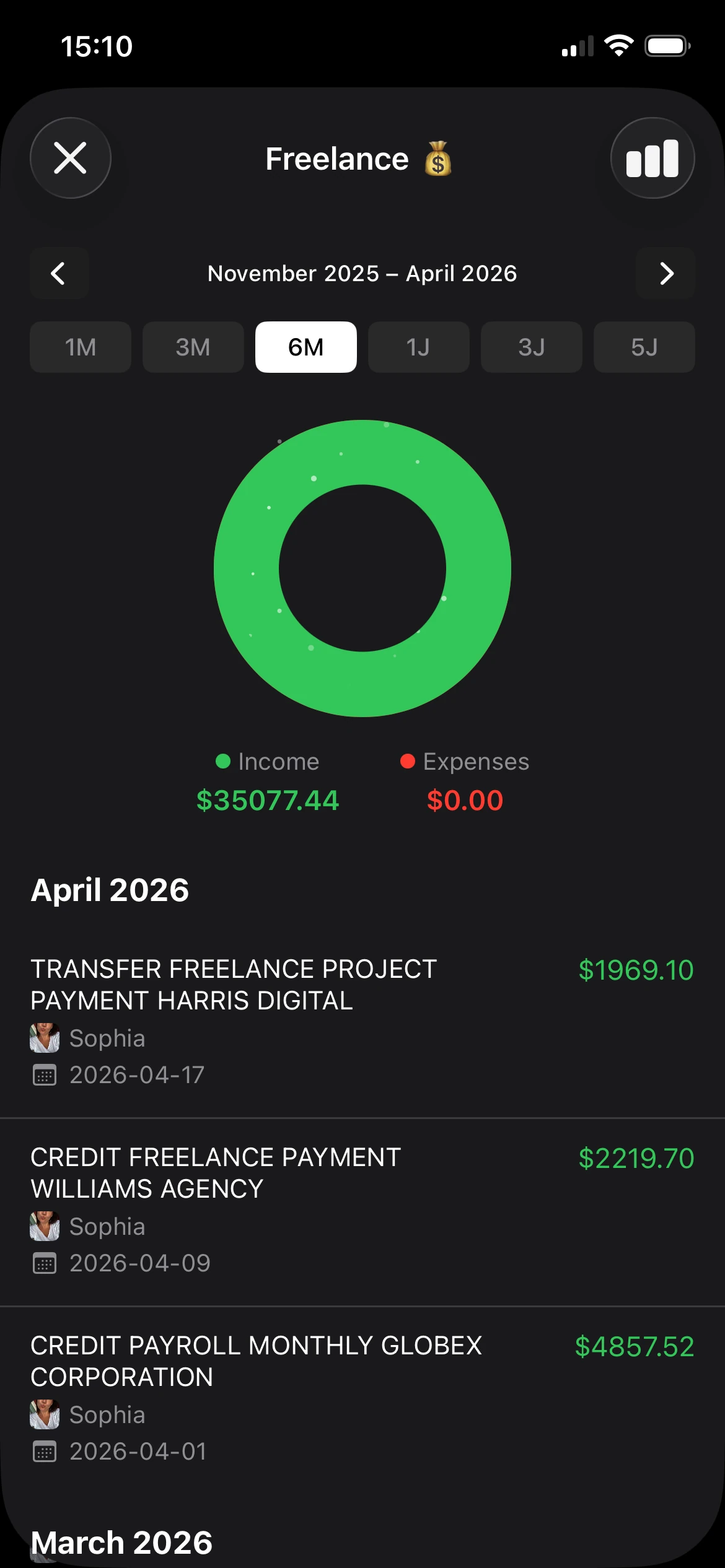
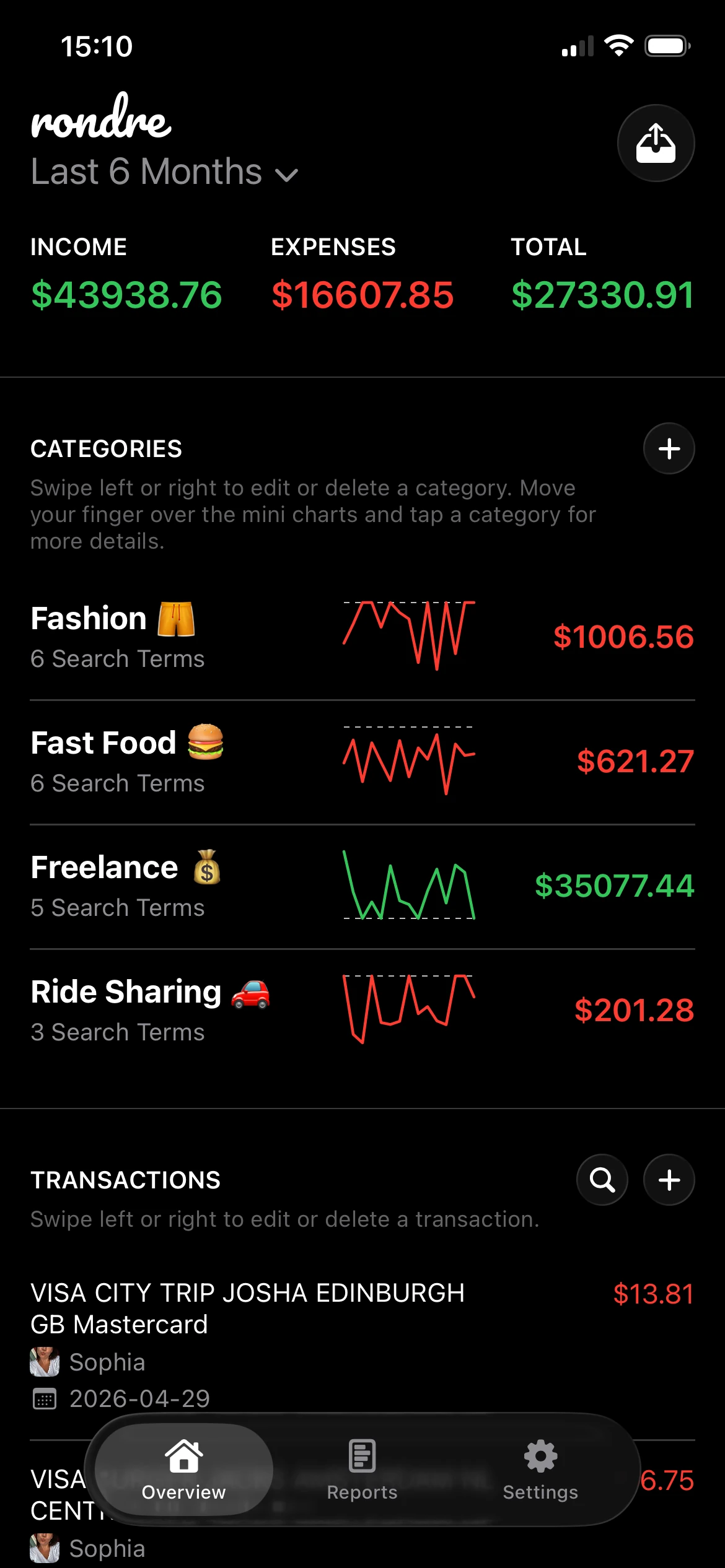
A private tracker like rondre for iPhone makes that practical because it doesn't require an account or sign-up, and it supports custom categories, imports, and fast transaction search. That matters for discretionary spending because this category is messy by nature. It includes small purchases, recurring charges, one-off treats, and spending shared with a partner or family.
A sensible setup might include categories like:
- Coffee shops: café runs, drive-through drinks, bakery stops
- Dining out: restaurants, takeaway, delivery apps
- Subscriptions: streaming, premium apps, digital memberships
- Hobbies: crafts, sports gear, books, gaming
- Social spending: gifts, group dinners, events
- Travel and fun: weekend plans, tickets, local outings
Use visuals to spot patterns faster
The challenge isn't only recording transactions. It's seeing patterns before the month is gone.
Bar charts and donut charts help because they answer basic questions quickly. Which category is growing fastest. Which purchases repeat more often than expected. Which type of spending feels small but adds up.
Someone reviewing a month of transactions may discover that “just food” splits into groceries, work lunches, delivery, coffee, and social meals. That changes the conversation. Instead of trying to cut all food spending, the person can focus on the subcategory that's creating pressure.
A budget gets easier the moment spending becomes visible enough to discuss calmly.
Shared tracking also helps households that spend together. When both partners can review joint categories like date nights, family activities, or travel, discretionary spending becomes less about blame and more about tradeoffs.
Smart Ways to Manage Your Discretionary Budget
Once discretionary spending is visible, the next step isn't cutting everything fun. It's deciding what deserves space.
That's a big difference. A budget built only on restriction usually doesn't last. A budget built around priorities has a better chance.

Cut less blindly and choose more intentionally
Some people like broad budgeting frameworks because they create a rough boundary. One common example is separating money into needs, wants, and savings. The exact split matters less than the principle. Discretionary spending should have a lane, not unlimited access to whatever remains in the account.
Useful management habits include:
- Name a monthly wants limit: even a simple cap creates awareness.
- Split wants into sub-groups: entertainment, food out, shopping, and hobbies behave differently.
- Review recurring charges first: subscriptions are easy to overlook because they feel automatic.
- Protect what matters most: if travel matters more than delivery apps, the budget should show that.
A better question than can this be cut
USAFacts notes a point many budget guides miss. Discretionary spending is often the easiest category to reduce, but it isn't always frivolous. Some expenses, such as education, work-related tools, or health-adjacent purchases, can act more like investment or risk reduction than pure consumption (USAFacts discussion of discretionary spending tradeoffs).
That changes how smart budgeting works.
A gym membership might be discretionary on paper, yet still support health and routine. A course subscription may be flexible, but it could improve income. Better shoes for a job that requires standing all day may not be technically essential in the narrowest sense, but cutting them may be shortsighted.
That's why the best filter is often this one:
- Does this help current comfort only
- Does this support future stability
- Does this effectively solve a recurring problem
A person doesn't need to remove all discretionary spending. The goal is to remove the spending that doesn't matter enough to justify its cost.
Your Practical Takeaway for Today
The biggest shift happens when discretionary spending stops being a fuzzy idea and becomes a visible, usable number. That's the point where a person can stop guessing.
Needs keep life running. Wants shape daily experience. Both matter. But only one category usually offers quick flexibility when money feels tight, a goal needs funding, or spending has drifted off course. That category is discretionary spending.
A practical first move doesn't need to be ambitious. It only needs to be specific.
Today, a reader can pull up the last few days of transactions and identify three purchases that were clearly optional. A coffee. A meal out. A digital subscription or entertainment purchase. Those three items are enough to begin. Once they're grouped together, the pattern starts to show itself.
Small categories create big clarity when they're tracked consistently.
That's how control starts. Not with a perfect plan. With one clean label and a few honest transactions.
A simple next step is to try rondre. Add the last three “fun” purchases, place them in a category like “My Wants,” and let the app show the pattern. Because rondre is free, private, and doesn't require an account, that first step takes only a few minutes and turns abstract budgeting advice into something visible today.