Zero-based budgeting is a method where every dollar of income is planned in advance so that income minus expenses equals zero. Unlike traditional budgeting, it starts from scratch each cycle, which means every expense has to earn its place instead of rolling forward automatically.
That idea sounds stricter than it really is. Individuals don't struggle because they've never heard of budgeting. They struggle because money keeps moving in small, scattered ways. Groceries run high one week, a subscription renews, a child needs school supplies, a partner pays one bill while the other pays another, or freelance income lands unevenly. By the end of the month, the numbers feel blurry.
That's where zero-based budgeting helps. It gives structure to real life without requiring perfection. For a single person, it can stop “miscellaneous spending” from swallowing the month. For couples and families, it creates a shared plan. For freelancers or anyone with uneven pay, it can turn unpredictable income into a calmer system.
Table of Contents
- Giving Every Dollar a Job
- Understanding the Zero-Based Budgeting Method
- Zero-Based Budgeting vs Traditional Budgeting
- The Benefits and Common Pitfalls of ZBB
- How to Create Your First Zero-Based Budget
- ZBB in Action for Your Lifestyle
- Your First Step to a Zero-Based Budget Today
Giving Every Dollar a Job
A common money problem looks like this: income comes in, bills get paid, spending happens, and nothing seems wildly irresponsible. Then the month ends and there's still a sense that money disappeared.
What is zero based budgeting in plain language? It's the practice of assigning each dollar a purpose before it gets spent. Some dollars go to rent or groceries. Some go to debt. Some go to savings. Some go to family expenses or upcoming irregular costs. When every dollar has a role, there's less drift.
Why this feels different
Many budgets fail because they only track what already happened. Zero-based budgeting starts earlier. It asks, “What should this money do?” instead of “Where did it go?”
That shift matters for people whose finances don't fit neat templates:
- Variable income earners need a plan that works even when pay changes.
- Couples need a way to agree on shared priorities without guessing.
- Families need room for school costs, activities, gifts, and surprise expenses.
- Anyone replacing cash envelopes or spreadsheets often wants a simpler digital system, especially after trying methods like the cash envelope budgeting approach.
Zero-based budgeting isn't about spending every dollar. It's about directing every dollar.
What “zero” actually means
The word zero confuses people. It doesn't mean a bank balance of zero. It means the plan reaches zero because all income has been assigned somewhere.
That “somewhere” can include:
- Essentials like housing, food, utilities, and transport
- Future goals like savings, sinking funds, or debt payoff
- Flexible spending like dining out, hobbies, or family fun
A zero-based budget works best when people stop treating it like a punishment and start treating it like a map. The map can change. The point is to have one.
Understanding the Zero-Based Budgeting Method
Zero-based budgeting is often described as “giving every dollar a job,” but there's a deeper idea underneath it. It's a decision-based allocation method. That means money doesn't flow into categories just because it did last month. People make an active decision about each category again.

Core definition: Zero-based budgeting is a decision-based allocation method in which every expense must be justified from scratch each cycle, so prior-year spending does not automatically carry forward, as explained in Deloitte's overview of zero-based budgeting.
Starting with a blank slate
A useful way to think about ZBB is a road trip. A traveler with a limited amount of fuel doesn't pour gas into random containers and hope the trip works out. Each part of the route has to be planned. The fuel goes where it's needed.
Money works the same way. In a traditional budget, last month's spending can become the default. In a zero-based budget, each month begins with a blank slate. Housing may still get funded first. Groceries may still be necessary. But nothing gets a pass solely because it has always been there.
That's why people often describe ZBB as a blank-slate method.
Where the method came from
Zero-based budgeting didn't begin as a personal finance trend. It emerged as a formal management tool in the 1970s, after it was popularized at Texas Instruments and later promoted in U.S. public administration during President Jimmy Carter’s budget reforms, according to the Government Finance Officers Association paper shared by MRSC.
The important idea from that history isn't just the date. It's the reason the method caught on. Instead of carrying old spending forward automatically, organizations had to rebuild budgets from zero and justify each line item anew. That same principle is powerful in personal finance because it exposes spending that has become automatic.
What people usually get wrong
Many readers hear “assign every dollar” and assume ZBB is rigid. It can be structured, but it doesn't have to be brittle.
A practical zero-based budget usually includes categories such as:
- Fixed bills that are easy to predict
- Variable basics like food, fuel, and household items
- Planned future needs such as car repairs, holidays, school costs, or annual subscriptions
- Priorities like savings or extra debt payments
A good zero-based budget isn't a promise that nothing will change. It's a plan for what the money should do before the month starts.
When people understand that point, the method becomes less intimidating. The power of ZBB isn't in forcing perfect spending. It's in forcing clear choices.
Zero-Based Budgeting vs Traditional Budgeting
Most households already use some form of budgeting, even if they don't call it that. They look at prior spending, make a few adjustments, and hope it works better this month. That's closer to traditional budgeting.
Zero-based budgeting takes a different route. Instead of tweaking the old plan, it rebuilds the plan from the ground up.
Side by side comparison
| Feature | Zero-Based Budgeting | Traditional Budgeting |
|---|---|---|
| Starting point | Starts from zero each budget cycle | Starts with the previous budget or recent spending |
| Expense treatment | Every expense must be justified again | Existing expenses often carry forward automatically |
| Mindset | Intentional allocation based on current priorities | Incremental changes around an existing baseline |
| Spending visibility | Makes hidden or habitual spending easier to spot | Can leave recurring spending unquestioned |
| Best fit | People who want tighter control or major changes | People who want a lighter-touch planning process |
The practical difference at home
Traditional budgeting often sounds like this: rent stays the same, groceries were high last month, entertainment should probably come down, and maybe savings can increase if there's enough left.
Zero-based budgeting sounds different: income is known first, then every category gets assigned on purpose until nothing is unplanned.
That difference is especially useful when spending has gone stale. Subscriptions, convenience spending, school extras, shared household costs, and little online purchases can become “default spending” fast. A traditional approach may only question the change. ZBB questions the category itself.
Which one helps more
Neither method is morally better. They solve different problems.
- Traditional budgeting is simpler when spending is steady and priorities aren't changing much.
- Zero-based budgeting is stronger when someone wants to cut waste, reset habits, or coordinate money across a household.
For readers searching “what is zero based budgeting,” this comparison usually clears up the confusion. The method isn't just a more detailed budget. It's a different way of making decisions.
The Benefits and Common Pitfalls of ZBB
Zero-based budgeting has a strong reputation because it makes spending visible. That can feel uncomfortable at first, but it's also why the method works.
One industry source says companies using ZBB report cost savings of 10% to 25%, and a survey reported that 96% cited profitability improvement as the main reason for using it, while 48% pointed to better cost transparency or control as a key motive, according to Anaplan's zero-based budgeting guide.
Those numbers come from organizational budgeting, not household budgets. Still, the lesson carries over well. When every expense gets reviewed, people usually spot costs that had been running on autopilot.
Why people like this method
The biggest benefits are often personal, not technical.
- Clearer priorities. Savings, debt payments, and essentials get funded intentionally.
- Better awareness. People notice recurring charges and low-value spending sooner.
- Less end-of-month confusion. The money already has a destination.
- Stronger household coordination. Shared goals become visible instead of assumed.
For someone trying to change habits, that visibility is often the breakthrough.
Practical rule: If a category can't be explained in a sentence, it probably needs to be split or reduced.
Where people get stuck
ZBB also has real friction. It asks for attention up front, and some people quit because they expect it to feel effortless immediately.
Common problems include:
- Too much detail too early. A budget with too many tiny categories becomes hard to maintain.
- Treating the first draft as final. Real life changes. The budget should change too.
- Forgetting non-monthly costs. Annual fees, birthdays, repairs, and school events can throw off the plan.
- Using guilt instead of information. Overspending in one category should trigger an adjustment, not shame.
- Making it too strict for family life. Households need flexibility because life with children or shared finances is rarely tidy.
The mindset that helps most
The people who tend to succeed with ZBB don't use it to control every penny in a fearful way. They use it to make tradeoffs visible.
That's an important distinction. A zero-based budget shouldn't make someone feel trapped. It should make choices clearer. If dining out matters, the budget can reflect that. If faster debt payoff matters more, the budget can reflect that instead.
The method works when the budget becomes honest.
How to Create Your First Zero-Based Budget
A first zero-based budget doesn't need fancy formulas. It needs a workable process and realistic inputs. Four steps are enough.

Step 1 and Step 2
Start with expected income for the month. For someone with a salary, this is usually straightforward. For someone with uneven income, a conservative estimate is safer.
Then list expenses in a way that reflects real life, not ideal life. That means fixed bills, variable spending, debt payments, savings, and irregular costs that don't show up every month.
Helpful categories often include:
- Must-pay bills such as rent, mortgage, insurance, and utilities
- Daily living such as groceries, transport, and household items
- True irregulars such as birthdays, subscriptions, school costs, and repairs
- Goals such as emergency savings or debt reduction
A look back at old bank activity helps a lot here. For people who prefer an app over a spreadsheet, one option is a monthly budget spreadsheet alternative that keeps transactions searchable and organized without building formulas manually.
Step 3 and Step 4
Once income and categories are listed, assign dollars until the budget reaches zero. If money is left over, give it a purpose. If the plan goes negative, reduce or delay something.
That's the heart of the method.
- Fund essentials first. Housing, utilities, food, transport, and minimum required payments come before flexible categories.
- Assign money to future needs. Savings counts as a job. So do sinking funds.
- Leave room for real spending. If coffee runs, takeout, hobbies, or children's activities happen regularly, pretending they don't exist won't help.
- Track and adjust during the month. A budget is a living plan, not a test.
A zero-based budget works on paper only if it also works on Tuesday afternoon, at the grocery store, under normal stress.
A simple setup that's easier to keep
The tracking part is where many budgets break down. A plan only helps if actual spending gets recorded and reviewed. That's why simple tools often beat complicated systems.
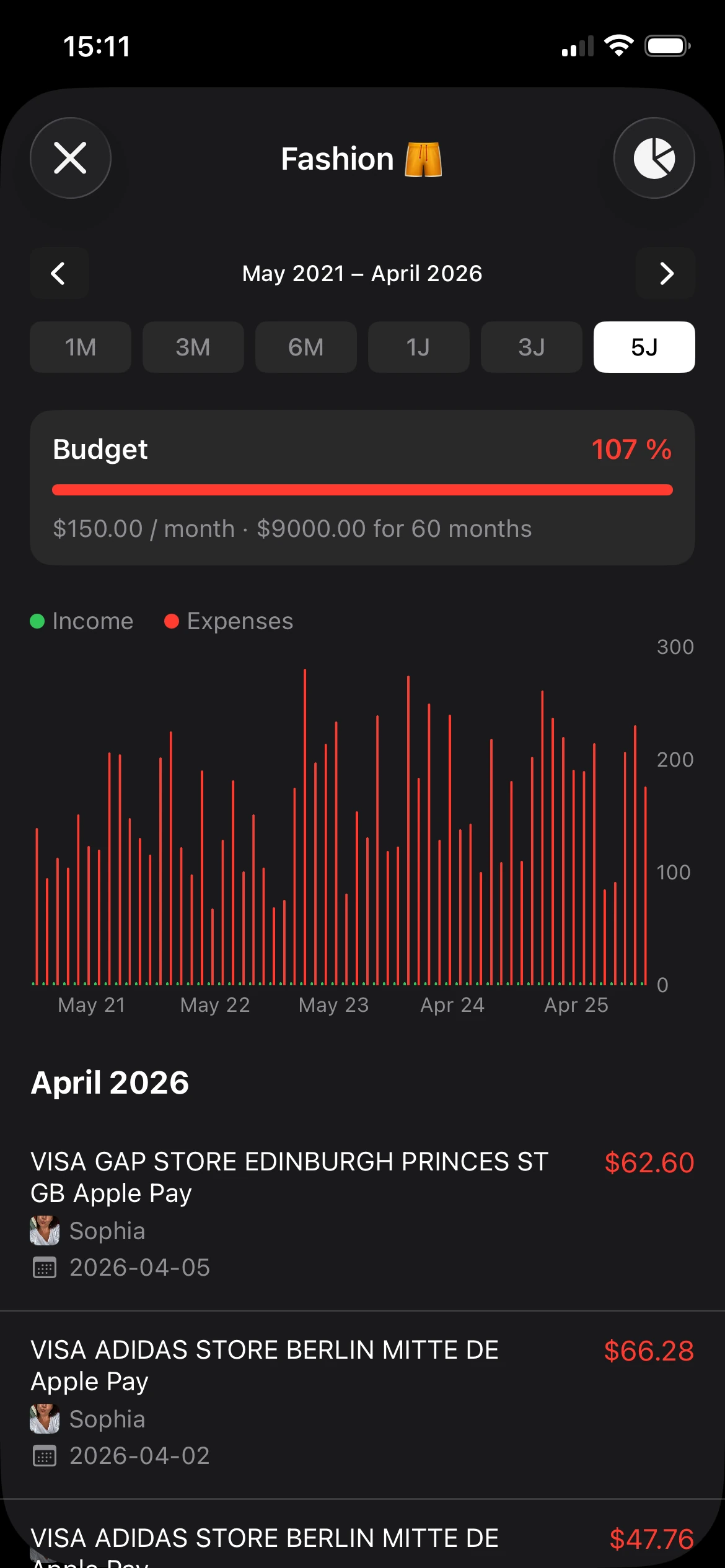
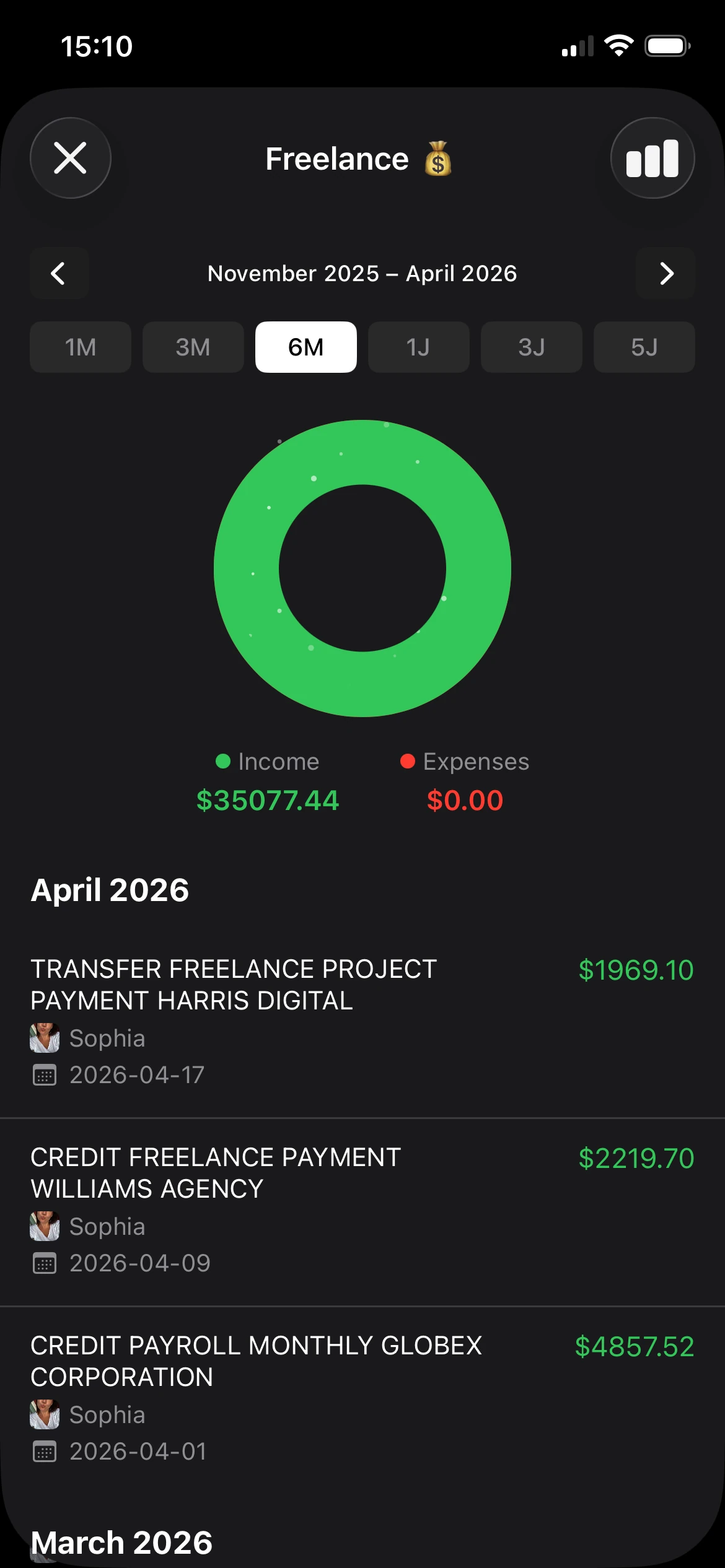
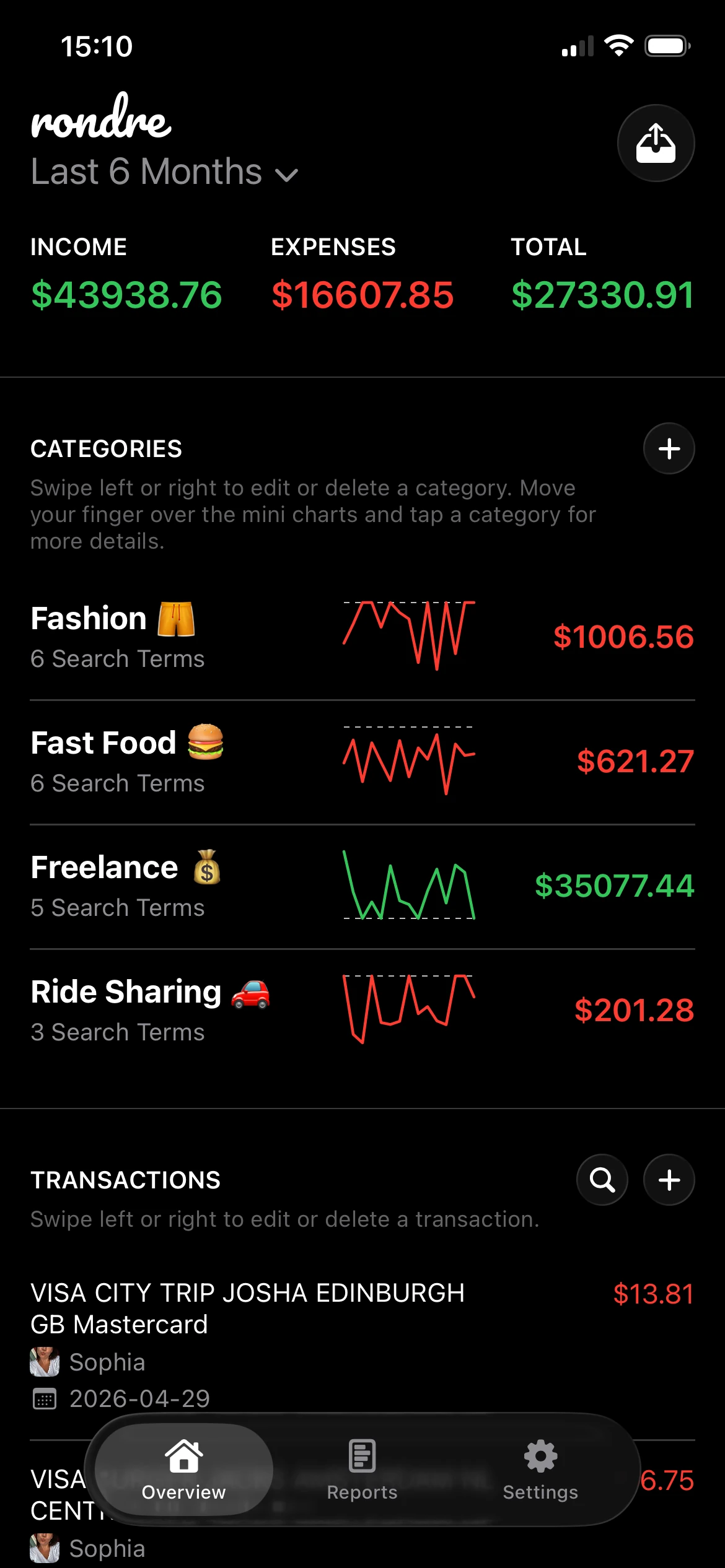
For iPhone users who want a low-friction setup, rondre can support a zero-based workflow by letting users track income and expenses, create smart categories with custom search terms, import CSV files and PDF bank statements, and search transactions quickly. It also works without an account or sign-up, which makes it easier to start using immediately.
The goal isn't to build a perfect budget on day one. The goal is to build a budget that can still be updated when life gets messy.
ZBB in Action for Your Lifestyle
Zero-based budgeting gets easier when people stop looking for a universal template. A solo renter, a couple, a family with children, and a freelancer don't need the same setup. They need the same principle applied differently.

One person with a steady paycheck
A solo budget is often the easiest place to start. Income is usually predictable, and decision-making is fast.
This setup works well when the person keeps categories broad enough to manage. Housing, groceries, transport, debt, savings, and personal spending are often enough. If overspending keeps happening, the fix usually isn't more guilt. It's more visibility around one or two categories that keep expanding.
A couple combining finances
Couples often struggle less with math than with coordination. One partner may think dining out is normal. The other may see it as the reason savings never grow. ZBB helps because it turns vague tension into category decisions.
A shared budget works better when couples agree on:
- Which expenses are joint
- Which spending stays personal
- Which goals come first
- How often the budget gets reviewed
Shared finance tools matter here because both people need access to the same picture, not separate memories of who paid what.
A family with uneven monthly needs
Families rarely have identical months. School events, clothes, birthdays, activities, medical copays, and household replacements can shift spending quickly.
The mistake many families make is treating these as surprises when they're expected, just irregular. Zero-based budgeting handles that by creating dedicated categories for recurring family needs, even when the timing moves around. That makes the month less fragile.
Family budgeting usually gets better when “unexpected” expenses are renamed as “irregular but likely” expenses.
A freelancer or variable income household
Many people assume zero-based budgeting won't work. In reality, it can work very well if the plan is built conservatively.
For people with irregular income, Fidelity notes that a zero-based budget can be adapted by basing the plan on the lowest-earning months, then sending extra income to savings, debt repayment, or future-month needs, as explained in Fidelity's guide to zero-based budgeting.
That changes the emotional tone of variable income. Extra money doesn't become accidental spending. It becomes a buffer.
A freelancer might separate the budget into three layers:
- Bare minimum living costs
- Core business or work-related needs
- Priority destinations for surplus income
That approach keeps lean months survivable and strong months productive.
Your First Step to a Zero-Based Budget Today
The hardest part of zero-based budgeting usually isn't the math. It's the feeling that the whole system has to be built perfectly before it can start.
It doesn't.
A useful first move is smaller than expected. Track every expense for one week. No judgment. No complicated categories. Just collect the information. That single habit makes the next budget far more realistic because it replaces guesses with actual behavior.
From there, the next version of the budget can answer simple questions. Which expenses are fixed? Which ones move around? Which categories keep absorbing money without much value? Which household costs need to be planned jointly? Readers who are comparing tools and want a simpler approach than heavier budgeting systems may find this YNAB alternative overview useful.
What is zero based budgeting, in the end? It's a way to make money decisions on purpose. The method isn't about restriction for its own sake. It's about making sure income serves the life in front of the person using it.
A simple next step is to try rondre and record one week of income and spending in a private, no-sign-up tracker. That gives every future budget a stronger starting point, especially for shared households, variable income, and anyone who wants clarity without a spreadsheet.