The pattern is familiar. One person pays for groceries, another covers the utility bill, someone else forgets to request reimbursement, and the running total lives in a group chat that nobody wants to scroll through. By the end of the month, the money problem usually isn't the money itself. It's the memory work, the awkward reminders, and the small disagreements caused by missing details.
That's why the shared expense tracker app has emerged as a normal tool instead of a niche one. People don't just want a way to split dinner once. They want a clean record of household spending, trip costs, and recurring shared bills that everyone can trust. That broader shift shows up in the market too. The global expense tracker apps market was valued at USD 10.0 billion in 2025 and is projected to grow at a 10.1% CAGR through 2036, according to Future Market Insights on the expense tracker apps market.
A good app doesn't remove every money conversation. It removes the messy ones. It gives people one place to record what happened, see what's shared, and settle up without turning every purchase into a debate.
Table of Contents
- The End of Awkward Money Conversations
- What Makes a Great Shared Expense App
- Beyond Couples Who Uses These Apps
- Spreadsheets and Group Chats Fall Short
- Your Guide to Privacy and Secure Sharing
- How to Set Up Your Shared System for Success
- Putting It All Together with rondre
- Frequently Asked Questions
The End of Awkward Money Conversations
A shared expense problem usually starts small. Two roommates mean to split household basics fairly. A couple wants a cleaner way to handle groceries and subscriptions. A family tries to track what belongs to the household budget and what belongs to one person. Then the usual patchwork appears: screenshots, bank app notes, payment requests, and a spreadsheet that only one person updates.

The primary cost is emotional. Nobody wants to sound petty by asking who still owes for cleaning supplies. Nobody wants to argue over whether a charge was personal or shared. When the system is vague, people fill in the gaps with assumptions, and that's when tension starts.
One record changes the tone
A good shared expense tracker app replaces memory with a record. Everyone can see the same transaction list, the same categories, and the same history. That matters because shared spending isn't just about splitting totals. It's about agreeing on what happened.
Shared money gets easier when the record is boring. If a transaction is logged clearly, people spend less time defending their version of events.
That's also why these apps have become mainstream. They fit how people already manage life now, on a phone, in the moment, while paying for something. The category is no longer a side tool for spreadsheet enthusiasts. It's part of a much bigger move toward mobile-first money management.
What usually improves first
The first visible improvement isn't a prettier budget chart. It's behavior.
- Fewer reminder messages: People stop asking the same questions because the answer is already in the app.
- Cleaner month-end reviews: Shared costs are easier to sort from personal spending.
- Less resentment: Small expenses stop turning into symbolic arguments about fairness.
Users often don't need a complicated finance system. They need one place where shared spending is captured consistently enough that nobody has to play detective later.
What Makes a Great Shared Expense App
The easiest way to judge a shared expense tracker app is to ignore the marketing and check whether it solves daily friction. If it takes too many taps to add a purchase, people won't use it. If the app hides who paid, who owes, or whether something was personal or shared, the confusion moves to a different screen.

The strong apps tend to get a few basics right instead of trying to impress with endless automation.
The features that actually matter
Think of the app as a shared notebook that stays organized.
- Easy entry: Logging an expense has to feel quick enough to do at the checkout line or right after paying a bill.
- A shared ledger: Everyone involved needs access to the same record, not separate versions that need reconciling later.
- Clear payment tracking: The app should make it obvious who paid and how the expense should be split.
- Useful categories: Groceries, rent, utilities, travel, household supplies, and other meaningful labels matter more than vague buckets.
- Search and review tools: People need to find old transactions quickly when questions come up.
- Privacy controls: Shared doesn't mean all-or-nothing visibility.
What sounds useful but often isn't
Some features look impressive in screenshots and still create clutter in real life.
| Feature | Useful when | Not useful when |
|---|---|---|
| Auto-splitting rules | Recurring bills follow a stable pattern | Household spending changes often |
| Deep reporting | People review trends monthly | Nobody looks at reports |
| Bank sync | Users want broad automation | Privacy is the priority |
| In-app chat | The group needs context on expenses | It turns into another noisy message thread |
A practical checklist helps more than a long feature list. People choosing between tools often do better by starting with what they need every week, then reading a more general breakdown like this guide to choosing the best app expense tracker.
Practical rule: If a shared expense app doesn't make entry, review, and settlement simpler in the first week, it probably won't become part of the household routine.
The best setup is usually the one that reduces decisions. Fewer categories, fewer unclear labels, and fewer places to check. That's what keeps the record usable after the novelty wears off.
Beyond Couples Who Uses These Apps
A lot of shared money advice assumes two people in a relationship. That's too narrow. Shared expense tracker apps are just as useful for groups that need coordination without merging their finances.
App listings already reflect that broader use. Google Play describes Splitwise as a way to share expenses with friends and family, says millions of people use it for households, trips, and more, and notes support for collaboration with up to 10 people in some collaborative use cases on the store listing for shared tasks and finances, as discussed in Google Play app-store coverage of collaborative bill sharing.
Roommates need consistency more than romance
Roommates usually deal with repetitive, low-drama expenses that become annoying only because nobody wants to track them. Rent may be fixed, but utilities, cleaning supplies, internet, and shared groceries create a steady stream of small reimbursements.
What works:
- A household book for shared costs only
- A clear rule for uneven expenses
- A regular settle-up day
What doesn't work is mixing personal spending into the same running list. Once shampoo, takeout, and someone's private shopping all sit together, the ledger stops feeling neutral.
People comparing options for that setup often care about recurring bills, simple categories, and clean household visibility more than “couples budgeting” features. A related family budgeting app guide is often more relevant than relationship-focused advice.
Families need shared visibility with boundaries
Families often need both togetherness and separation. Household bills may be shared, while each adult still wants room for personal spending without turning every transaction into a joint review.
That's why a useful shared system for families usually includes:
- A space for household expenses.
- Categories that reflect real life, such as groceries, kids, transport, and home.
- A rule for what stays personal.
Trips and project groups need a short-lived system
Travel groups, wedding planning teams, and small project partnerships don't need a forever budget. They need a temporary ledger that survives changing plans. One person books the rental, another pays for food, someone fronts event supplies, and the full picture gets blurry fast.
These are perfect use cases for a lightweight shared expense tracker app because the goal isn't just splitting a final amount. The goal is keeping a clean sequence of who paid for what while the group is still moving.
Spreadsheets and Group Chats Fall Short
Spreadsheets feel responsible. Group chats feel easy. Both work for a while. Then one person updates the numbers late, someone else sends money without noting what it covered, and the entire system depends on people remembering context that has already disappeared.
A dedicated app solves a different problem than either of those tools. It preserves the transaction and the meaning of the transaction in one place.
Expense Tracking Method Comparison
| Feature | Shared App | Spreadsheet | Group Chat / Notes |
|---|---|---|---|
| Real-time shared visibility | Strong | Limited by who updates it | Weak |
| Mobile entry | Easy | Usually clumsy | Easy but messy |
| Searchable history | Strong | Depends on structure | Poor |
| Who paid and who owes | Built for this | Manual formulas or notes | Easy to lose track |
| Category review | Simple | Possible but manual | Weak |
| Emotional labor | Lower | Moderate | High |
Where spreadsheets break down
Spreadsheets are powerful, but they ask too much from ordinary shared spending.
- Someone has to maintain structure: Columns, formulas, and sorting rules don't take care of themselves.
- Mobile use is awkward: Most shared expenses happen away from a desk.
- Version control causes friction: Even one missed update can create distrust in the totals.
Why chats create the most confusion
Chats are excellent for sending a quick reminder. They are bad at storing a money system.
One message says “got groceries.” Another says “paid internet.” A third says “you can get me later.” That may feel flexible in the moment, but it creates a terrible audit trail. Nobody can scan one clean list of transactions. Nobody can filter by category. Nobody can settle up confidently without rereading old messages.
A money system fails when the answer exists somewhere, but nobody can retrieve it without effort.
Shared expense tracker apps win because they remove reconstruction work. People don't need to remember the story behind the month. They can see it.
Your Guide to Privacy and Secure Sharing
Most articles about expense apps treat bank linking as the default. That works for some people, but it's not the only sensible model. For many households, the smarter choice is a shared expense tracker app that doesn't require bank access at all.
That preference is more common than reviews often admit. Many users want shared tracking without linking bank accounts, especially when they're managing money with a partner, roommate, or family member and don't want to expand who can touch sensitive financial data. That gap is highlighted in NerdWallet's discussion of budgeting apps and no-bank-link options.

The two privacy models
Most shared finance apps fall into one of these buckets:
| Model | Main benefit | Main trade-off |
|---|---|---|
| Bank-linked tracking | Automation | More data exposure |
| Manual or import-based tracking | Control | More user effort |
Bank-linked apps reduce typing, but they also ask users to trust a chain of services with sensitive account visibility. That may be a fair trade for some households. It isn't automatically the right one.
Manual tracking gets framed as a downgrade when it's often a boundary. It lets people decide exactly what enters the shared record.
Why manual entry can be the safer choice
Manual entry creates a cleaner privacy line.
- No bank credentials involved: Users don't have to grant ongoing account access to keep a household ledger.
- Only shared information gets shared: A person can record the grocery run without exposing unrelated spending.
- The record becomes intentional: Every transaction in the shared space is there on purpose.
A practical companion to this approach is using imports when helpful, then reviewing what belongs in the shared record. This kind of expense tracking workflow without overexposing financial data is often a better fit for people who care about both clarity and boundaries.
Privacy check: Before choosing an app, ask a simple question. “What data does this app need from the household, and what data is it collecting only because it can?”
What to look for before sharing with others
Privacy-first doesn't mean paranoid. It means deliberate.
Check for these signs:
- A clear sharing model: People should know exactly what other members can see.
- No unnecessary account friction: The more identity and permission layers involved, the more trust the app asks for.
- Easy correction: If something private is logged by mistake, it should be easy to fix.
The best shared systems don't just track money. They limit exposure while doing it.
How to Set Up Your Shared System for Success
A shared expense tracker app only works when the household agrees on the rules behind it. Most failures don't come from bad software. They come from vague expectations, inconsistent logging, and categories that are too messy to review later.
A simple setup solves most of that.
Start with one conversation
Before anyone logs the first expense, the group should agree on three things:
- What counts as shared
- How splits work
- When balances get reviewed
That conversation matters more than app settings. If groceries are shared but lunches aren't, define it. If rent is uneven because bedrooms differ, define it. If reimbursements happen monthly instead of constantly, define that too.
Keep categories tight
Too many categories make logging slow. Too few make reports useless.
A practical middle ground is a short list that matches how the household spends. Technical analysis of expense systems notes that clerical errors and data loss are major points of failure, including a 40% receipt loss rate in email-based workflows, and also points to structured mobile entry and category discipline as ways to improve reliability in Adalo's breakdown of mobile expense tracking workflows.
A useful starter set often looks like this:
- Housing: Rent, mortgage, maintenance
- Utilities: Power, water, internet
- Groceries: Shared food and household basics
- Transport: Fuel, transit, parking for shared purposes
- Kids or family: School, activities, supplies
- Travel or events: Temporary shared spending
If people hesitate every time they choose a category, the category system is too complicated.
Enter expenses close to the moment
Delayed entry is where trust starts to slip. People don't usually forget the big rent payment. They forget the pharmacy stop, the cleaning supplies, the extra grocery run, and the event deposit.
What tends to work best is one of these habits:
- Immediate logging: Best for households that want high accuracy
- Daily catch-up: Good for people who dislike interruption
- Receipt review at day's end: Useful when purchases happen in batches
The specific routine matters less than consistency. The record has to be current enough that no one is reconstructing the month from memory.
Review on a schedule
A shared system feels lighter when the review date is predictable. A short weekly glance can catch mistakes early. A monthly review can handle reimbursements, budget drift, and recurring bills.
Keep the meeting small:
| Review item | What to check |
|---|---|
| Missing expenses | Anything paid but not logged |
| Category mistakes | Shared vs personal errors |
| Balances | Who owes what |
| Upcoming bills | Recurring costs for the next cycle |
Good shared finance habits are usually boring. That's the point. The less drama in the process, the easier it is to keep using.
Putting It All Together with rondre
A shared expense system works better when it records only what the group has agreed to share. One person buys groceries and detergent. Another pays the internet bill. A third expense is personal and stays private. That boundary is easier to keep with a manual shared ledger than with an app that pulls in full bank activity and asks people to sort out the mess afterward.

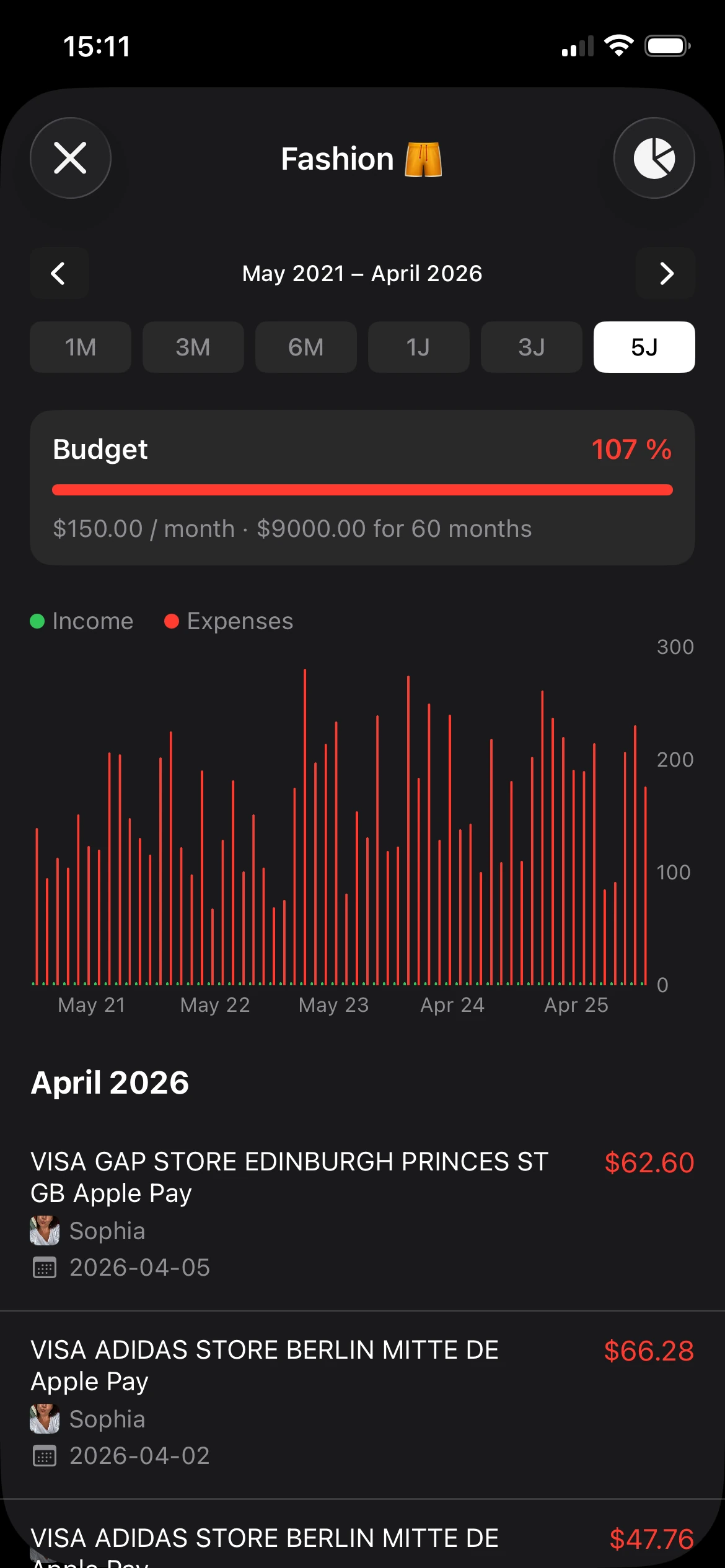
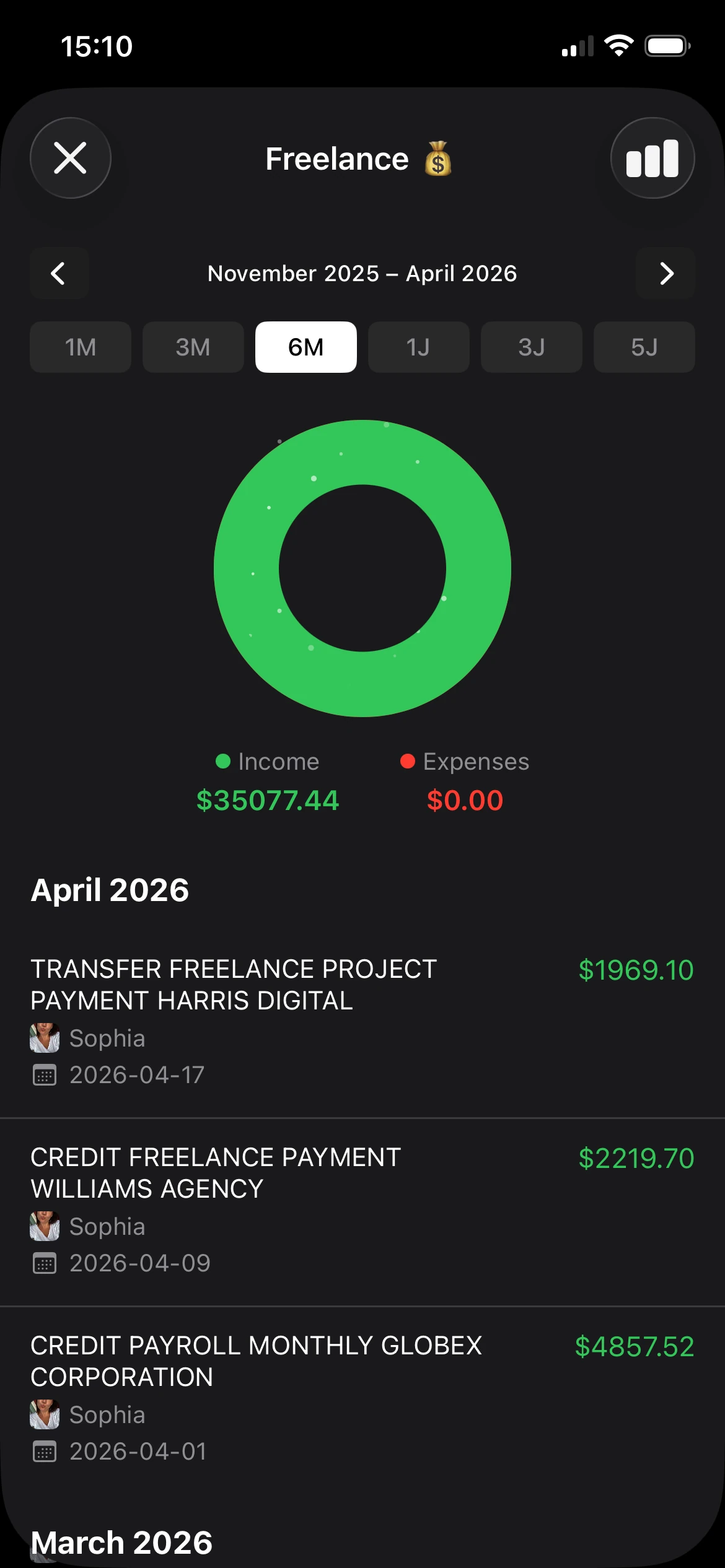
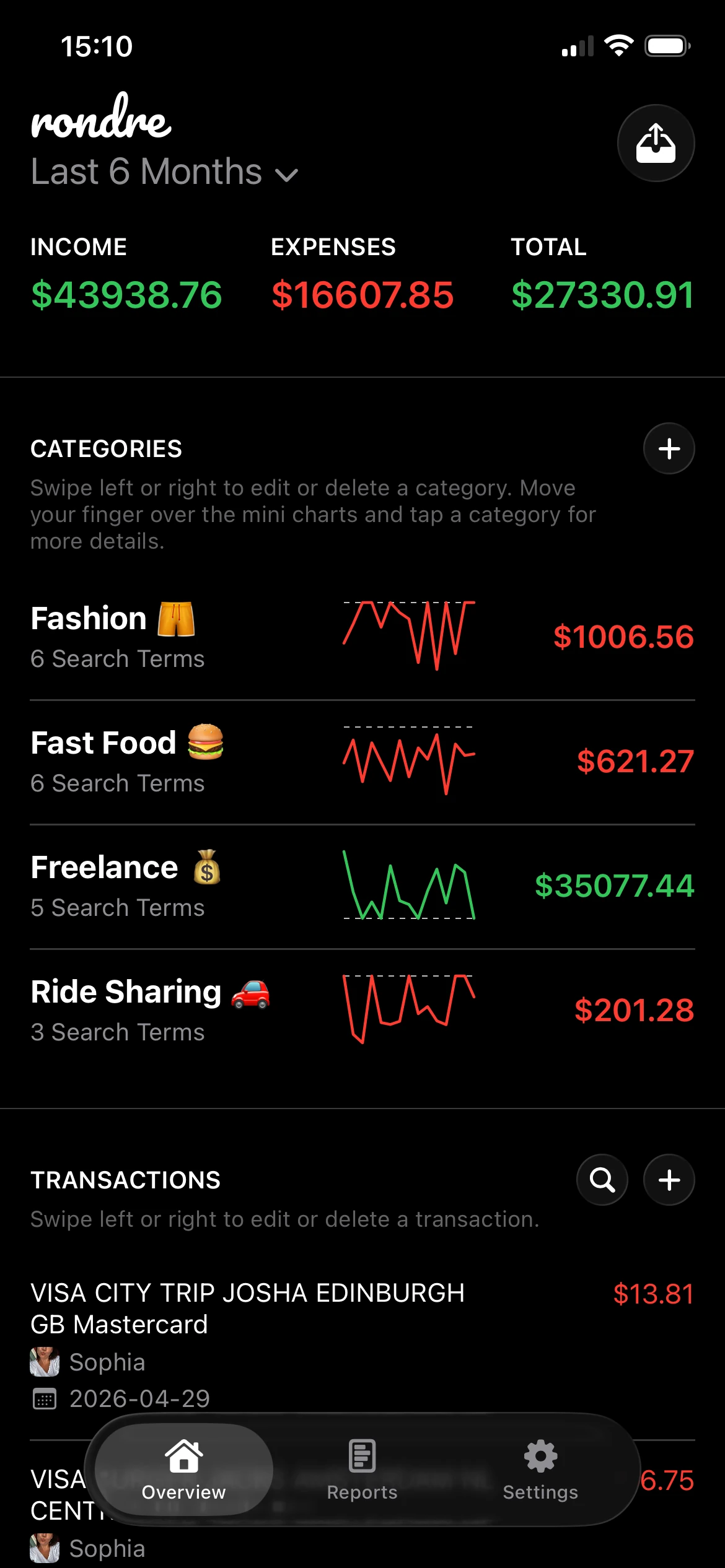
For iPhone users who want that setup, rondre matches the structure described throughout this article. It supports shared books for partners or families, manual transaction entry, custom categories with search terms, and imports through CSV files and PDF bank statements. It also does not require an account or sign-up, which matters for households that want a shared record without handing over more personal data than the job requires.
Manual entry has a trade-off. It asks each person to log what they spend. In return, the shared book stays focused. Personal purchases never have to be imported, hidden, re-categorized, or explained away because they were never added in the first place.
That trade is often worth it.
Why this model works in practice
The advantage is control. Everyone can see the same shared record, but nobody has to expose unrelated account activity just to split rent, groceries, childcare, or trip costs.
A setup like this tends to hold up well for a few practical reasons:
- Selective sharing: Only shared transactions go into the book.
- Clearer review: Fewer irrelevant entries means faster weekly or monthly check-ins.
- Useful search: Old expenses are easier to find when the ledger contains shared spending instead of everything.
That makes the tool feel more like a household record and less like constant account monitoring. For couples, families, and roommates who care about privacy, that is usually the better fit.
The strongest shared systems are often the ones with clear limits. Record the shared money. Leave the rest alone.
Frequently Asked Questions
How should people split expenses if incomes are very different
Equal isn't always fair. A household can choose equal splits for clearly shared basics and use a different arrangement for bigger recurring costs if incomes are far apart. The important part is consistency. Once the rule is agreed, it should be used the same way each month so nobody has to renegotiate every bill.
A simple written rule inside the shared system helps. “Groceries are equal. Rent is weighted. Personal spending stays personal.” That kind of clarity prevents resentment.
What's the best way to handle a large one-off purchase
Treat it separately from day-to-day expenses. Furniture, a vacation deposit, or a major appliance can distort the normal monthly picture, so it helps to mark it clearly with a dedicated category or note. That keeps regular household spending readable.
If repayment will happen over time, agree on the schedule when the purchase is logged. The mistake isn't the large purchase. It's leaving the repayment terms vague.
What if one person resists tracking
Resistance usually means the process feels annoying, not that the person wants chaos. The fix is to make the system lighter.
Try these adjustments:
- Reduce categories: Too many labels create friction.
- Use a shorter review cycle: Small check-ins feel easier than one big monthly correction.
- Assign responsibility by type: One person logs groceries, another logs utilities.
- Keep the shared ledger narrow: Only strictly shared expenses belong there.
People stick with a money system when it feels fair and quick, not when it feels impressive.
Should every expense be shared in one app
No. Shared visibility works best when it has a clear boundary. Household expenses, trip costs, or project spending belong in the shared record. Personal spending usually doesn't. The more selective the shared ledger is, the more useful it stays.
What if mistakes keep happening
Mistakes usually point to one of three problems:
- Logging happens too late.
- Categories are unclear.
- People haven't agreed on what counts as shared.
The solution is to simplify before adding more features. A smaller, cleaner system usually beats a complex one that nobody fully understands.
A simple next step is to start one shared book, choose a short list of shared categories, and log only this week's shared expenses. For iPhone users who want that without ads, tracking, sign-up friction, or bank linking, rondre offers a practical way to do it.