A lot of car shopping starts the same way. Someone realizes the current car isn't reliable enough, starts browsing listings, and then gets stuck on one question: what credit score is needed to finance a car?
That question matters, but it can also be misleading. A car loan usually isn't a simple yes-or-no decision based on one number. Lenders look at a credit score as a shortcut for risk, and that score often shapes the rate, the required down payment, and how flexible the approval will be. Bankrate, citing Experian's Q3 2025 auto-finance report, found that average new-car APRs were 6.37%, while super-prime borrowers paid 4.66% and deep subprime borrowers paid 16.01%. That gap can add thousands of dollars in interest cost over the life of the loan.
That's why the best way to think about a credit score to finance a car isn't “Can approval happen?” It's “How expensive will this approval be, and is now the right time to buy?”
Table of Contents
- Your Guide to Car Financing and Credit Scores
- Understanding Auto Loan Credit Score Tiers
- How Your Score Determines Your Interest Rate and Payment
- Choosing the Right Lender for Your Credit Profile
- Actionable Steps to Secure Your Best Car Loan
- Plan and Track Your Car Loan with rondre
Your Guide to Car Financing and Credit Scores
A borrower with average credit and a borrower with strong credit can walk onto the same lot, choose the same model, and leave with very different loan terms. That's where a lot of confusion starts. Many people assume a lender is only deciding whether someone is “good enough” to get approved. In reality, lenders are also deciding how much risk they think they're taking on, and they price that risk into the loan.
A credit score works like a lender's quick summary. It doesn't tell the whole story, but it strongly influences what happens next. Someone with a stronger profile usually gets better pricing and more options. Someone with a weaker profile may still get financed, but often with a higher rate, tighter conditions, or pressure to accept a less favorable deal.
Practical rule: The score doesn't just affect approval. It affects how much flexibility a buyer has at every step.
That's especially important for people who need a car soon and don't have perfect credit. Waiting may improve a score and reduce borrowing cost. But waiting also has a cost if the current car is unreliable, repair bills are piling up, or getting to work has become difficult.
Calm decision-making proves beneficial. Instead of asking, “Is this score bad?” the better questions are:
- What rate range is likely at this score? A rate difference changes the monthly payment and total cost.
- How urgent is the purchase? A broken commute changes the math.
- What can change before applying? A lower card balance, a cleaner report, or a bigger down payment can improve the deal.
- Which lender is a fit? Not every lender treats the same borrower the same way.
A smart car financing decision usually comes from understanding those moving parts, then matching the loan to the budget rather than chasing a perfect score.
Understanding Auto Loan Credit Score Tiers
A lot of lenders sort borrowers into credit tiers. That doesn't mean every lender uses the same labels or exact cutoffs, but the general idea is consistent. Lenders want a fast way to sort applications from lowest risk to highest risk.
Why lenders group borrowers into tiers
The easiest way to think about auto loan tiers is as a trust meter. The higher the score, the more confident a lender tends to feel about repayment. More confidence often leads to lower rates and easier approval. Less confidence usually leads to higher rates, extra conditions, or fewer lender options.
There's also no single national cutoff that every lender follows. Central Bank explains that there is no universally accepted minimum credit score for auto lending, though many lenders treat roughly 500 as a practical floor, and the strongest pricing often starts around the prime range of about 661+.
That point trips people up. A person can absolutely finance a car below prime. The bigger issue is usually price, not pure eligibility.

A simple view of the common tiers
Here's a plain-English way to think about the usual ranges shown in auto finance:
| Tier | General score band | What it often means |
|---|---|---|
| Super-prime | 781-850 | Lowest perceived risk, strongest pricing, easiest approvals |
| Prime | 661-780 | Good approval odds and favorable terms |
| Non-prime | 601-660 | Financing is often available, but pricing gets less attractive |
| Subprime | 501-600 | Approval may come with higher rates or more conditions |
| Deep subprime | 300-500 | Approval can be harder and often more expensive |
People often focus too much on crossing one exact line. That's understandable, but lenders don't think that way. They usually look at the whole file, including income, debt load, the vehicle itself, and how much money is going down.
A borderline score doesn't always mean “wait.” Sometimes it means “prepare better and shop wider.”
A buyer trying to improve a credit score to finance a car should pay attention to where the score sits relative to these broad tiers, not just whether it feels “good” or “bad.” Moving from one tier to a stronger one can change the loan experience more than people expect.
How Your Score Determines Your Interest Rate and Payment
A credit score matters most when it turns into an APR, because APR is what changes the actual cost of borrowing. Two buyers may both get approved, but the one with the lower rate keeps more room in the monthly budget.
What the APR spread looks like
That range explains why people with similar incomes can experience car ownership very differently. One borrower may have a manageable payment with room for insurance, fuel, and repairs. Another may feel squeezed before the first payment is even due.

A simple way to make this feel real is to compare two versions of the same purchase:
- Buyer with stronger credit: gets a lower APR, which keeps more of each payment going toward principal.
- Buyer with weaker credit: gets a higher APR, so more of the payment goes to interest.
- Result: the weaker-credit borrower may need a cheaper car, a larger down payment, or a longer term just to make the monthly number work.
That's where many buyers make a costly mistake. They focus on whether the payment fits today, but don't compare how much the rate is adding over time.
The monthly payment can hide a bad deal. The APR usually reveals it.
Why used cars can cost more to finance
People often assume a used car is automatically the safer money choice. Sometimes it is. But the loan side can be trickier. Experian's data shows used-car APRs are higher on average across the credit spectrum than new-car APRs.
That doesn't mean a used car is a bad idea. It means the financing side needs the same scrutiny as the sticker price. A cheaper vehicle with a much higher rate can still become an expensive decision if the budget is already tight.
When comparing options, buyers usually benefit from writing down three versions of the deal:
- The car wanted
- The car that fits comfortably
- The backup option if the rate comes in worse than expected
That short exercise often prevents emotional overspending at the dealership.
Choosing the Right Lender for Your Credit Profile
Where the loan comes from can matter almost as much as the score itself. Different lenders look for different things, price risk differently, and move at different speeds.
How lender types differ
Some borrowers start at the dealership because it's convenient. Others check with a bank or credit union first. Online lenders have also become common for buyers who want to compare offers before stepping onto the lot.

Here's a practical comparison:
| Lender type | Often strongest for | Main tradeoff |
|---|---|---|
| Banks | Borrowers with solid credit and existing relationships | Can be more rigid on approval |
| Credit unions | Members who want personal service and competitive terms | Membership may be required |
| Dealership financing | Buyers who want one-stop convenience | Easy to focus on payment instead of total cost |
| Online lenders | Buyers who want to compare offers quickly | Terms can vary widely, so details matter |
For someone with stronger credit, preapproval from a bank, credit union, or online lender can provide an advantage before talking numbers at the dealership. For someone with weaker credit, shopping across multiple lender types can surface offers that don't look identical, even with the same vehicle and same borrower.
Readers comparing tools for organizing these offers may find it helpful to review this guide to an app for personal finance, especially when tracking loan estimates, fees, and the monthly budget side by side.
Why the score model matters
Many buyers think there's one credit score and every lender sees the same thing. That's not how it works. Navy Federal notes that auto lenders may use different scoring models, including FICO Auto Score, FICO, or VantageScore, and a “good” score on one scale can still lead to different APRs depending on the model used.
That's a major reason shopping around matters. A borrower may look average to one lender and stronger to another. The difference isn't always about luck. It can come down to the scoring model, the lender's appetite for risk, and the kind of vehicle being financed.
A few good habits help here:
- Get preapproved early: That gives a buyer a baseline before discussing dealership financing.
- Ask which score model is being used: The answer can explain why offers differ.
- Compare the full loan terms: Rate, term length, fees, and required down payment all matter.
- Stay focused on total cost: Convenience can be expensive if no comparisons are made.
The best lender for a prime borrower isn't always the best lender for a borderline borrower. Fit matters.
Actionable Steps to Secure Your Best Car Loan
A less-than-perfect score doesn't shut the door on financing. NerdWallet reports that borrowers with scores from 501 to 600 and below 500 still make up over 15% of all financed cars, while borrowers with 661+ generally get better rates. That means financing is available across a wide range of profiles, but it rewards preparation.
When buying now makes sense
Sometimes the car need is immediate. The current vehicle may be unreliable, the repair cycle may be getting expensive, or commuting without a car may not be realistic.
Buying now tends to make more sense when:
- Transportation is urgent: Missing work or losing flexibility creates its own financial cost.
- The current car is draining cash: Repeated repairs can crowd out savings for a down payment.
- The buyer can keep the loan modest: Choosing a cheaper vehicle can reduce the damage from a higher rate.
- A stronger application is already possible: Stable income, a down payment, or a co-applicant can help offset a weaker score.
In that situation, the goal isn't perfection. It's damage control. A buyer can focus on a practical vehicle, a realistic payment, and room to refinance later if credit improves.
When waiting can be smarter
Waiting often makes sense when the score is near a better tier and the current transportation is still workable. A short pause can help if a buyer can fix report errors, pay down revolving balances, save more cash, or reduce existing debt pressure.
That choice is less about chasing an ideal score and more about improving the quality of the application. Even a small cleanup can change how lenders view the file.
Decision lens: If delaying the purchase improves both the score and the down payment while the current transportation remains usable, waiting can create a better deal on both rate and approval terms.
A buyer weighing this decision can track current transportation costs, repair spending, rideshare use, and savings progress in one place. This guide on how to track expenses is useful for turning a vague feeling into a clear monthly comparison.
A practical checklist before applying
Some steps help almost every borrower:
- Check the credit reports first. Errors matter most when someone is about to apply for a major loan.
- Pay special attention to card balances. Lower balances can strengthen the application.
- Set a firm top-line budget. The payment should still work after insurance, fuel, and maintenance.
- Save what's possible for a down payment. More cash down can reduce the amount financed and improve lender comfort.
- Get more than one preapproval. One offer is information. Several offers create negotiating power.
- Bring a backup plan to the dealership. If the rate comes in too high, the buyer should already know the maximum acceptable payment and the alternative car choice.
- Consider a co-applicant carefully. This can help some borrowers, but both people should understand the responsibility.
The strongest move is often the least exciting one. Separate the car decision from the financing decision. Pick the budget first. Then shop the loan.
Plan and Track Your Car Loan with rondre
Once the loan terms are on paper, the next challenge is living with them month after month. A good car deal should fit real life, not just a lender's approval screen.

The practical side of car buying usually comes down to a few habits:
- Track the full cost, not just the loan payment. Insurance, fuel, registration, parking, and repairs all change the monthly picture.
- Separate the car goal from everyday spending. A dedicated budget view makes it easier to save for a down payment or first month's expenses.
- Review the payment against actual cash flow. What looked fine during the application can feel different once it hits the checking account each month.
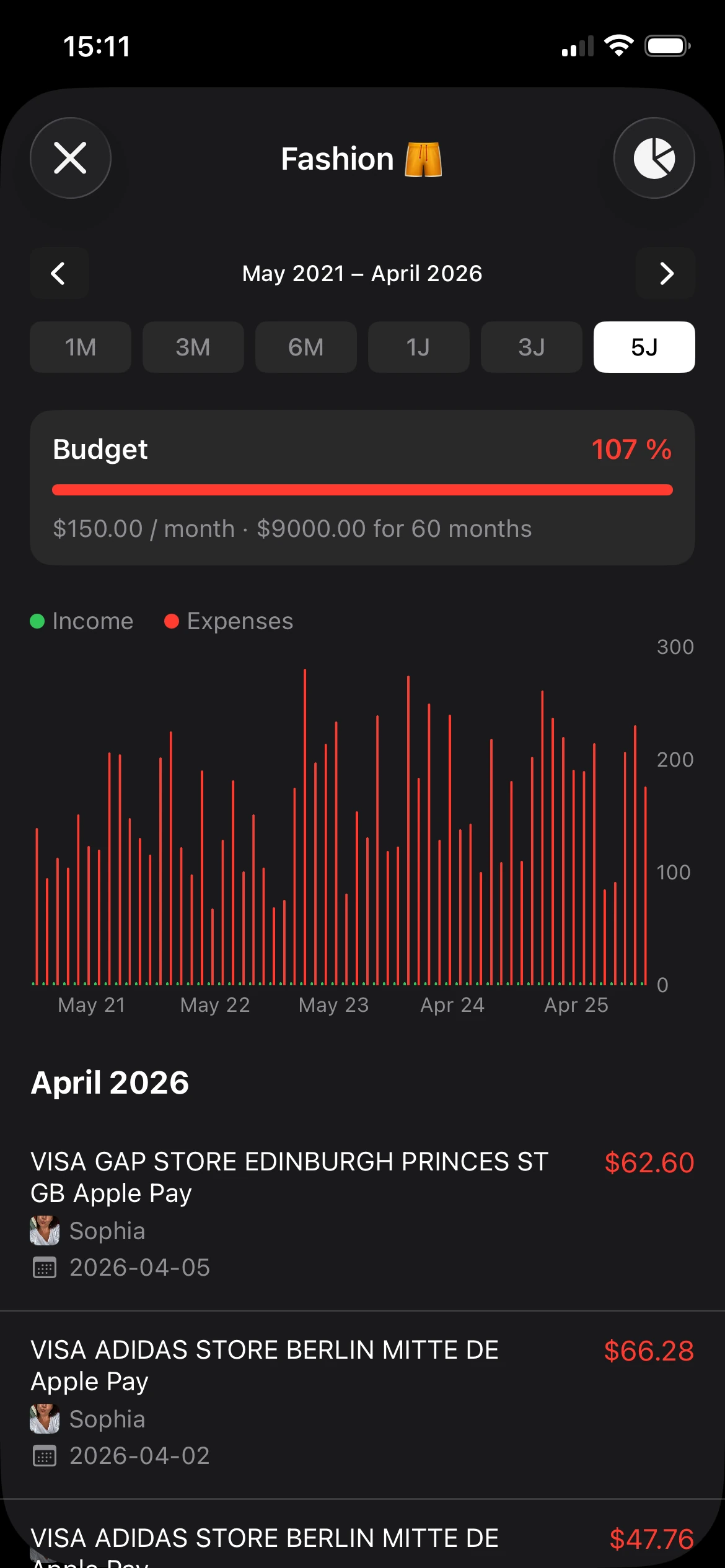
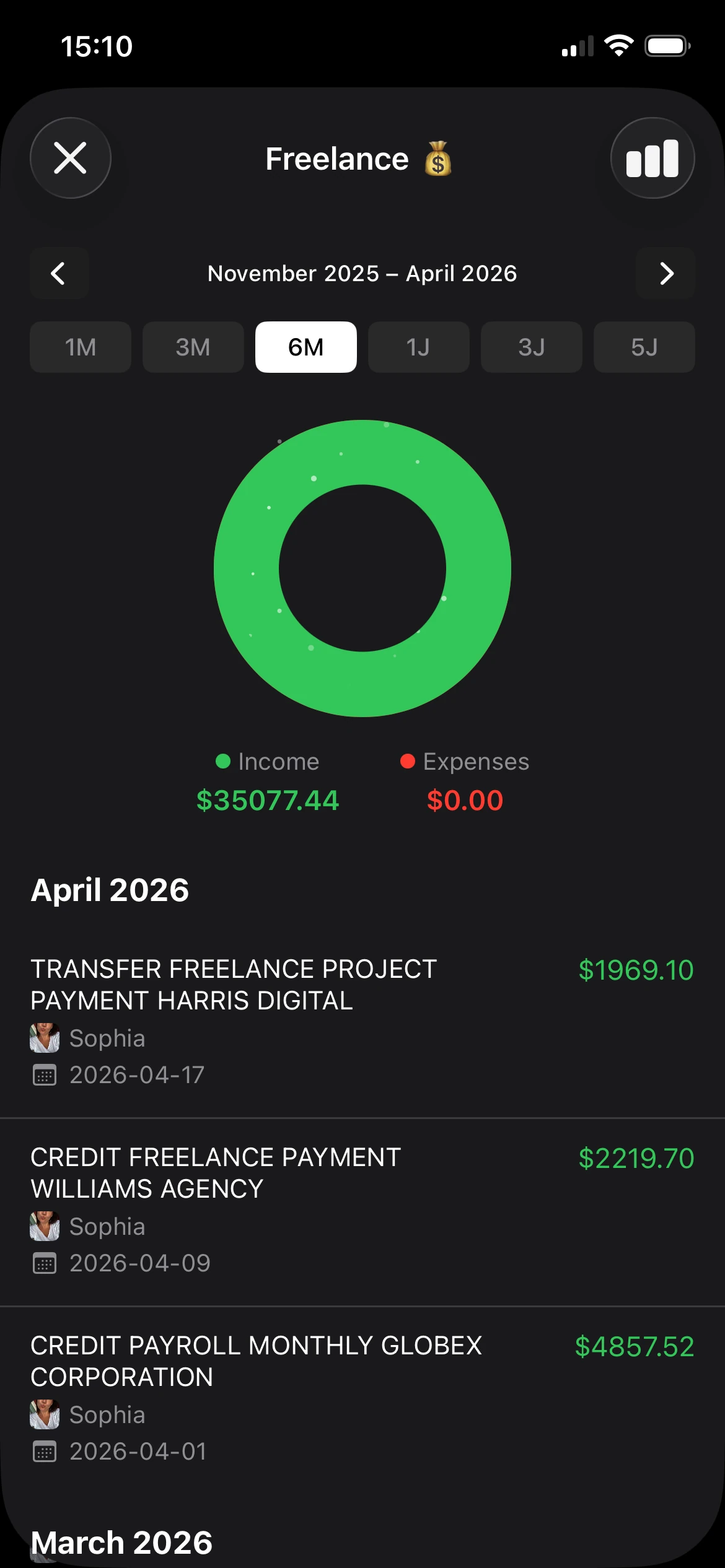
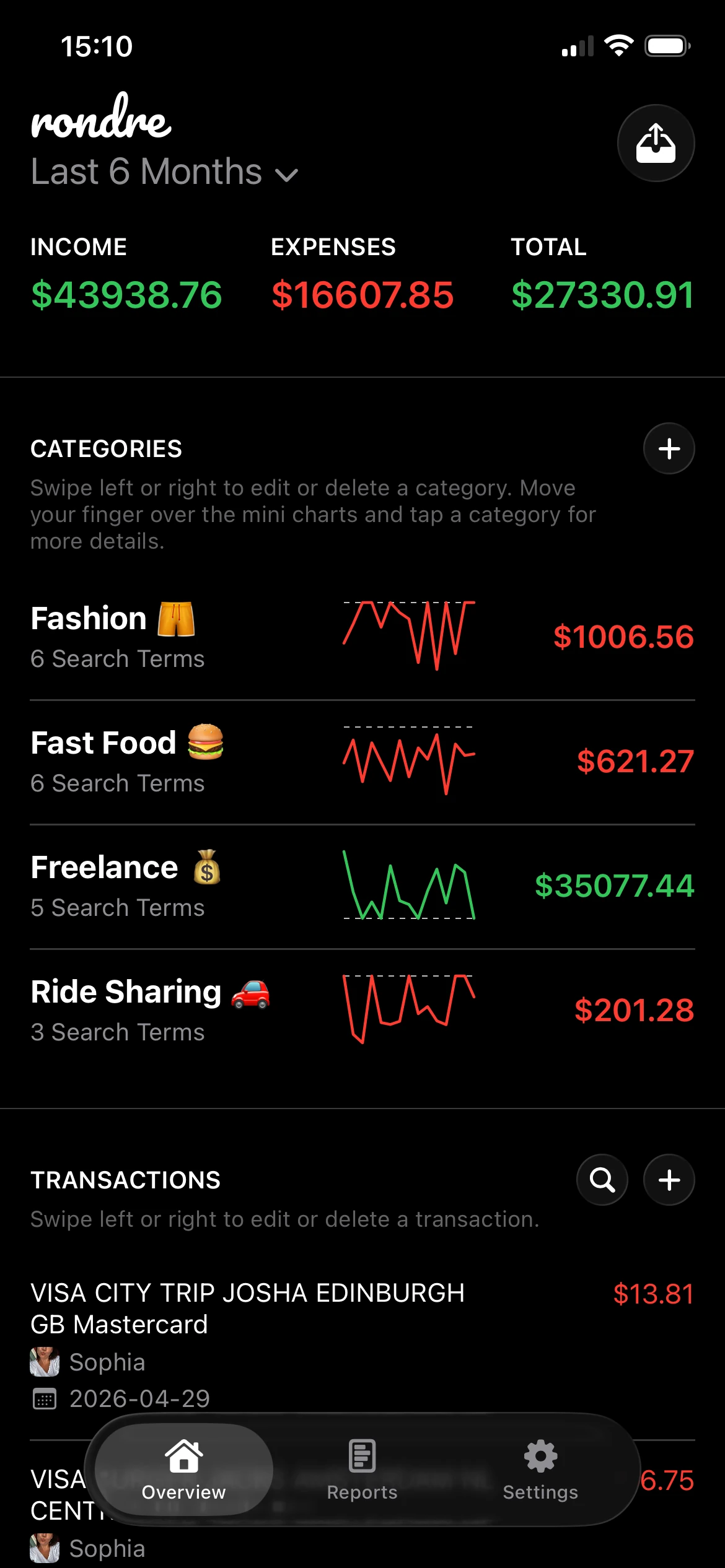
rondre fits well here because it's simple and private. A user can create a separate book for a car purchase goal, track down payment savings, import transactions by CSV or PDF bank statement, and organize spending with custom categories and search terms. Shared books can also help couples or family members plan together if the vehicle affects a household budget.
Because rondre is free, has no ads, no tracking, and no sign-up, it's easy to use just for the planning stage or to keep tracking after the loan starts. Anyone thinking ahead about payoff strategies can also review the best way to pay off an auto loan.
The key takeaway is simple. A credit score to finance a car matters, but the smartest move is usually the buyer who knows the budget, compares lenders, and tracks the actual monthly impact before signing.
rondre helps turn car financing decisions into something concrete. Instead of guessing whether a payment will work, readers can use rondre to track income and expenses, create a dedicated car budget, import bank data, and even share a book with a partner or family member. It's free, private, has no ads, and doesn't require an account, which makes it an easy tool to use today before applying for a loan.