That car payment can start to feel permanent. The money leaves the account every month, but the balance seems stubborn, and the finish line keeps moving. For many drivers, that’s the most frustrating part. The payment becomes normal long before the loan feels smaller.
The best way to pay off auto loan debt faster usually isn’t one dramatic move. It’s a plan that matches real cash flow, uses the right payoff method, and removes the common mistakes that slow progress down. A borrower who understands the loan, chooses a workable strategy, and tracks every extra payment has a much better shot at getting rid of that debt early.
Owning the car outright changes more than one line in the budget. It creates room. It reduces stress. It gives the borrower one less monthly obligation to carry.
Table of Contents
- Your Roadmap to a Debt-Free Drive
- First Assess Your Loan and Your Budget
- Choose Your Payoff Strategy
- Master These Accelerated Payment Tactics
- Smart Moves for Couples and Special Cases
- Start Your Payoff Journey Today
Your Roadmap to a Debt-Free Drive
The monthly payment clears, the car keeps running, and the loan fades into the background. Then one day the balance still looks stubbornly high, and it becomes clear that "paying on time" is not the same as "paying it off quickly."
A better approach is to treat the loan like a short project with a visible finish line. That changes the goal from keeping up to actively cutting months and interest off the debt.
The plan does not need to be complicated. It needs to answer a few practical questions fast:
- What is the actual target?
The current balance shows what still has to be cleared. - What is slowing progress?
The rate and remaining term show how expensive it is to let the loan run its full course. - Where will extra money come from?
The answer usually sits in the household budget, whether that means trimming spending, redirecting a windfall, or adjusting other debt priorities. - How will progress stay visible?
A payoff plan works better when the balance trend is easy to see month by month.
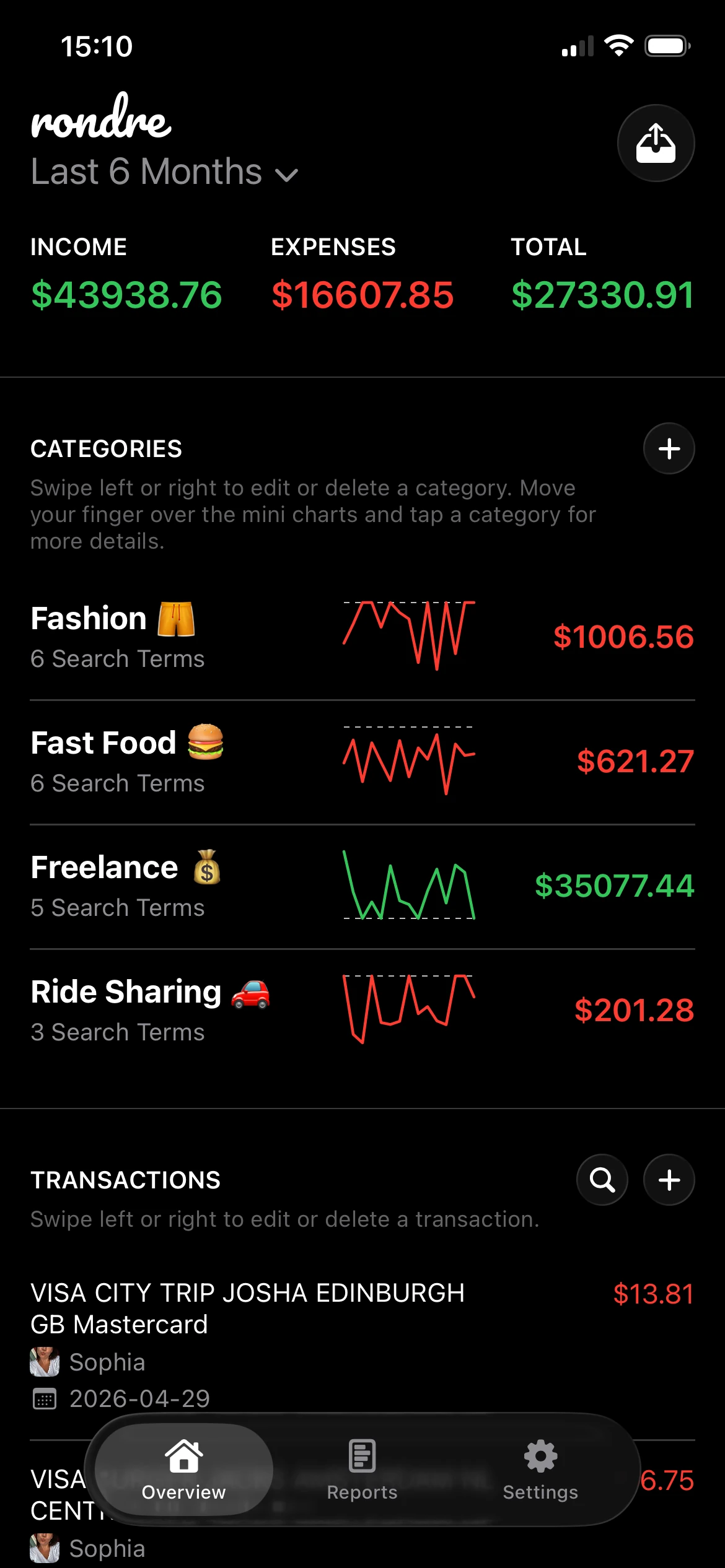
Visibility matters more than people expect. Couples do better when both people can see the same target. Solo borrowers do better when extra payments stop feeling random and start feeling measurable. A privacy-first tracker like rondre gives that line of sight without building a spreadsheet from scratch, and a simple household budget that shows where extra loan payments can come from makes the plan easier to stick with.
One extra payment strategy can work well for one borrower and fail for another. A large annual lump sum works if cash flow is uneven. Small automatic overpayments work better for many households because they are easier to repeat.
The best way to pay off auto loan debt is the method that fits real cash flow, survives a busy month, and keeps progress visible enough to stay motivating.
First Assess Your Loan and Your Budget
A lot of borrowers start with motivation and skip the math. Then the first extra payment goes out, the balance barely moves, and the plan loses steam.
Start with the loan terms and your real monthly cash flow. That gives you a payoff plan you can trust.

Pull the numbers that matter
The loan statement usually has everything needed to make a smart decision. Focus on three numbers first:
- Remaining balance
Use the current payoff amount or principal balance, not the original amount financed. - APR
The rate tells you how expensive it is to carry the loan longer. - Remaining term
This shows how many months the payment will keep taking space in your budget if nothing changes.
Those numbers work together. A payment can feel affordable and still cost too much over time. As noted earlier, longer auto loans usually mean more total interest paid, even when the monthly bill looks manageable.
Then check the lender’s rules for extra payments. Some lenders apply any overpayment to next month’s bill unless you tell them to send it to principal. Others let you choose inside the payment portal. A few still require a phone call or written instruction.
That step matters more than people expect.
If extra money is not being applied the right way, you may lower the next due date without cutting much interest or shortening the loan by much. The statement shows the balance. The payment policy shows whether extra effort will shorten the loan.
Find room in the budget without guessing
The best payoff plan is one your budget can carry in a normal month, not just in an optimistic one.
Review the last one to two months of spending and look for money that can be reassigned to the car loan. The goal is not to make life miserable. The goal is to stop treating extra payments like a vague intention.
A practical review looks like this:
- List fixed bills first
Housing, utilities, insurance, minimum debt payments, groceries, and the regular car payment. - Review variable categories
Takeout, subscriptions, shopping, rideshares, convenience spending, and weekend spending are common places to find room. - Flag uneven income and windfalls
Bonuses, tax refunds, side work, reimbursements, commissions, and gift money can become planned principal payments.
If you want a cleaner setup before you increase payments, this guide to creating a household budget gives you a simple way to sort fixed costs, flexible spending, and extra cash.
For couples, this part works best when both people can see the same numbers and agree on the amount available for payoff. For solo borrowers, the win is clarity. You stop wondering whether you can afford an extra payment and start seeing the answer in plain view. A tracker like rondre helps by making progress visible month by month without building a spreadsheet from scratch or sharing more data than you want to share.
Match the payment style to the way money comes in
A borrower with steady paychecks can usually commit to a fixed extra amount each month. Someone with variable income may do better with smaller baseline overpayments and a rule for sending lump sums when cash comes in.
Use the pattern that fits your life:
| Situation | Better starting move |
|---|---|
| Income is stable and predictable | Set a fixed extra payment |
| Income changes month to month | Use flexible lump-sum principal payments |
| The payment feels high because of rate | Review refinancing options |
| Spending is scattered and hard to track | Tighten the budget before increasing payments |
This assessment is where a payoff plan becomes real. You know what the loan is costing, how your lender handles extra money, and how much you can send without creating a new problem somewhere else.
That is the point where progress stops feeling random.
Choose Your Payoff Strategy
A good payoff plan matches the actual problem. Some borrowers need to cut interest. Others need a faster finish line. Some just need a system that keeps extra money from disappearing into everyday spending.

The best way to pay off auto loan debt is usually one of three paths: pay extra toward principal, refinance to improve the terms, or create new cash flow and send that money to the loan. The right choice depends on your rate, your budget, and how predictable your income is.
A simple rule helps. If the loan terms are decent, attack principal. If the rate is expensive and your credit is stronger now, price out a refinance. If your budget has no room, build room first and assign that money to the car.
Principal attack
This is the cleanest strategy to run. Keep the current loan, add extra payments, and make sure the lender applies them to principal.
According to GTFederal Credit Union’s guidance on paying off a car faster, even modest extra payments can shorten the loan and reduce interest costs over time. That makes this a practical starting point for borrowers who want progress without opening a new loan.
It works best for a borrower with stable income and enough margin to commit to a repeatable amount each month. I usually tell people to pick a number they can sustain in a boring month, not just a good month. Consistency beats an aggressive plan that falls apart after six weeks.
This option also works well inside a visual tracker like rondre. Set the monthly target, log each extra payment, and watch the balance trend down. Couples can both see the same plan without passing a spreadsheet back and forth. Solo borrowers get the same benefit. Clear progress tends to reduce second-guessing.
Interest rate reduction
Refinancing changes the math instead of just adding effort. A lower rate can free up more of each payment for principal, and a shorter term can pull the payoff date closer.
The same source also notes that refinancing can be one of the faster ways to deal with a high-interest auto loan. That only helps if the new loan improves the numbers enough to justify the switch.
Check the trade-offs before signing:
- Lower rate, same payment
More of each payment goes toward principal, which can speed payoff without changing your routine much. - Shorter term
You may pay more each month, but you cut the total time in debt. - Longer term with a lower payment
This can ease monthly pressure, but it often slows payoff unless you keep paying the old amount.
A refinance is strongest when credit has improved, the current rate is high, and fees are low or nonexistent. It is weaker when the lender stretches the term so far that the lower payment feels good but keeps the debt around longer.
Cash flow boost
Some borrowers do not have a loan problem first. They have a margin problem.
In that case, the strategy is to create payoff money on purpose. Sell unused items. Route overtime, bonuses, tax refunds, or side income to the loan. Use a standing rule so the decision is already made before the money lands.
This path is especially useful for variable income. A freelancer, tipped worker, or commission-based earner may not want to promise a fixed extra payment every month. A better plan is often a base payment plus lump-sum principal reductions whenever income runs above the minimum needed for bills and savings.
Here’s the practical trade-off:
| Strategy | Best for | Main advantage | Main risk |
|---|---|---|---|
| Principal attack | Stable budgets | Easy to start and easy to track | Extra payments stop when cash gets tight |
| Interest rate reduction | High-rate loans | Better loan math | A new term can delay payoff if structured poorly |
| Cash flow boost | Tight or variable budgets | Creates new payoff money | Extra income can get spent elsewhere |
Many borrowers get the best result with a hybrid plan. Refinance if the terms clearly improve, then keep paying at the old amount. Or set a fixed monthly extra payment and add windfalls on top. In rondre, that hybrid approach is easy to follow because you can see the target, the actual payments, and the progress in one place instead of trying to piece it together from bank history.
Master These Accelerated Payment Tactics
A payoff plan gets faster when the mechanics are right. I’ve seen borrowers send extra money for months, then realize the lender treated it as an early payment instead of a true principal reduction. The effort was real. The progress was smaller than expected.

Use extra payments the right way
Extra payments work only when they lower principal.
According to Valley Credit Union’s breakdown of quick auto loan payoff, early auto loan payments often go heavily toward interest. That is why the instructions on an overpayment matter so much. If the lender applies the money to a future scheduled payment, you may stay current, but you may not shorten the loan the way you planned.
A practical routine looks like this:
- Ask the lender how to submit principal-only payments
Get the exact process, not a vague verbal answer. Some lenders need a memo line, a dropdown selection, or a separate payment channel. - Review the posted transaction
Check whether the principal balance dropped by the amount you expected. If it did not, contact the lender right away. - Keep a short payment log
Save the date, amount, confirmation number, and screenshot. This takes two minutes and makes disputes easier to fix.
In rondre, this is simple to monitor. Record the planned extra payment, then compare it with the balance change after the lender posts it. That visual check helps you catch errors early without building a spreadsheet.
Set up biweekly payments carefully
Biweekly payments can speed up payoff because the timing changes and the yearly total usually increases. Instead of one monthly payment, you send half the payment every two weeks. That adds up to 26 half-payments each year, or 13 full payments instead of 12, as explained in Valley Credit Union’s guide.
The same source gives a useful example. On a $10,000 loan at 7% APR over 48 months, a biweekly schedule can cut interest costs and shorten the term by more than a year.
This approach fits best when your paycheck already arrives every two weeks. The money leaves close to payday, and the rhythm is easier for many households to maintain than one larger extra payment each month.
Still, setup matters:
- Match the lender’s system
Some lenders offer true biweekly autopay. Others do not, and a homemade version can create timing issues if you are not careful. - Confirm how partial payments are handled
Ask whether each half-payment posts immediately or sits in suspense until a full monthly payment is reached. - Watch the first two cycles closely
Once the process works correctly, automation is useful. Before that, trust but verify.
If you share money decisions with a partner, biweekly payments are also easier to see and discuss. In rondre, both people can track the target, the posted payments, and the shrinking balance in one place, which cuts down on missed details and “I thought that already went through” moments.
Make rounding up automatic
Rounding up is one of the easiest ways to speed up an auto loan without putting pressure on the rest of the budget.
If your payment is $313, round it to $325 or $350. If it is $468, round it to $500. The amount is small enough to stick, but steady enough to matter over time, especially early in the loan when interest takes a bigger share of each payment.
The key is consistency. A modest bump paid every month usually beats an ambitious extra payment that lasts only two billing cycles.
Set the rounded amount as your default, then track the balance drop visually in rondre. Seeing the line move month by month keeps the plan concrete. That matters when motivation fades, or when life gets busy and you need the system to carry the plan for you.
Smart Moves for Couples and Special Cases
Some car loans are harder than the standard advice assumes. Two situations show up often. The borrower is upside-down, meaning the loan balance is higher than the car’s value, or the loan is shared with a partner and payment decisions affect two people instead of one.

When the loan is upside-down
Negative equity changes the payoff conversation. The borrower doesn’t just want to eliminate debt. The borrower also wants to close the gap between what’s owed and what the car could realistically sell for.
An estimated 35% of U.S. couples have joint auto loans, and with 15% to 20% annual vehicle depreciation, many become upside-down early in the term, according to PNC’s discussion of upside-down car loans. The same verified data notes that using bi-weekly payments can reduce the time spent in negative equity by 6 to 12 months compared to standard payments.
That makes one principle especially important. If the borrower is upside-down, rolling the balance into another vehicle often extends the problem unless the new deal is clearly better and fully understood. In many cases, the safer move is to stay put, keep the car, and attack principal until the equity position improves.
A practical focus helps:
- Delay trade-in decisions
Trading too early can carry today’s debt into tomorrow’s car. - Prioritize principal reduction
This is what closes the negative equity gap. - Keep the vehicle longer if it’s reliable
Time and principal paydown work together.
When two people share the loan
Shared loans fail when communication fails. One partner assumes extra payments are happening. The other thinks the minimum is enough. Both are stressed, and neither has a single clear view of progress.
The better approach is to agree on the method before money moves. Couples usually need answers to three questions:
- Who pays the base payment?
- Who funds extra payments, if any?
- What happens when one month is tighter than expected?
Shared debt needs a shared rule. Otherwise, every extra payment turns into a small negotiation.
A simple shared tracking setup helps more than a spreadsheet that only one person updates. A household can create one place to log the standard payment, mark principal-only extras, and review whether the plan is working. That’s especially useful when one partner contributes irregular income, side work, or seasonal bonuses toward the loan.
The payoff isn’t only financial. It reduces confusion, blame, and duplicated effort. Couples who can see the same numbers tend to make cleaner decisions.
Start Your Payoff Journey Today
A more complicated payoff theory isn’t necessary. What is needed is a starting move that can be repeated.
The best way to pay off auto loan debt is usually the plan that removes friction. Know the loan details. Pick one strategy that fits the budget. Use one acceleration tactic consistently. Check that every extra dollar hits principal the way it should.
Waiting for the perfect month tends to keep the loan alive. Starting with a manageable action creates momentum, and momentum changes behavior faster than good intentions do.
A simple first move works best:
- Open the lender portal
- Schedule one small principal-only extra payment
- Set a recurring reminder to review the loan once a month
That’s enough to break the feeling that the loan is running on autopilot.
The borrower who sends one small, correct extra payment today is in a better position than the borrower who keeps researching and does nothing. Action beats optimization at this stage.
The practical takeaway is simple. Pick one method before the day ends. If the budget is steady, start with a fixed extra payment or biweekly setup. If income is uneven, create a rule for sending part of every windfall to principal. Then track the result so the shrinking balance stays visible and real.
If keeping that payoff plan organized feels harder than making the payment itself, rondre gives iPhone users a simple private way to track it. A borrower can create a dedicated book for a car payoff goal, import transactions by CSV or PDF statement, label extra principal payments clearly, and even share the book with a partner when the loan is joint. There’s no account, no ads, no tracking, and no subscription barrier, which makes it a practical tool for staying consistent without building another spreadsheet.