A lot of couples don’t realize how messy food spending has become until they look at a full month at once. The grocery run feels reasonable. The coffee stop barely registers. Takeout after a long day seems justified. Then the card statement lands, and food has taken over more of the month than expected.
That’s why a useful monthly food budget for 2 starts with coordination, not restriction. Two adults can eat well on many different budgets, but the money usually slips away in the same places: duplicate grocery trips, vague dinner plans, overbuying ingredients for one recipe, and treating restaurant spending as separate from the overall food budget. Couples who get this under control usually don’t become extreme. They just start acting like a team.
Table of Contents
- The Unspoken Cost of Unplanned Grocery Trips
- First Know Your Numbers by Calculating Your Current Food Spend
- Set Your Target with Realistic Food Budgets for Two
- Smart Strategies to Meet Your New Budget
- Track and Adjust Together with a Shared System
- Quick Answers to Common Food Budgeting Questions
The Unspoken Cost of Unplanned Grocery Trips
One partner grabs milk on the way home because it seems like the fridge is empty. The other stops for eggs and salad because dinner needs to happen fast. Later that night, there are three dairy items in the fridge, no real plan for the week, and a takeout order because nobody wants to piece together random ingredients.

That pattern is common. It doesn’t look reckless in the moment. It looks like two busy people trying to keep life moving. But unplanned food spending creates small leaks everywhere: duplicate purchases, impulse extras, emergency takeout, and produce bought with good intentions that never gets used.
The broader numbers show why this matters. The U.S. Bureau of Labor Statistics reports that the average American household spent $831 monthly on food, and for a two-adult household this often falls between $600 and $850, a figure that has risen significantly due to grocery inflation over the past five years, according to Remitly’s summary of Consumer Expenditure Survey data.
Where couples usually lose control
Most couples don’t overspend because they love luxury groceries. They overspend because their food decisions happen separately.
- Duplicate shopping runs often lead to buying the same staples twice.
- Loose dinner plans make convenience spending feel necessary.
- Different mental budgets create friction. One person thinks snacks are part of groceries, the other treats them like extras.
- No shared list means the household buys what sounds good in the moment, not what supports a week of meals.
Food spending gets expensive when each purchase makes sense by itself, but the month doesn’t make sense as a whole.
A better system doesn’t need to feel strict. It just needs to answer three questions clearly: what’s already at home, what still needs buying, and how much room is left this month. When couples can see those answers together, grocery decisions stop feeling random. They start feeling manageable.
First Know Your Numbers by Calculating Your Current Food Spend
Before setting a target, a couple needs a baseline. That means pulling together all food spending, not just supermarket receipts. A realistic picture includes groceries, takeout, coffee, lunches bought at work, delivery fees folded into food orders, and those quick convenience-store stops that tend to disappear from memory.
The easiest way to do this is to review the last month of transactions rather than guessing. Budgeting coaches note that proper tracking improves follow-through, and that importing past spending by CSV can cut the adjustment time for a new budget in half compared to manual spreadsheets, according to My Budget Coach’s grocery budget guidance.
What to include in the total
A clean monthly food budget for 2 usually gets derailed by partial tracking. If a couple only counts groceries, the number will look better than reality.
Count these together:
- Groceries from supermarkets, warehouse clubs, and smaller markets.
- Takeout and delivery from food apps and direct restaurant orders.
- Dining out including casual lunches and date-night meals.
- Coffee and snacks bought on the go.
- Workday food spending that gets missed because it feels routine.
A practical way to pull the numbers
Manual entry sounds disciplined, but it usually creates resistance. Most couples will stick with the process longer if setup is simple.
A straightforward workflow looks like this:
- Import past statements from the last 30 days using a CSV or PDF export from the bank.
- Tag food transactions into broad buckets such as groceries, dining out, and coffee.
- Scan for patterns instead of judging individual purchases.
- Add one shared note about what made the month unusual, such as travel, guests, or a hectic work stretch.
Practical rule: Don’t build a new budget from memory. Build it from transactions.
What the baseline often reveals
The total usually exposes one of three issues. Some couples are spending more than expected on restaurant food. Others are doing fine on takeout but losing money in scattered grocery trips. A third group finds that both areas are manageable, but convenience purchases keep nudging the total upward.
That’s why the first month should be observational. The point isn’t to slash spending overnight. The point is to find the actual starting line so the next target has a chance of being sustainable.
Set Your Target with Realistic Food Budgets for Two
A target should fit real life. It has to match income, location, cooking habits, and what the couple prioritizes. Some households are happy eating a tight rotation of home-cooked meals. Others want room for specialty foods or regular meals out. Neither approach is wrong, but the budget has to be honest.
According to budgeting experts and USDA 2025 data, a typical moderate monthly grocery budget for two adults ranges from $550 to $750, budget-conscious couples can target $450 to $550, and couples prioritizing organic or specialty items may spend $700 to $850, based on this grocery budget breakdown for couples.

Three useful budget lanes
These aren’t rigid formulas. They’re practical lanes a couple can choose from and adjust.
Lean and efficient
This lane works best for couples who cook most meals at home, repeat staples often, and keep restaurant spending limited. It usually means tighter planning, fewer impulse items, and a short list of dependable meals.
Moderate and balanced
This is the most sustainable lane for many couples. It allows for regular grocery shopping, some convenience foods, and occasional dining out without making every week feel like a challenge.
Comfortable and flexible
This lane suits households that buy premium ingredients, enjoy specialty diets, or want plenty of room for meals out. It’s still a budget, just one with more breathing room.
For couples still building the rest of the household plan, this guide on how to create a household budget helps place food spending in the bigger monthly picture.
Sample monthly food budgets for a couple
| Category | Lean Budget (~$550/mo) | Moderate Budget (~$750/mo) | Comfortable Budget (~$950+/mo) |
|---|---|---|---|
| Groceries | $450 to $500 | $550 to $650 | $700 to $850 |
| Dining out | Limited and planned | Occasional | Regular and flexible |
| Coffee and snacks | Mostly home-based | Some convenience spending | Frequent convenience or premium items |
| Best fit | Aggressive savings goals | Balanced routine | Food-forward lifestyle |
A few notes matter here. First, the table mixes verified grocery benchmarks with qualitative spending patterns for the rest of the category. That’s intentional. There isn’t one universal split between groceries and dining out, so couples should choose based on their own routines.
Second, the target should feel slightly disciplined, not punishing. If a couple currently spends well above the chosen lane, it’s smarter to step down gradually than to force a dramatic cut that falls apart by the second week.
Smart Strategies to Meet Your New Budget
A budget only works if daily habits support it. Most couples don’t need a dramatic food overhaul. They need a few repeatable moves that lower waste, reduce decision fatigue, and make it easier to stay aligned during busy weeks.
One of the biggest traps is the one-off recipe. The “specific ingredient trap” can make a home-cooked meal 1.5 times more expensive than takeout, and couples who use overlapping staples for repeatable meals can cut variety-driven costs by up to 35%, according to research discussed in this public health and budgeting source.

Build meals around overlap
The cheapest useful meal plan is rarely the most exciting one on paper. It’s the one that reuses ingredients well.
A smarter pattern is to choose a handful of dinners that share a base. Rice, eggs, pasta, potatoes, frozen vegetables, yogurt, tortillas, beans, and a few proteins can stretch across multiple meals without feeling identical.
- Pick anchor ingredients that appear in several meals, not just one.
- Repeat breakfasts and lunches on workdays to reduce decision fatigue.
- Use one flexible night each week for leftovers, bowls, wraps, or fried rice.
A good meal plan doesn’t try to impress the grocery cart. It tries to empty the fridge by the end of the week.
Shop in a way that protects the plan
The shopping list should serve the meals, not the other way around. Couples who shop without checking what’s already at home usually end up replacing half-used items instead of finishing them.
A few habits help:
- Check the fridge before leaving so both people know what’s already covered.
- Choose frozen produce when practical because it’s easier to use fully and tends to fit a longer planning window.
- Avoid novelty purchases unless they fit at least two meals.
- Keep a shared staple list for items that should be replaced consistently.
Short grocery trips are often safer than wandering trips. The longer the store visit, the more likely the cart shifts from ingredients to entertainment.
Treat dining out like part of the budget
Restaurant spending isn’t the enemy. Unplanned restaurant spending is usually the problem.
Some couples do best when they decide in advance how often they’ll eat out. Others prefer a set amount reserved for convenience, date nights, or social meals. Either way, dining out should sit inside the same food budget, not outside it.
A simple approach works well:
- Choose the meals out ahead of time when possible.
- Use home-cooked meals to protect busy days rather than hoping motivation appears at 7 p.m.
- Save one easy backup meal at home for nights when the plan slips.
That combination tends to work better than trying to “be good” all month and then rebounding into takeout.
Track and Adjust Together with a Shared System
Couples usually don’t fail at food budgeting because the target was unreasonable. They fail because one person is tracking mentally, the other is estimating loosely, and neither has a shared view of what the month looks like right now.
That’s why spreadsheets often break down for shared food spending. They’re easy to postpone, awkward to update from two places, and rarely checked in the moment of purchase. A shared system works better because both people can see the same reality without needing a separate budget meeting every time someone buys groceries.

Why shared visibility matters
Food is one of the most frequent shared expenses in a household. It changes week to week, and both partners usually influence it. When only one person tracks it, the budget can start to feel like supervision instead of teamwork.
A better setup gives both people access to the same categories and the same running total. That changes the tone. Instead of asking, “Who spent this?” the conversation becomes, “Do these choices still fit the month we want?”
Useful shared tracking should make it easy to:
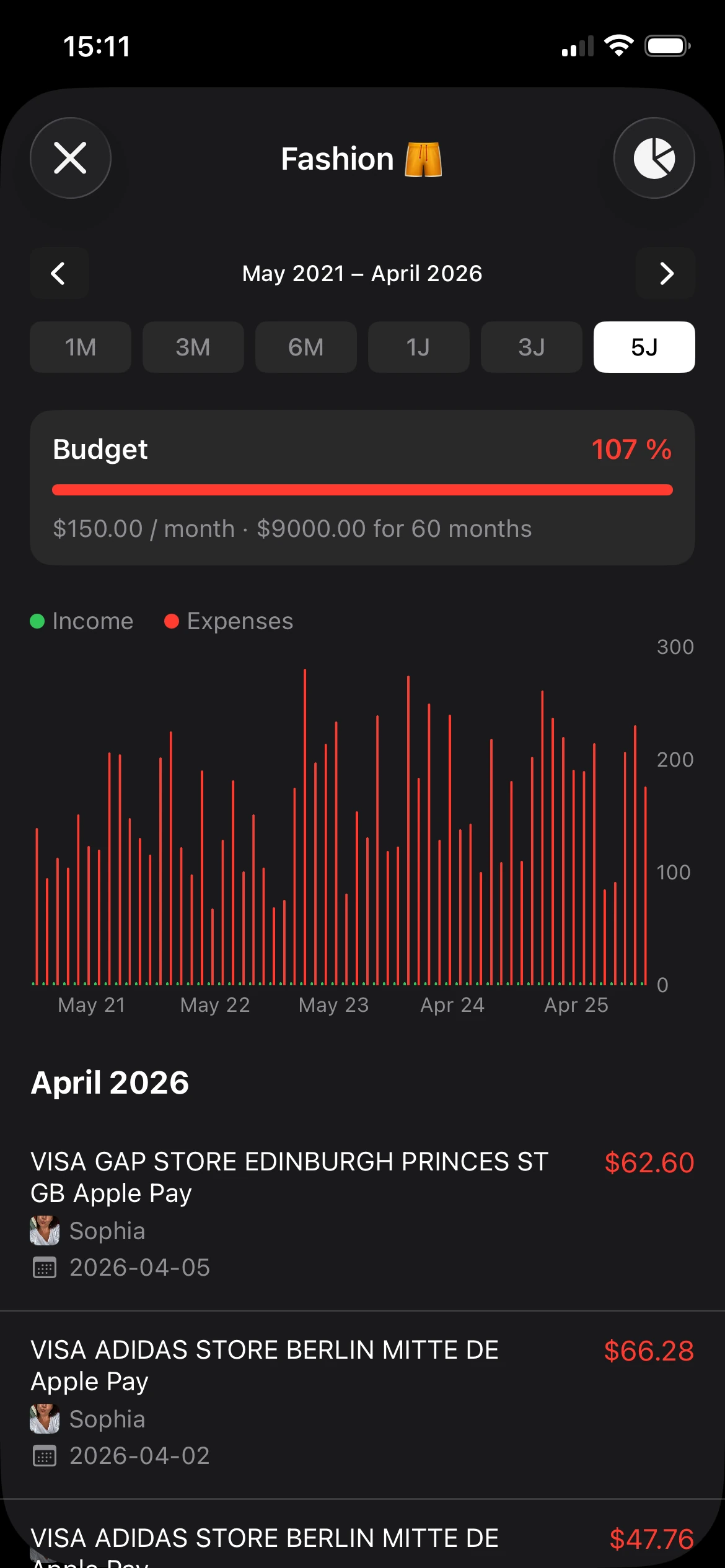
- See grocery and restaurant spending in one place
- Search past transactions quickly
- Separate food into useful categories
- Check progress mid-month, not just after the damage is done
A simple weekly check-in
The strongest budgeting habit for couples is often a short review, not constant discussion. Ten calm minutes is more effective than lots of reactive comments after random purchases.
A good weekly check-in can be this simple:
- Look at total food spending so far.
- Compare groceries versus dining out.
- Decide whether the next shop needs to be normal, leaner, or restock-heavy.
- Agree on any meals out that are still planned before month-end.
Shared budgeting works best when both people can see the same number without asking permission to view it.
That routine keeps the budget active without making food feel tense.
Quick Answers to Common Food Budgeting Questions
What if the couple lives in a high-cost city
National benchmarks are useful, but they don’t always travel well. Generic USDA-style ranges often miss location differences. Food costs in major U.S. urban centers can be 10 to 25 percent higher than the national average, while other markets such as the UK or Australia can vary significantly, according to this discussion of regional grocery budget differences.
The practical fix is simple. Start with a national benchmark that fits the household style, then adjust upward if local store prices consistently make that target unrealistic. The budget should reflect actual shelf prices, not wishful thinking.
Do diet choices change the budget much
Yes, sometimes sharply. Plant-based eating can be very affordable when the plan leans on beans, lentils, grains, eggs, and repeat staples. Keto, gluten-free, and specialty-organic shopping often push the total higher because the basket relies more on premium products and niche replacements.
The key is to price the diet the couple follows, not the one they hope to follow. A food budget works better when it matches real meals bought repeatedly.
What if income changes month to month
Use a floor, not a fantasy number. A couple with fluctuating income should base the monthly food budget for 2 on a dependable lower-income month, then loosen it only when the month supports that.
That usually means keeping a stable grocery core and letting dining out flex up or down. Groceries are easier to plan. Restaurants and convenience spending are easier to trim when cash flow tightens.
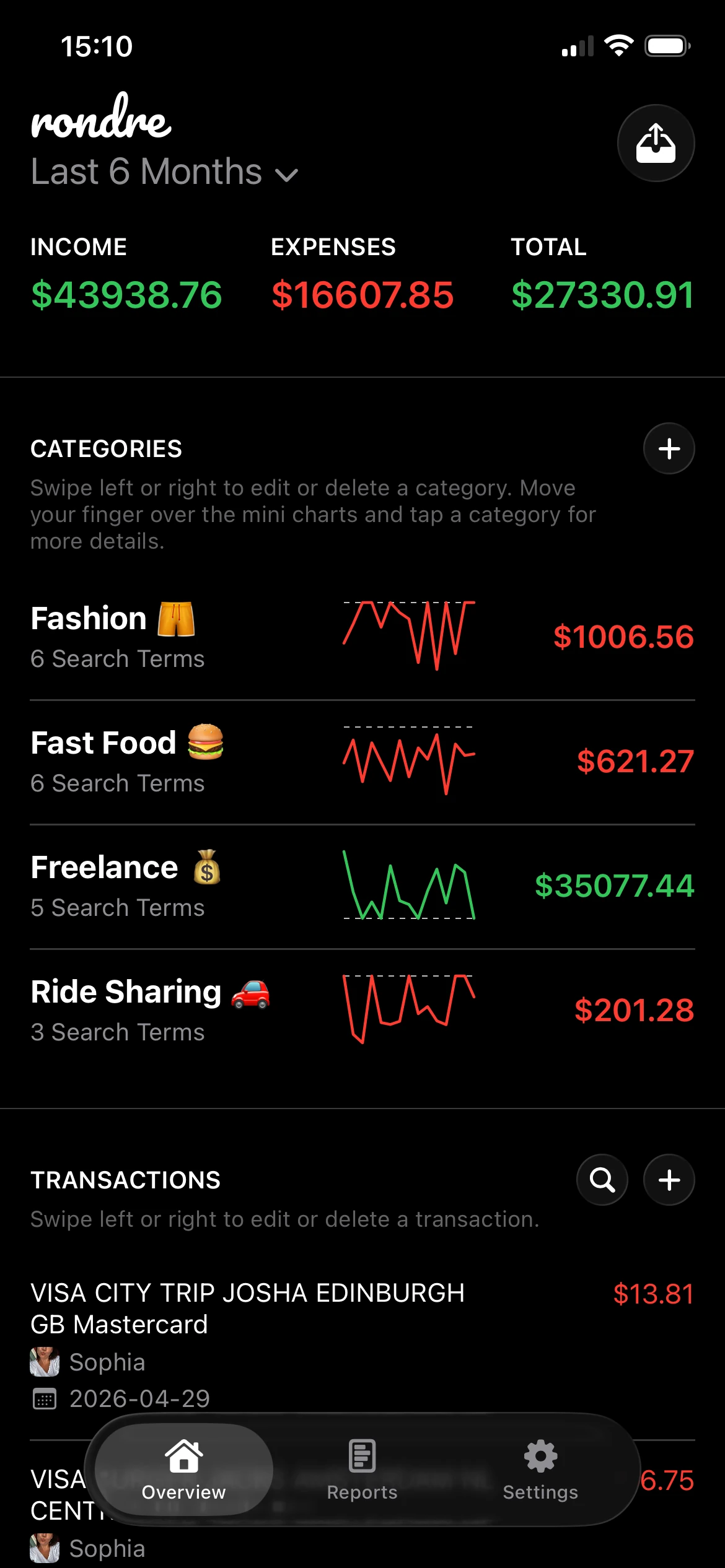
A simple next step is to review the last 30 days of food spending together and sort it into groceries, dining out, and coffee or snacks. If a private, lightweight tool would make that easier, rondre gives couples a free way to track shared expenses, import statements, organize categories, and keep the whole budget visible without ads, tracking, or sign-up.