Variable expenses are costs that change from month to month based on usage or consumption, like groceries, gas, or utility bills. In personal finance, average monthly variable spending for groceries and transport was $1,200 in 2023, and those costs often varied 20 to 30% month to month based on consumption.
That’s why a budget can look fine on paper and still feel shaky in real life. Rent may stay the same, but food, fuel, dining out, and household extras can creep up until the month ends with a surprise.
A lot of people don’t have a budgeting problem so much as a variable expense visibility problem. The money isn’t disappearing. It’s moving through categories that change every week.
Table of Contents
- Why Your Budget Feels Unpredictable (And What to Do About It)
- Understanding the Definition of Variable Expenses
- Variable vs Fixed Expenses A Clear Comparison
- Common Examples of Variable Expenses in Your Life
- Smart Budgeting Strategies for Variable Expenses
- How to Track and Analyze Your Variable Costs with rondre
- Frequently Asked Questions About Variable Expenses
Why Your Budget Feels Unpredictable (And What to Do About It)
A common month goes like this. The fixed bills are covered early. Rent is paid, subscriptions clear, insurance is handled, and everything seems under control.
Then real life starts stacking up. A few grocery runs cost more than expected. Gas gets refilled more often. Someone grabs takeout twice in one week, then a third time because the fridge is empty. By the end of the month, the budget feels broken even though nothing dramatic happened.
That pattern usually points to variable expenses. These are the parts of a budget that move with habits, timing, seasons, errands, and convenience. They don’t always look dangerous because each purchase seems ordinary on its own.
Variable expenses rarely wreck a budget in one big moment. They usually do it through a string of reasonable purchases that never got grouped together.
That’s also why people get frustrated. Fixed expenses are easy to blame, but they’re often the most predictable part of the month. Variable expenses are trickier because they ask for ongoing attention, not a one-time decision.
A better approach starts with noticing three things:
- Which costs move most often: groceries, transport, dining out, utilities, and personal spending are common trouble spots.
- Which categories feel fuzzy: if spending gets filed under “miscellaneous,” it’s hard to spot patterns.
- Which purchases happen automatically: not by subscription, but by habit. Coffee, delivery, quick store runs, and top-up purchases add up fast.
Once those fluctuating costs are named clearly, the budget usually feels less random. The goal isn’t to make every month identical. The goal is to make changing costs visible enough that they stop surprising people.
Understanding the Definition of Variable Expenses
A solid variable expenses definition is simple. Variable expenses are costs that change in direct response to how much a person uses, buys, or does. They’re different from fixed expenses, which stay the same regardless of activity.

What makes an expense variable
Three traits usually show up together.
- It changes month to month: grocery spending rarely lands on the exact same amount every time.
- It responds to behavior: more driving means more fuel. More meals at home can shift spending away from restaurants and toward groceries.
- It usually offers some short-term flexibility: a person may not be able to cut rent quickly, but they can often adjust takeout, entertainment, or shopping choices faster.
This is why variable expenses matter so much in personal budgeting. They’re the categories people touch all the time. They reflect routines, preferences, stress, convenience, and household needs.
According to Navan’s explanation of variable expenses, variable expenses align with the 50/30/20 budgeting rule, where 30% of after-tax income goes to wants, often including variable spending like entertainment. The same source notes that average monthly variable spending for groceries and transport was $1,200 in 2023, often varying 20 to 30% month to month based on consumption.
A simple way to think about it
A car offers an easy analogy.
The car payment is fixed if it stays the same every month. The gas bill is variable because it depends on how far the car is driven. Some months involve commuting, school runs, and road trips. Other months don’t.
That same logic applies across a household:
| Expense | Why it’s variable |
|---|---|
| Groceries | The total shifts with prices, meal planning, and household needs |
| Gas | Spending changes with mileage and travel patterns |
| Electricity | Usage changes the bill |
| Dining out | It depends on choices and frequency |
| Household supplies | More use usually means more spending |
Practical rule: If the amount changes because usage changes, it’s usually variable.
Some variable costs are needs, and some are wants. That’s where readers often get confused. Groceries are necessary, but still variable. Dining out is more optional, and also variable. The key isn’t whether the expense is “good” or “bad.” The key is whether the amount changes with consumption.
Variable vs Fixed Expenses A Clear Comparison
A budget gets easier to trust once you separate the costs that stay put from the costs that keep shifting. Fixed expenses usually hold the same shape each month. Variable expenses respond to real life.

The core difference
The difference is simple. A fixed expense is usually tied to a contract, plan, or recurring obligation. A variable expense changes with usage, habits, timing, or demand. Readers who want a closer look at the fixed side can compare this guide with this definition of fixed expenses.
One practical way to picture it is to compare your budget to a house. The fixed expenses are the walls. They create structure. The variable expenses are more like the temperature inside. They rise, fall, and need more frequent adjustment.
| Characteristic | Fixed Expenses | Variable Expenses |
|---|---|---|
| Payment pattern | Usually the same each month | Changes from month to month |
| Predictability | Easier to forecast | Harder to forecast |
| What drives it | Agreements or recurring obligations | Usage, consumption, behavior |
| Short-term control | Usually limited | Usually higher |
| Common examples | Rent, loan payments, set subscriptions | Groceries, gas, utilities, dining out |
That comparison matters because the two categories need different habits. Fixed expenses often need a review only when income changes, a contract renews, or a bill increases. Variable expenses need more active tracking because small changes pile up fast.
This aspect often causes many households to stumble. A couple may know the rent down to the dollar, but still feel like money disappears because food, fuel, school extras, and weekends out never land on the same number twice. Families see the same pattern with sports fees, birthday gifts, and seasonal utility bills. Freelancers feel it on both the personal and business side, especially when project costs rise and fall from month to month.
Where semi-variable costs fit
Some expenses sit in the middle. They are semi-variable, which means one part stays steady and another part changes.
A phone bill is a common example. The monthly plan may be fixed, but overage charges or add-ons can change the total. Utilities often work the same way. There may be a base service fee plus a charge tied to usage.
A simple sorting method helps:
- Pure fixed: the amount stays the same unless the contract or plan changes
- Pure variable: the amount rises and falls with use
- Semi-variable: one part stays stable, while another part moves
This matters less for labeling and more for tracking. If you put a semi-variable bill in the fixed bucket and ignore it, your budget can drift without much warning. In rondre, it helps to split that expense into a stable base and a flexible portion so the pattern is easier to see over time.
That small adjustment gives couples cleaner shared budgets, gives families a better view of changing household costs, and gives freelancers a clearer line between recurring bills and activity-based spending.
Common Examples of Variable Expenses in Your Life
Some variable expenses are obvious. Others hide inside everyday routines and don’t stand out until a few months of spending are reviewed together.

Personal and household examples
A household usually sees variable expenses in categories like these:
- Groceries: spending shifts with prices, meal plans, guests, and how often people cook at home.
- Gas and transport: more driving usually means higher fuel costs.
- Utilities: the bill may move with heating, cooling, water use, or electricity use.
- Dining out: this category changes quickly when schedules get busy.
- Entertainment and personal spending: movie tickets, hobbies, gifts, snacks, and spontaneous shopping all fit here.
Households also run into less frequent variable costs, such as home supplies, minor repairs, school extras, or seasonal purchases. These don’t appear every week, but they still belong in the variable side of the budget because the amount and timing change.
Freelance and self-employed examples
Freelancers usually deal with a second layer of variable expenses linked to work.
Client travel, shipping, project-based software, materials, printing, and job-specific purchases can all rise and fall depending on workload. Even a month with strong income can feel tight if those moving costs aren’t tracked separately.
A useful check is to ask, “Would this cost shrink in a slower month?” If the answer is yes, it’s probably variable.
That matters even more for people with irregular income. A self-employed person may not need a perfect forecast. They need a clear list of which costs rise automatically when work or life gets busier.
Smart Budgeting Strategies for Variable Expenses
You check your account halfway through the month and the budget looks fine. Then a bigger grocery trip, two takeout nights, extra driving, and one school or work purchase push everything off track. Variable expenses often feel random for that reason. They arrive in small waves, not one dramatic bill.
A better budget gives those waves a place to go.
Start with a real baseline
A variable expense budget works best when it starts from recent spending, not from a number that feels responsible in the moment. Pull the last few months of groceries, fuel, dining out, utilities, and other shifting categories. Then use that history to set a starting point.
For freelancers, this matters even more because business spending can rise right along with project volume. A practical rule is to average recent months and leave extra room for busier periods. As noted earlier, guidance on variable expenses often suggests using recent averages rather than guessing. The same idea works for households, couples, and families.
If you use rondre, this is a good first win. Import transactions, sort them into clean categories, and look for your normal range instead of chasing a perfect number.
Give each category some breathing room
Variable expenses rarely behave well under rigid caps. Groceries jump when prices rise. Gas climbs during a busy week. Family spending changes fast when schedules change.
A flexible setup usually holds better:
Set a target range, not a single hard line
A range reflects real life better than one exact number. If groceries usually land between two amounts, budget for that range.Keep a flex category
This can catch the month’s odd extras, such as school events, household supplies, or one-off work costs. It keeps every surprise from looking like a budgeting failure.Review spending weekly
Weekly check-ins are early enough to help and short enough to stick with. You can spot drift before the month is almost over.
For couples, shared visibility matters here. If one person thinks dining out is still on track and the other has already made three convenience purchases, the problem is not discipline. It is timing and visibility. A shared tracker helps both people react to the same numbers.
Split mixed bills into fixed and variable parts
Some expenses blur the line. A phone bill may have a standard monthly charge plus overages. A utility bill may include a regular service fee plus usage that changes. If you lump the whole thing into one bucket, the budget gets harder to read.
Use a simple sorting rule:
- Put the stable base in fixed expenses
- Put the changing portion in variable expenses
- Mark unusual spikes so you remember why they happened
This works like separating the membership fee from what you spend once you walk inside the store. The fixed part tells you what shows up no matter what. The variable part shows where your choices, workload, or season changed the total.
Plan for low-frequency surprises
Some variable expenses are sneaky because they do not happen every week. Pet supplies, kids' activities, home items, gifts, and freelance project purchases can stay quiet for a while, then hit all at once.
Treat these like uneven waves instead of true surprises. If they appear every few months, give them a small monthly placeholder. That turns a frustrating spike into something expected.
Families often benefit from this approach quickly. Freelancers do too, especially when work-related purchases are mixed in with personal spending. Keeping those categories separate makes it easier to see whether pressure came from home life, client work, or both.
Adjust the system, not just your behavior
If the same category breaks the budget month after month, the answer is usually not "try harder." The category may be too broad, the baseline may be too low, or the budget may need a seasonal adjustment.
That is why a tool like rondre is useful in everyday budgeting. You can tighten categories, review shared spending, and revise targets based on actual patterns. The goal is not perfect control. The goal is to notice changes early enough to make a calm decision while the month is still recoverable.
How to Track and Analyze Your Variable Costs with rondre
A variable expense becomes manageable once it’s visible in the same place every time. That’s where a simple tracker helps more than a mental estimate or a scattered spreadsheet.

Set up categories that reflect real life
The first move is to stop using categories that are too broad. “Food” often hides the difference between groceries, lunch runs, coffee, and delivery. “Transport” may hide fuel, parking, and ride-share costs.
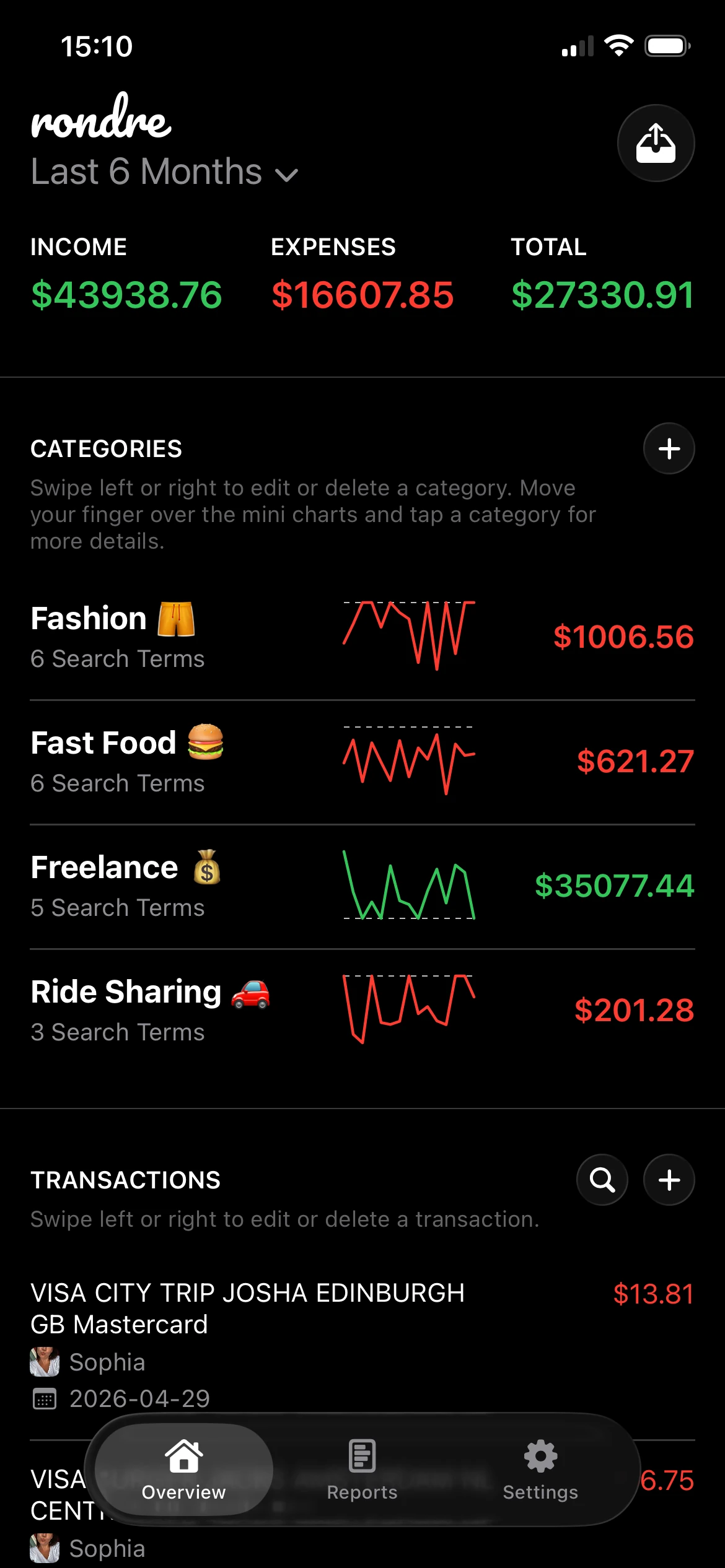
A cleaner setup uses categories that align with how spending decisions happen. Smart categories with custom search terms can help route recurring merchants and transaction descriptions into the right bucket. CSV files and PDF bank statement imports also make it easier to pull spending into one place instead of rebuilding months by hand.
A good category setup often includes:
- Groceries
- Dining out
- Fuel or transport
- Utilities
- Personal spending
- Work-related variable costs for freelance activity
Instant transaction search helps when a category suddenly looks high and someone needs to find the exact purchases behind the total.
Use shared tracking for household spending
Variable expenses often create more friction in shared finances than fixed bills do. One partner may think dining out is under control while the other sees a pattern of small purchases adding up.
According to Xledger’s discussion of variable expenses, a 2023 survey by the Financial Planning Association found 62% of couples struggle with aligning their variable expense spending, leading to 25% higher overspending on categories like dining out. The same source notes that using a shared digital tracker to log costs in real time can reduce budget-related disputes by up to 35%.
That’s why shared books matter for couples and families. They create one record, one set of categories, and one place to review the month without piecing together separate notes or messages.
Shared tracking works best when people log spending close to the moment it happens, not weeks later from memory.
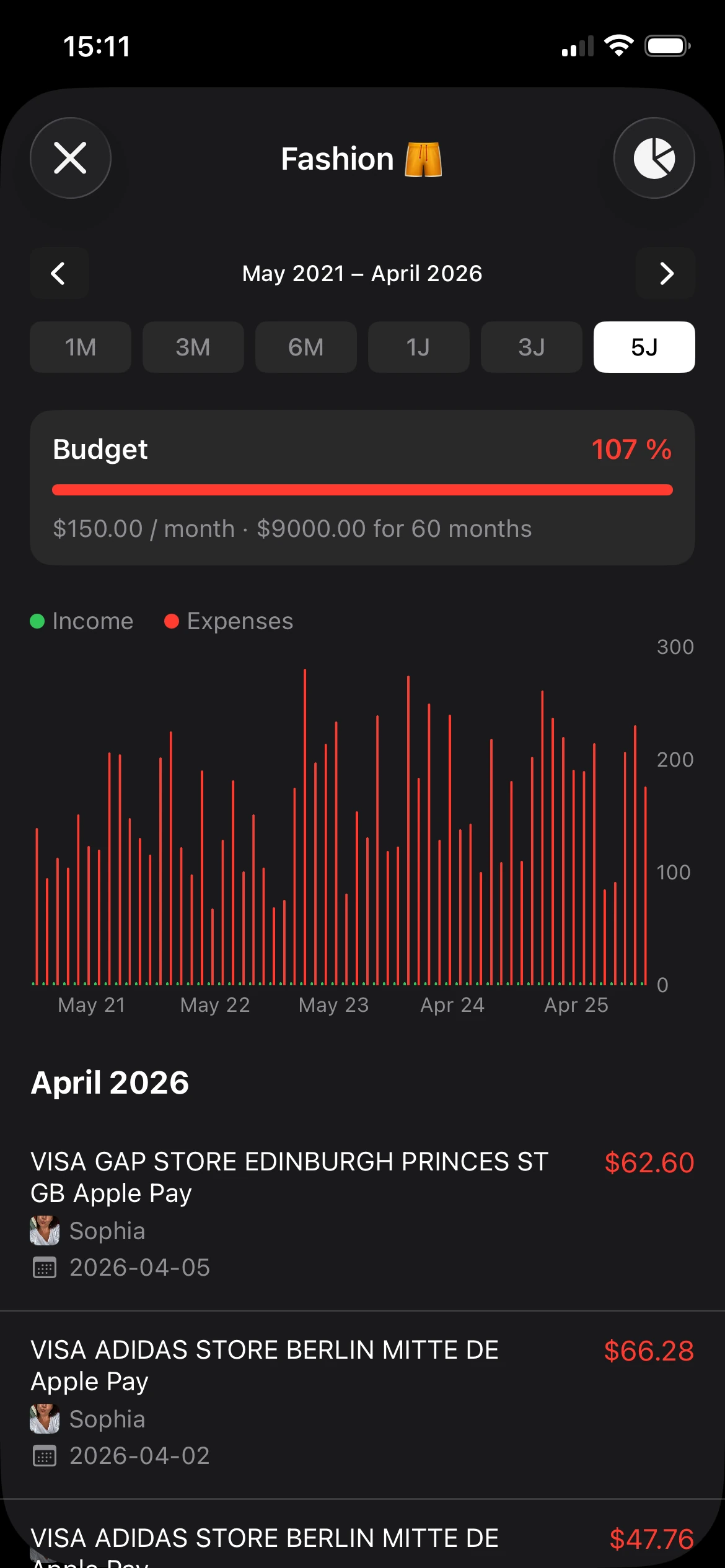
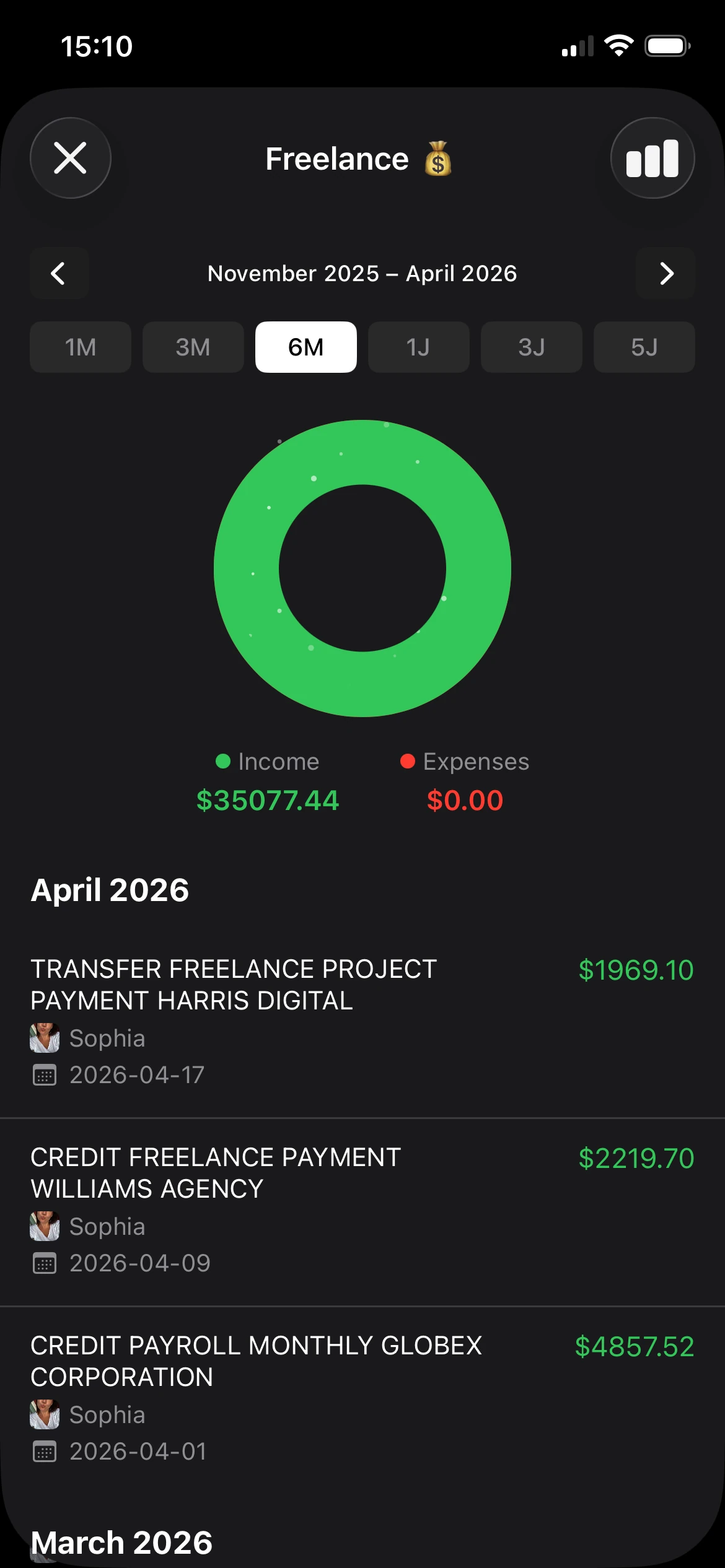
Mini-charts, donut charts, and bar charts add another layer. They help people see trends quickly, especially in categories that feel harmless day to day. A chart won’t solve a budgeting disagreement on its own, but it gives both people the same starting point.
For freelancers, separate books can keep business and personal variable expenses from blurring together. That makes it easier to see whether a high-spending month came from work activity, household costs, or both.
Frequently Asked Questions About Variable Expenses
Are utilities always variable
Not always. Many utility bills behave like semi-variable costs. One part may be a standard service charge, while another part changes with usage. That’s why utilities often confuse people during budgeting.
How often should variable expenses be reviewed
Weekly is a practical rhythm for most households. Monthly is often too late because the spending has already happened. A quick midweek or weekend review usually gives enough time to adjust the rest of the month.
Are taxes variable expenses
Sometimes yes, sometimes no. It depends on the context. A recurring payroll deduction may feel more fixed in a personal monthly budget, while tax owed on freelance income can move with earnings and behave more like a variable obligation.
Can a fixed expense become variable
Yes. A stable bill can become variable if pricing changes with usage, add-ons, penalties, or overages. That’s another reason to review category totals instead of assuming old labels still fit.
What’s the easiest place to start
Start with the categories that change the most and happen the most often. Groceries, dining out, transport, and utilities are usually the best first group because they create the clearest month-to-month movement.
A practical next step is to open rondre and create just three variable categories today, such as groceries, transport, and dining out. Import a recent CSV or PDF statement, scan the totals, and look for one category that keeps drifting. For couples or families, a shared book can put everyone on the same page without accounts, ads, or tracking.