Choosing a financial advisor often starts the same way. Someone asks for referrals, opens a few websites, scans credentials, and then gets pulled into a polished conversation that sounds reassuring but says very little. A significant danger isn't only hiring someone unqualified. It's hiring someone who sounds competent yet never builds advice around the realities of daily cash flow, taxes, debt, family tradeoffs, and the way money moves through a household.
That gap matters. After the 2008 to 2009 financial crisis, the playbook for questions to ask financial advisors changed in a big way. Modern advisor interviews put far more weight on disclosure, fiduciary duty, conflicts of interest, education, and a full discovery process that examines goals, risk tolerance, taxes, debt, estate issues, and communication rhythm, as noted in Define Financial's discussion of how advisor checklists evolved. Today, the strongest meetings don't start with a fund pick. They start with whether the advisor can coordinate the whole picture.
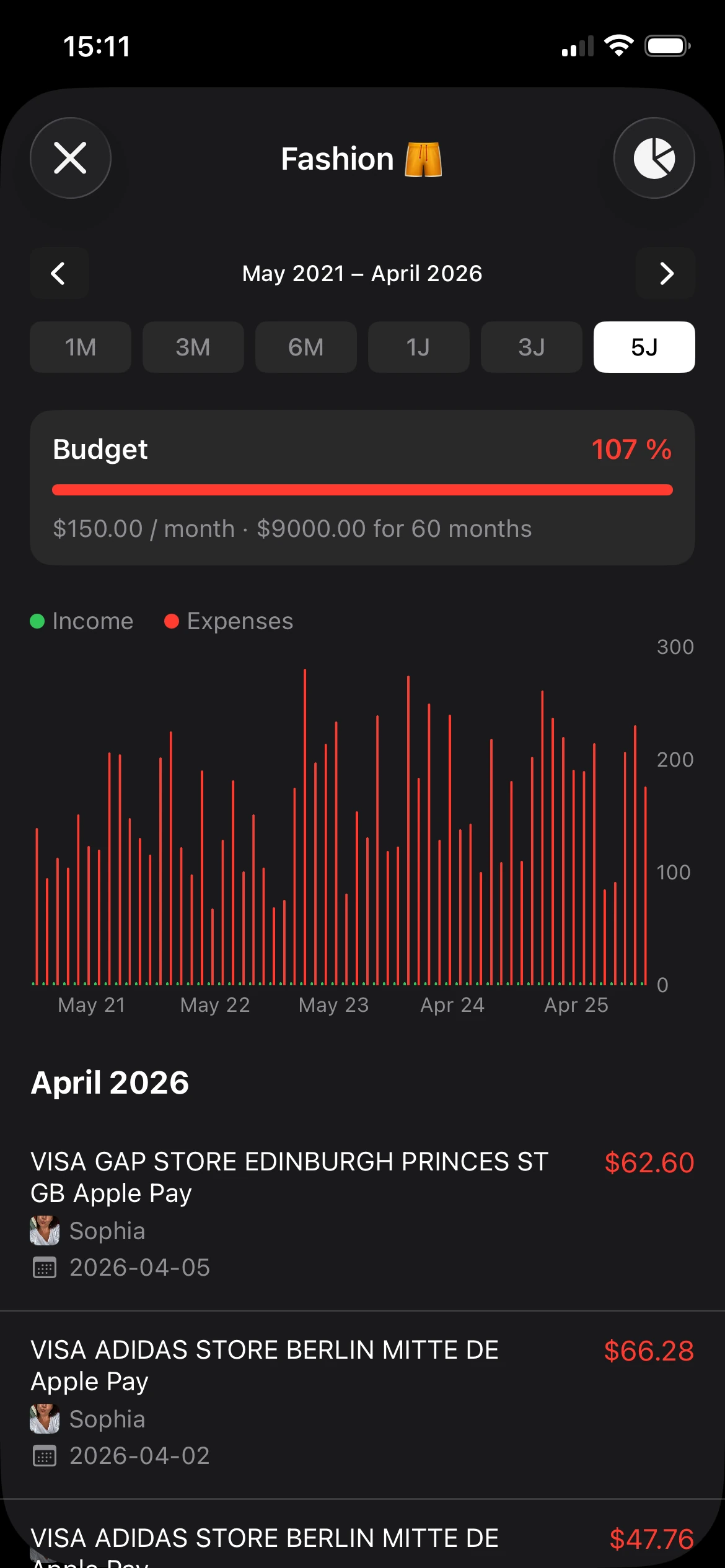
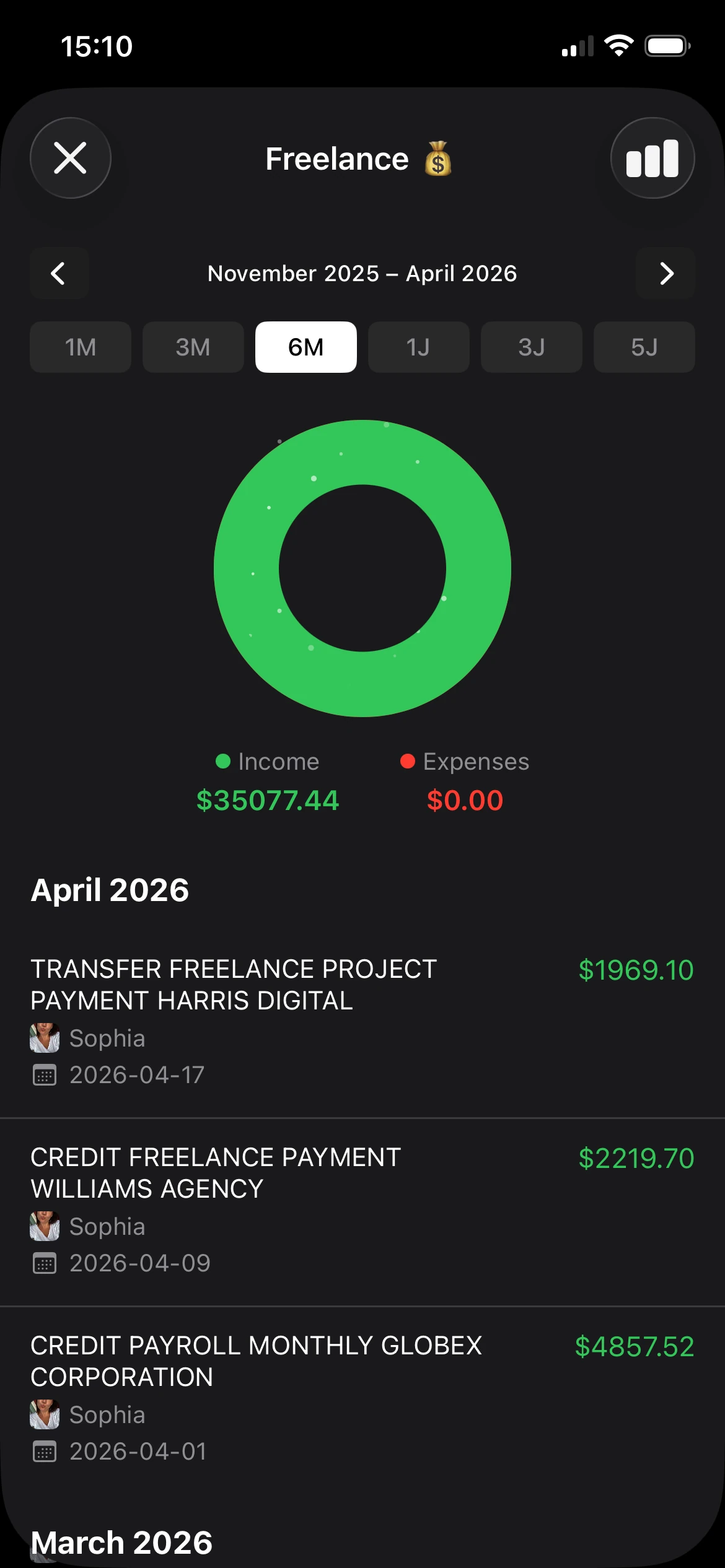
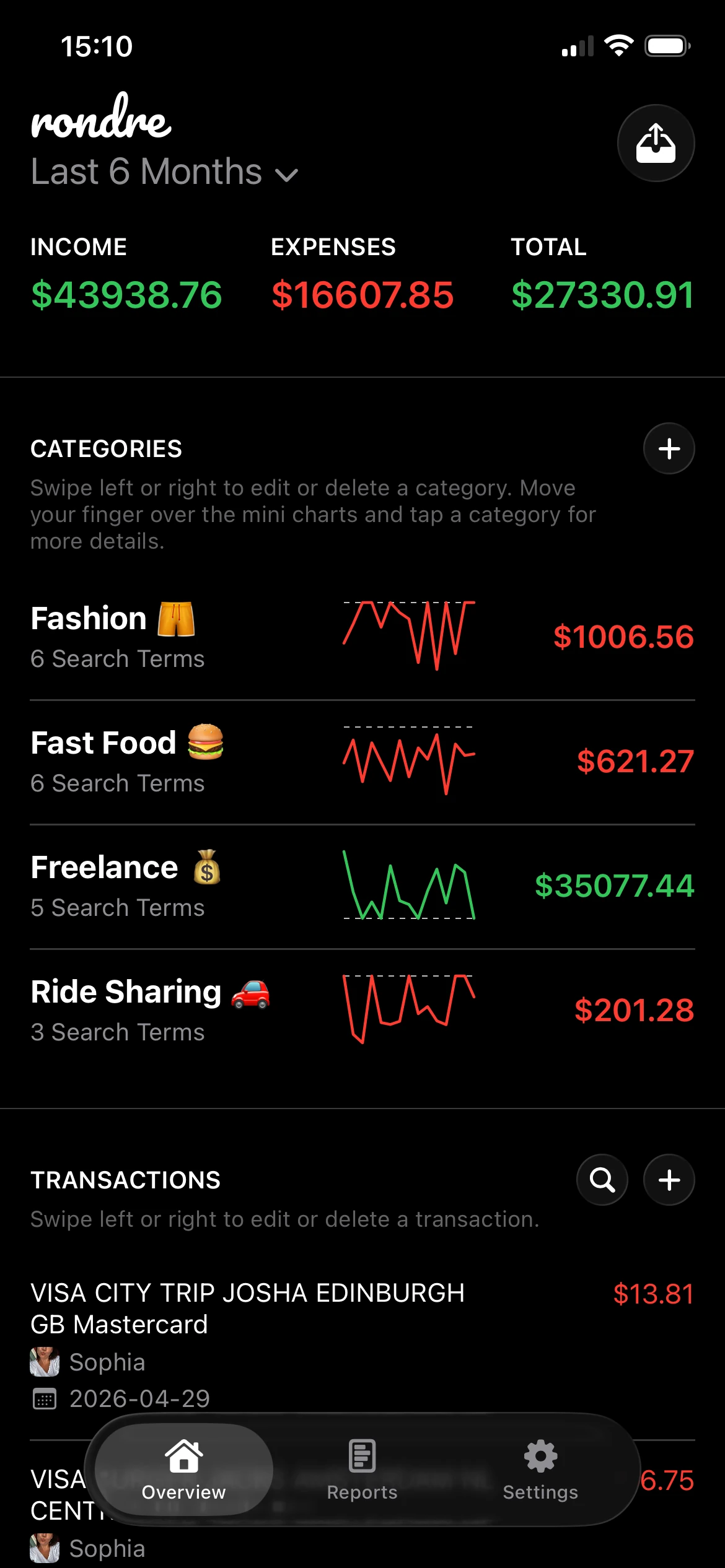
That is where preparation gives a client an advantage. A person who walks into the meeting with a clean record of income, spending, recurring bills, debt payments, and irregular expenses gets better answers. Tools like rondre make that easier because the app lets users track transactions, organize categories, import statements, and share a book with a partner without creating an account. That means the conversation can move quickly from generic advice to decisions tied to real numbers from real life.
Table of Contents
- 1. What are your fees and how do you get compensated?
- 2. Are you a fiduciary and do you have that designation in writing?
- 3. What is your investment philosophy and how does it align with my goals?
- 4. How will you help me plan for taxes and minimize my tax burden?
- 5. What is your process for creating and updating a comprehensive financial plan?
- 6. How often will we meet or communicate, and what is your availability?
- 7. Can you explain your approach to diversification and managing risk?
- 8. What professional credentials and ongoing education do you maintain?
- 9. What is your client retention rate and why do clients stay with you?
- 10. How do you handle conflicts of interest and ensure objectivity in recommendations?
- 10 Key Questions for Comparing Financial Advisors
- Your Next Step From Questions to Action
1. What are your fees and how do you get compensated?
This is the first question because every other answer gets filtered through it. If an advisor can't explain how they get paid in plain English, trust drops fast. A client shouldn't have to decode whether the recommendation is based on fit, product incentives, or account size.
Ask for the full menu of costs, not just the headline fee. That includes the advisory fee, product costs, transaction-related costs, and any separate planning charge. An advisor who says, "We'll go over that later," is already asking for trust before earning it.

A useful follow-up is simple: "What will I pay in a normal year, and what situations would make that total go up?" That wording forces specifics. It also makes room for practical tradeoffs. A flat planning fee may suit someone who wants advice without turning over investment management. Ongoing asset-based pricing may fit someone who wants implementation and continued monitoring.
Practical rule: If the advisor explains fees faster than they explain potential returns, that's a good sign.
For someone using rondre, this question also has a direct operational benefit. Advisory costs can be tracked as their own category, which makes it easier to see whether the relationship is earning its place in the budget. If a household pays for planning, investment management, or insurance reviews, those expenses should be visible, not buried.
A real-world example helps. A freelancer with variable income may not want an arrangement that scales upward just because a taxable account grows after a strong market year. That same person may prefer project-based planning around taxes, retirement contributions, and cash reserves. A couple nearing retirement may decide that ongoing management is worth paying for, but only if the advisor also handles withdrawal sequencing, tax coordination, and regular reviews.
2. Are you a fiduciary and do you have that designation in writing?
You sit down with an advisor, ask a direct question about fiduciary duty, and get a polished answer that never quite lands. That moment matters. If someone wants authority over your money, retirement decisions, or insurance recommendations, they should be able to state their legal standard clearly and put it in writing.
Use plain language. Ask, "Are you a fiduciary for my accounts and recommendations, and will you confirm that in writing?" Then ask a second question that catches a lot of vague answers: "Does that apply at all times, or only for certain services?"
That distinction matters because some advisors switch standards depending on what they are doing. Planning may be handled one way. Product recommendations may be handled another. A verbal "we always do what's best for clients" is not enough. The paperwork has to match the promise.
A clean written answer beats a polished verbal answer every time.
I look for two things here. First, whether the advisor answers without dodging. Second, whether they explain any limits, conflicts, or exceptions without being pushed three times. Clear disclosure is a good sign. Evasion is a red flag.
For couples, the script can be even tighter: "If one of us calls you about rolling over an old 401(k), recommending an annuity, or changing investments, are you acting as a fiduciary in each case?" For freelancers or business owners, ask: "Does your fiduciary duty cover retirement plan advice, cash management guidance, and insurance recommendations, or only investment accounts?" Those details change the relationship more than the label does.
Documentation gives you something to audit later. Keep the written fiduciary statement, advisory agreement, Form ADV if applicable, and your meeting notes together. If you already use a system for tracking recurring and one-off expenses, add a simple advisor log outside the app with recommendation dates, promised follow-ups, and what standard the advisor said applied. That makes it easier to compare what was said in the meeting with what transpired.
A practical comparison shows why this question works. Advisor A says, "Of course we put clients first," but avoids the legal wording and does not provide written confirmation. Advisor B says, "Yes, for these services. Here is where that duty applies, here are the disclosures, and here is where conflicts can still exist." Advisor B usually earns the next meeting.
The goal is not to catch someone with clever wording. The goal is to find out how they behave when accountability enters the room.
3. What is your investment philosophy and how does it align with my goals?
You meet an advisor, ask what they recommend, and hear a tidy mix of funds, percentages, and market commentary. Then the real test shows up six months later. Markets swing, cash needs change, or one spouse gets nervous. Philosophy is what determines whether the advice still fits when real life interrupts the model.
That is why this question works. It gets past product talk and into decision-making.
An advisor's philosophy should match the job you need the portfolio to do. If you need flexibility in the next few years, the plan should show how much stays accessible and why. If you want retirement income, the answer should cover withdrawals, risk, and how spending will be supported in weak markets. If you are a freelancer with uneven cash flow or live in an area with local tax complexity, your investment plan should reflect cash buffer needs and account choices, not ignore them. Reviewing your own regional income tax obligations and planning considerations before the meeting can make that conversation much sharper.

Ask for the decision rules
Skip labels like "balanced," "growth," or "active." Ask this instead: "Walk me through how you would build a portfolio for my goals, timeline, cash needs, and ability to handle losses. Then tell me what would make you change it."
That second sentence matters. Plenty of advisors can describe an allocation. Fewer can explain the rules behind it. You want to hear how they set cash reserves, how they choose between stocks and bonds, what rebalancing looks like, and what would trigger a shift beyond normal market noise. If they jump straight to products, they are selling implementation before they have shown judgment.
The answer should sound different for different households:
- For a couple within ten years of retirement: "How does this portfolio support income needs if markets fall early in retirement, and what spending assumptions are you using?"
- For a freelancer or business owner: "How much cash do you want me to keep outside the market, and how do irregular income months change the investment mix?"
- For an early-career investor: "What level of volatility should I expect, and how would the plan change if I buy a home or change careers?"
Use the meeting to test alignment, not charm. A strong advisor will connect investments to your actual constraints. A weak one will talk about beating the market, recent performance, or a house view that sounds the same for every client.
Preparation helps here. A person who has already organized expenses clearly can answer the liquidity questions with numbers instead of guesses. If you use the rondre app, bring a short summary of recurring expenses, irregular bills, and savings capacity into the meeting, then log the advisor's recommendations afterward. That gives you a simple way to compare what they proposed with what your cash flow can support.
One practical script I like is this: "What do you believe clients should do during a bad market, and how is the portfolio built to make that behavior realistic?" That question exposes whether the philosophy depends on perfect client discipline or on a plan built for real human behavior.
Red flags are usually obvious once you know what to listen for. Watch for vague language, generic model portfolios presented as personalized advice, or answers that never mention liquidity, taxes, withdrawals, or trade-offs. A useful philosophy is not a slogan. It is a repeatable process that fits your goals and still makes sense under pressure.
4. How will you help me plan for taxes and minimize my tax burden?
Tax planning is where many advisor relationships either prove their value or reveal their limits. Plenty of advisors can discuss investments. Fewer can explain how taxes affect account location, withdrawals, income timing, or coordination with a CPA.
This question should be framed broadly. Ask how the advisor handles taxes before, during, and after major decisions. That includes contributions, rebalancing, withdrawals, asset sales, business income, and retirement income. If the answer stays generic, the client is probably hearing investment advice dressed up as complete planning.
What a strong answer sounds like
A strong answer connects taxes to inflation and withdrawal strategy because those constraints interact in real life. Merrill's advisor guidance highlights inflation-aware withdrawal planning and mentions tools such as TIPS and inflation-adjusted retirement withdrawals, while also noting the importance of method rather than guesswork in spending plans, as described in Merrill's guide to questions worth asking an advisor.
That means the follow-up question should be concrete: "What method do you use to plan withdrawals, and how do taxes and inflation change that plan over time?" A serious advisor should be able to explain the logic, not just say they'll stay flexible.
Watch for this distinction: General tax awareness is not the same as tax planning.
A freelancer can press even further. Ask how quarterly taxes, uneven revenue, retirement contributions, and personal spending get coordinated through the year. A household with charitable goals can ask how giving decisions fit into the broader tax picture. A retiree can ask which accounts the advisor expects to draw from first and why.
For preparation, it's useful to bring categorized spending and income records. Someone tracking cash flow in rondre can separate business expenses, household bills, debt payments, and seasonal spikes before the meeting. Readers dealing with local tax obligations may also find it helpful to review regional income tax basics before asking an advisor how local taxes fit into the overall plan.
5. What is your process for creating and updating a comprehensive financial plan?
You sit down for the second meeting, expecting a clear roadmap. Instead, the advisor jumps from insurance to investments to retirement projections without showing how those decisions connect. That usually means the process is being built on the fly.
Ask for the sequence, not the sales pitch. A credible advisor should be able to walk you through how they gather facts, set priorities, test trade-offs, recommend actions, and revisit those choices as your life changes. If they cannot explain that in plain language, expect the work itself to feel fuzzy.
This question does real screening work because it reveals what the relationship is built around. Some advisors lead with planning. Others lead with products and add planning language around them. The difference shows up fast in how they describe their process.
A solid answer usually covers four parts:
- Discovery: They ask for income, spending, debts, account details, family goals, insurance coverage, estate documents, and major upcoming decisions before giving advice.
- Analysis: They explain how they weigh trade-offs such as paying down debt versus investing, or saving more for retirement versus keeping more cash on hand.
- Action: They spell out what happens next, who is responsible for each task, and which recommendations they will handle versus what you need to do yourself.
- Ongoing updates: They define when the plan gets reviewed, what events trigger changes, and how new recommendations are documented.
Push further with a few direct follow-ups. Ask, “What do you need from me before you build the first version?” Then ask, “What usually causes you to revise the plan?” and “How do you track whether your recommendations were implemented?” Those questions get you past polished language and into operating discipline.
This is also where preparation changes the quality of the meeting. Couples can compare goals, list shared and separate accounts, and note any disagreements before they walk in. Freelancers should bring income patterns, tax set-asides, business expenses, and months where cash flow gets tight. If you want a stronger prep list, review these financial questions to ask before hiring an advisor and use them to test how detailed the advisor's process really is.
I would treat vague answers as a warning sign. “We tailor everything to you” sounds good, but it says nothing unless the advisor can show how the work gets done.
A better answer sounds like this: first we review your cash flow and balance sheet, then we identify the decisions that matter most this year, then we present recommendations in priority order, then we assign action items, and then we revisit the plan after a major life event or at scheduled review points. That is a process you can hold someone accountable to.
One more red flag. If a family asks for retirement guidance and the advisor never asks about college support, aging parents, debt, healthcare costs, or uneven spending, that is not full-plan advice. It is investment management wearing a planning label.
6. How often will we meet or communicate, and what is your availability?
A great plan with poor communication still fails in practice. People need answers when markets are rough, jobs change, a parent gets sick, a business has a bad quarter, or a couple disagrees about spending. Communication isn't a bonus feature. It's part of the service.
The best question here isn't only "How often do we meet?" It is also "When something changes in my life, how do I get support, and who responds?" That gets past the sales promise and into the operating model.
A weak answer sounds vague. "Reach out anytime" can mean very little. A stronger answer explains scheduled reviews, normal response patterns, whether meetings include both partners, and how urgent issues are handled when the lead advisor is away.
Scripts for couples and freelancers
Different clients should ask this differently.
- For couples: "Do both partners attend reviews, receive updates, and have equal access to ask questions?" This matters because one partner is often less involved until a crisis forces engagement.
- For freelancers: "How do you handle communication during uneven income periods or tax season when decisions may need to happen quickly?" That tests whether the advisor understands irregular cash flow.
- For blended families: "How do you document household goals when spouses have different priorities or children from prior relationships?" That reveals whether the advisor can manage real-world complexity.
A client shouldn't need a market panic to discover that the advisor is hard to reach.
This is also where rondre can improve the relationship. Couples who use a shared book can walk into review meetings with the same transaction history, the same categories, and fewer arguments over what was spent. That makes meetings more productive because the discussion starts from shared facts, not memory.
A practical red flag appears when an advisor promises frequent contact but can't explain what those meetings are for. More meetings don't automatically mean better service. The question is whether each touchpoint helps decisions, accountability, and follow-through.
7. Can you explain your approach to diversification and managing risk?
A market drop is a bad time to learn what your advisor really means by "risk." The test comes when the portfolio is down, cash is tight, and the recommendation is to stay the course. Ask this question before that moment, not during it.
Use a sharper version of the prompt: "How do you decide how much risk is appropriate for me, and what specific changes would make you reduce or increase it?" That pushes the advisor to explain a process. It also makes it easier to compare advisors, because vague answers start to stand out fast.
A good answer connects investment risk to your actual financial life. That means income stability, cash reserves, planned withdrawals, debt, time horizon, and how you have behaved in past declines. A portfolio can hold many funds and still be poorly diversified if all the risk is tied to the same outcome, such as one sector, one employer, or one short-term spending need.
This is especially useful for people with uneven cash flow. A freelancer may be able to accept market volatility over 20 years and still need a larger cash position over the next 12 months. A retired household may need less focus on maximum growth and more focus on avoiding forced sales during down markets. Couples should ask how differing risk tolerances between partners get resolved, because one spouse's comfort with volatility often disappears once losses show up on a statement.
Ask the advisor to walk through a bad year in plain English. "If markets fall and I need money at the same time, what gets sold first, what stays untouched, and why?" That answer reveals whether the advisor has a withdrawal plan, a cash strategy, and rules for rebalancing, or whether "diversification" is just a generic talking point.
A few prompts make this conversation more concrete:
- Stress test the plan: "What would concern you about my current allocation, and what risk are you intentionally asking me to accept?"
- Check for concentration risk: "How much exposure to my employer stock, one company, or one sector would you consider too high?"
- Test behavior coaching: "What would you want me to do, and not do, during a 20 percent decline?"
- Clarify cash reserves: "How much cash or short-term reserves do you want outside the portfolio so I am not forced to sell investments at the wrong time?"
The weak version of this conversation sounds like a quiz about whether you're "aggressive" or "conservative." The stronger version ties allocation decisions to spending, liquidity, taxes, and behavior under stress.
Use rondre before the meeting to make this question easier to answer well. Bring a clear view of recurring spending, savings rate, account balances, and upcoming large expenses. That gives the advisor real inputs instead of rough guesses. After the meeting, log the recommendation and the reason behind it. If the advisor later changes course, you will be able to see whether the change came from your life, the market, or their own inconsistency.
A practical red flag is an advisor who talks about upside in detail but gets vague about downside, drawdowns, or what happens when the plan meets real cash needs. Good risk management is not about sounding calm. It is about having a portfolio and a decision process that can hold up when life gets messy.
8. What professional credentials and ongoing education do you maintain?
Credentials don't guarantee wisdom, but they do help separate serious professionals from people who rely mostly on sales ability and confidence. This question matters even more because the title "financial advisor" covers a wide range of backgrounds and capabilities.
Ask two things. First, what credentials and registrations are active right now. Second, how does that education show up in the work the advisor does for clients like this one. That second part is important because letters after a name only matter if they connect to the services being sold.
Credentials matter when they match the job
An advisor focused on overall planning should be able to explain training relevant to planning, ethics, and continuing education. An advisor who emphasizes investment analysis should be able to explain what supports that expertise. A tax-heavy practice should be able to explain how tax knowledge stays current.
This also reveals how the advisor thinks about professional development. Some people collect designations that sound impressive in a bio but rarely change the quality of recommendations. Others maintain a smaller set of relevant credentials and can clearly explain how they stay current on regulation, retirement planning, tax law changes, and portfolio design.
A useful follow-up question is, "Which part of your education most directly helps clients in situations like mine?" That keeps the conversation grounded.
Clients don't need the longest acronym list. They need proof that the advisor keeps learning in the areas that affect their decisions.
A real-world example makes this clearer. A self-employed designer interviewing an advisor may care less about broad investment jargon and more about whether the advisor understands business cash flow, retirement contribution choices, and tax coordination. A retired couple may care whether the advisor stays current on income planning, withdrawal strategy, and estate coordination. The best answer is specific to the client's life, not a résumé recital.
9. What is your client retention rate and why do clients stay with you?
This question can make advisors uncomfortable, which is part of its value. It pushes past polished marketing and asks whether clients remain satisfied over time. If the advisor can answer directly, the client learns a lot. If the advisor gets evasive, that also says a lot.
Because verified retention figures aren't available here, the smart move is to ask qualitatively and look for clear reasoning. Why do clients stay? What kinds of clients leave? What changes usually cause a relationship to end? Strong answers acknowledge that not every client is a fit forever.
Listen for substance over sales language
An honest advisor might say some clients leave because they want to self-manage, need a different service model, move into a more complex estate situation, or no longer need ongoing support. That kind of answer feels grounded. It shows the advisor understands fit, not just persuasion.
A weaker answer sounds like branding. "Clients stay because we care" isn't enough. The client should hear specifics about communication, planning quality, responsiveness, coordination with tax professionals, or guidance during difficult transitions.
Useful follow-up questions include:
- Ask about the long haul: "What do your longest relationships have in common?"
- Ask about departures: "When a client leaves, what are the most common reasons?"
- Ask about accountability: "How do you learn when a client is unhappy before they walk away?"
A practical example: a couple wants someone for decades, through retirement, health changes, and estate decisions. An advisor who can't explain why long-term clients remain engaged may not have a repeatable service model. The best client relationships usually stay because the advisor keeps translating a plan into ongoing decisions, not because the opening presentation was impressive.
10. How do you handle conflicts of interest and ensure objectivity in recommendations?
Every financial relationship has incentives. The point isn't to find a magical advisor with none. The point is to find someone willing to identify conflicts clearly and explain how they are controlled.
This question should be asked without apology. "What conflicts of interest should I know about, and how do you prevent them from influencing recommendations?" A trustworthy advisor won't act surprised by that question. It belongs in every serious interview.
Red flags that deserve a hard stop
Some conflicts are obvious. Product commissions, referral arrangements, proprietary investments, and compensation tied to asset gathering all deserve scrutiny. Other conflicts are subtler. Even an advisor paid only by the client may still benefit when more assets stay under management rather than being used for debt payoff, a home purchase, or a business investment.
A strong answer includes disclosure and a process. The advisor should explain what conflicts exist, how they're disclosed, and what internal rules or review steps reduce bias. The client should not have to drag that information out.
Watch for these warning signs:
- Defensiveness: The advisor treats the question as insulting.
- Absolute claims: The advisor says there are no conflicts at all.
- Missing documentation: The advisor speaks generally but provides nothing in writing.
- Product-first behavior: Recommendations arrive before the advisor understands the household.
One practical way to test objectivity is to ask for alternatives. "What would be the lower-cost or simpler option here, and why aren't you recommending it?" That question often cuts through polished sales language quickly.
The more money a recommendation can make for the advisor, the more clearly the advisor should have to explain it.
For rondre users, this is also where accountability becomes concrete. Track advisory fees, product-related charges that show up in statements, and any action items the advisor recommends. If spending, savings, or investment behavior changes because of the advisor's advice, the household should be able to see whether the recommendations improved the day-to-day system or just added another layer of cost and complexity.
10 Key Questions for Comparing Financial Advisors
| Item | Implementation complexity | Resource requirements | Expected outcomes | Ideal use cases | Key advantages |
|---|---|---|---|---|---|
| What are your fees and how do you get compensated? | Low, straightforward inquiry | Written fee schedule, time to compare | Clear cost structure; budget alignment | Budget-conscious users; rondre expense trackers | Reveals conflicts; enables fee comparison |
| Are you a fiduciary and do you have that designation in writing? | Medium, requires verification | Written agreement, regulatory checks (SEC/FINRA) | Legal duty to act in client's best interest | Users needing legal protection or complex advice | Higher duty of care; accountability |
| What is your investment philosophy and how does it align with my goals? | Medium, conceptual explanation | Written philosophy, performance data, benchmarks | Strategy alignment with goals and risk profile | Goal-oriented investors; ESG or value seekers | Matches strategy to goals and values |
| How will you help me plan for taxes and minimize my tax burden? | High, tax complexity and coordination | Tax expertise, CPA coordination, modeling tools | Reduced after-tax burden; optimized withdrawals | Self-employed, high-income, retirees | Increases after-tax returns; holistic planning |
| What is your process for creating and updating a comprehensive financial plan? | High, multi-step process | Time, documented plan, transaction history (rondre) | Documented roadmap and measurable progress | Couples, families, complex finances | Systematic planning; accountability |
| How often will we meet or communicate, and what is your availability? | Low–Medium, scheduling and policies | Communication channels, meeting cadence | Timely support and course corrections | Busy professionals; couples; anxious investors | Accessibility; responsiveness |
| Can you explain your approach to diversification and managing risk? | Medium–High, technical analysis | Portfolio analytics, correlation data, rebalancing tools | Tailored allocations; reduced volatility | Investors with multiple goals or risk concerns | Evidence-based risk control; volatility reduction |
| What professional credentials and ongoing education do you maintain? | Low, credential verification | Certificate records, issuer databases | Credibility and validated expertise | All clients, especially high-net-worth | Demonstrates knowledge and recourse options |
| What is your client retention rate and why do clients stay with you? | Low, metric disclosure | Firm retention data, client references | Insight into satisfaction and service stability | Long-term relationship seekers | Signals consistent service quality |
| How do you handle conflicts of interest and ensure objectivity in recommendations? | Medium, policy review | Written COI disclosures, compliance procedures | Greater transparency; reduced recommendation bias | Investors valuing objectivity and transparency | Builds trust; clarifies potential biases |
Your Next Step From Questions to Action
The best questions to ask financial advisors don't just help with hiring. They create a standard for the entire relationship. Once an advisor is selected, those questions become a working accountability system. Fees should stay transparent. Fiduciary commitments should remain clear. Communication should happen as promised. Tax planning, withdrawal planning, and investment decisions should continue to reflect the client's real life, not a generic model portfolio.
That is where many people lose momentum. They do the interview process well, hire someone capable, and then slip back into passivity. Meetings become occasional check-ins. Advice gets delivered, but nobody tracks whether recommendations were implemented, whether spending changed, or whether the plan still fits the household's priorities. A good advisor can improve outcomes. A passive client can still waste the relationship.
The easiest way to avoid that is to show up with better data and keep a simple record of what the advisor recommends. Income, recurring bills, discretionary spending, debt payments, and irregular expenses all affect the quality of advice. If those inputs are fuzzy, the plan will be fuzzy too. If those inputs are visible, the meeting gets sharper fast.
That is why the most practical next step is so small. Before scheduling the first advisor interview, gather one week of real cash-flow data. Track income, fixed expenses, variable spending, debt payments, and any transfers that happen repeatedly. For couples, use one shared record so both people walk into the meeting from the same facts. For freelancers, separate business and personal spending so the advisor can see where volatility shows up. For families, make sure irregular categories like childcare, travel, medical bills, and school costs aren't left out just because they don't occur every week.
A free tool like rondre makes this prep work easier because it keeps the focus on transactions and categories without adding account setup friction. Users can import statements, create custom categories, search transactions quickly, and share a book with a partner or family member. That means the advisor meeting starts with organized evidence instead of rough guesses.
A client doesn't need perfect records to have a productive meeting. But a client who can say, "Here is what comes in, here is what goes out, here are the categories that keep surprising us, and here are the goals we need this plan to support," has already changed the balance of power. That person isn't waiting to be sold. That person is hiring carefully.
The practical takeaway for today is simple. Start tracking for one week before meeting any advisor. Bring those records, ask the ten questions above, and write down every answer. The strongest advisor won't mind the scrutiny. That response is part of the interview.
rondre gives readers a simple way to prepare for advisor meetings and keep the relationship accountable afterward. It is free, private, has no ads, no tracking, and no sign-up. Users can track income and expenses, import CSV files and PDF bank statements, create custom categories, search transactions instantly, and share a book with a partner or family. For anyone who wants clearer financial conversations backed by real spending data, rondre is a smart place to start.