Two people can share a home, split groceries, plan a trip, and still avoid the one conversation that brews the most tension. One partner pays the rent. The other grabs the groceries. A few subscriptions sit on separate cards. Nobody is lying, but nobody has the full picture either.
That’s usually where the stress starts. Not with one dramatic mistake, but with a pile of small assumptions. One person thinks things are fine. The other feels behind. Then a routine purchase turns into a loaded question.
Learning how to budget as a couple isn’t about turning a relationship into a spreadsheet. It’s about replacing guesswork with a shared plan. Money gets easier when both people can see what’s coming, what matters, and how decisions get made. With a simple system and a private tool that doesn’t force full financial exposure, budgeting can feel less like surveillance and more like teamwork.
Table of Contents
- Beyond the Awkward Money Talk
- Your First Money Date Aligning Financial Goals
- Choosing Your Budgeting Style Yours, Mine, or Ours
- Building Your Shared Budget in Rondre
- Staying on Track Together
- Making Your Budget Last and Handling Curveballs
Beyond the Awkward Money Talk
One partner pays the rent. The other grabs groceries, covers streaming bills, and books the dog sitter. By the end of the month, both feel like they are contributing, but neither feels fully sure where the money went. That uncertainty is what turns ordinary spending into tension.
Money stress usually shows up sideways. It sounds like a sharp reply to a simple question. It looks like avoiding the banking app, postponing a bill conversation, or privately resenting who paid for what last week. Couples rarely need more motivation to care about money. They need a way to discuss it without turning every transaction into a character judgment.
The first goal is simple. Lower the temperature.
A shared budget gives the conversation a neutral reference point. Instead of arguing over whether one person is being careless, the couple can look at the same numbers and decide what needs to change. That shift matters, especially for couples with uneven incomes, freelance work, or separate accounts they want to keep separate.
That is where many traditional budgeting setups fall short. They often assume fully merged finances, equal paychecks, and complete visibility into every purchase. Plenty of couples do not want that. A workable system can still be shared without becoming intrusive. In practice, the strongest setup is often privacy-first. Each partner keeps personal autonomy while both stay clear on joint obligations, shared goals, and what is safe to spend.
A useful couple budget answers three questions: what is coming in, what is already committed, and how much room is left for shared priorities and individual spending.
That makes budgeting feel less like a scorecard and more like a planning tool for the next decision.
What helps early and what usually doesn't
Couples tend to make faster progress when they start with a few ground rules:
- One clear view of shared costs: Housing, utilities, groceries, debt payments, and other joint obligations should be visible to both people, even if bank accounts stay separate.
- A fair contribution method: Equal splits work for some couples. Percentage-based splits often work better when incomes differ or change month to month.
- Personal spending room: Each partner needs some money that does not require explanation. That protects dignity and cuts down on small, draining arguments.
- A simple shared system: Tools like rondre help couples track household categories together without forcing full financial exposure.
A few habits usually create friction fast:
- Starting from blame: Once one person feels audited, honesty drops.
- Budgeting from memory: “We spend a lot on random stuff” is too vague to fix.
- Copying someone else’s setup: A couple with one salaried income and one variable income needs a different system from a couple with fully combined finances.
- Treating privacy like secrecy: Healthy boundaries and hidden problems are not the same thing. Good budgeting makes that distinction clear.
The best early result is not a perfect spreadsheet. It is relief. Both people know what bills matter, what counts as shared, what stays personal, and how to make decisions without repeating the same argument every month.
Your First Money Date Aligning Financial Goals
Friday night, one person wants to book a weekend trip. The other is thinking about the credit card bill and next month’s rent. Nobody is wrong, but without a plan, that kind of moment turns into a fight about spending when the issue is different priorities.
Your first money date should give those priorities a place to surface early, before they show up as tension. The goal is not to review every transaction. The goal is to agree on what matters, what feels fair, and what each person needs to feel secure.

Start with direction
A strong first conversation is short, specific, and calm. Set aside 30 to 45 minutes. Bring rough numbers if you have them, but start with goals, not line items.
Cover three things first:
- What you want to make possible together: more breathing room, a trip, debt payoff, a home move, a baby fund, or a larger emergency cushion
- What money pressure feels like for each person: uncertainty, loss of independence, carrying too much of the load, or feeling left out of decisions
- What fairness means in this relationship: equal dollar amounts, percentage-based contributions, or another approach that fits your incomes
This matters even more when income is uneven or changes month to month. A couple with one stable paycheck and one variable income usually needs a plan that bends without breaking. In practice, that often means agreeing on shared goals first, then building a contribution method that can adjust.
Privacy belongs in this conversation too. Some partners want full visibility into everything. Others are comfortable sharing joint expenses but want personal spending to stay personal. That is not a problem to solve away. It is a boundary to define clearly, especially if you plan to use a tool like rondre to manage shared categories without merging every detail of your financial life.
Questions that lead to useful answers
Good questions lower defenses. These usually work well:
- “What would make money feel more manageable for you over the next few months?”
- “What are the top two jobs our budget needs to do right now?”
- “Where do you want more freedom, and where do you want more structure?”
- “What should stay personal, and what needs to be shared?”
- “If one income drops or changes, what would feel fair?”
I usually tell couples to listen for patterns, not perfect wording. If one person keeps coming back to stability, that matters. If the other keeps bringing up autonomy, that matters just as much. A workable budget has to support both.
Keep the first decision small
Many couples overload the first money date. They try to settle debt strategy, vacation spending, retirement, account structure, family support, and weekly spending rules in one sitting. That usually creates more stress than clarity.
A better first result is simple:
- Choose one shared priority. Example: build a one-month cushion for household bills.
- Choose one fairness rule. Example: contribute to joint expenses based on income percentage for now.
- Set one check-in date. Put the next conversation on the calendar before you stop talking.
If the conversation starts slipping into a dispute over past purchases, return to the bigger question: what is this budget supposed to help you do? That reset keeps the discussion on planning instead of blame.
A good first money date should leave both people with less pressure, not more. You do not need a finished system yet. You need shared direction, a fair next step, and enough trust to keep going.
Choosing Your Budgeting Style Yours, Mine, or Ours
One partner gets paid a steady salary. The other has freelance income that swings from month to month. They want to plan together, but neither wants every personal purchase turned into a joint discussion. That is why choosing a budgeting style matters. The structure has to support teamwork without stripping away privacy.

Three ways couples usually organize money
Couples usually land in one of three setups: fully joint, fully separate, or hybrid. Ally’s overview of couple budget templates also describes a proportionate approach, which is often less about account structure and more about how shared costs get divided.
Here’s the practical difference:
| Method | How It Works | Best For | Potential Pitfall |
|---|---|---|---|
| Fully Joint | All income and expenses go into one shared system | Couples who want maximum simplicity and full visibility | One partner may feel overexposed or less independent |
| Fully Separate | Each person keeps their own accounts and handles agreed expenses | Couples who strongly value autonomy and financial privacy | Bill tracking and uneven contributions can create friction |
| Hybrid | Personal spending stays separate, while household costs are managed together | Couples who want shared planning and personal space | It takes a little more setup and regular check-ins |
In practice, hybrid is often the easiest starting point for modern couples. It handles a real tension that older budgeting advice often skips over. Many partners want shared responsibility for rent, groceries, and savings goals, while still keeping some personal spending private. That is especially useful when incomes are unequal, one person is self-employed, or both people want a degree of financial autonomy.
A privacy-first tool such as rondre fits that approach well because the couple can organize shared household planning without forcing a full financial merge on day one.
How to split shared costs fairly
Once you choose the structure, decide how joint expenses will be funded.
An equal split works well when incomes, debt loads, and outside obligations are close. It gets harder when one person earns much more, covers child-related costs, supports family members, or has income that changes month to month. In those cases, a proportionate split usually creates less strain because each person contributes based on capacity, not just a 50-50 formula.
Three common options work:
- Equal split: Useful when pay and personal obligations are similar.
- Proportionate split: Useful when incomes are uneven or fluctuate.
- Set contribution: Useful when couples want a fixed monthly amount for shared bills and already agree that the number feels fair.
The best test is simple. Ask whether both people would still describe the arrangement as fair after a few expensive months, a slow work season, or a surprise bill. If the answer is shaky now, the system will probably cause tension later.
For many couples, “yours, mine, and ours” gives the best balance. Shared obligations are covered together. Personal money stays personal. That setup often reduces money stress because it respects both partnership and privacy.
Building Your Shared Budget in Rondre
A shared budget starts working when both people can see the same household picture without giving up all financial privacy. That matters even more when income is uneven, freelance pay moves around, or one partner wants personal spending to stay personal.
A strong first draft comes from real transactions, not memory. Broad guesses usually miss the bills that create stress later. Pacesetter Planning recommends building a couple’s budget with specific categories and actual spending patterns instead of vague catch-all totals.

Build the first draft from real transactions
Start with the last two or three months of bank and card activity. That gives you a baseline based on your real spending, including the small repeat purchases couples tend to forget.
A practical setup looks like this:
- Create one shared household view. Use it for rent, groceries, utilities, transportation, and other joint costs.
- Import recent statements. CSV files and PDF bank statements make recurring charges easier to spot.
- Sort transactions together. Label each item as shared, Partner A personal, or Partner B personal.
- Flag irregular expenses. Annual fees, car repairs, gifts, travel, and medical costs should not disappear just because they are not monthly.
That sorting step matters. I have seen couples build a clean-looking budget, then realize a week later that half the spending was still mixed together. Fixing that at the start saves arguments later.
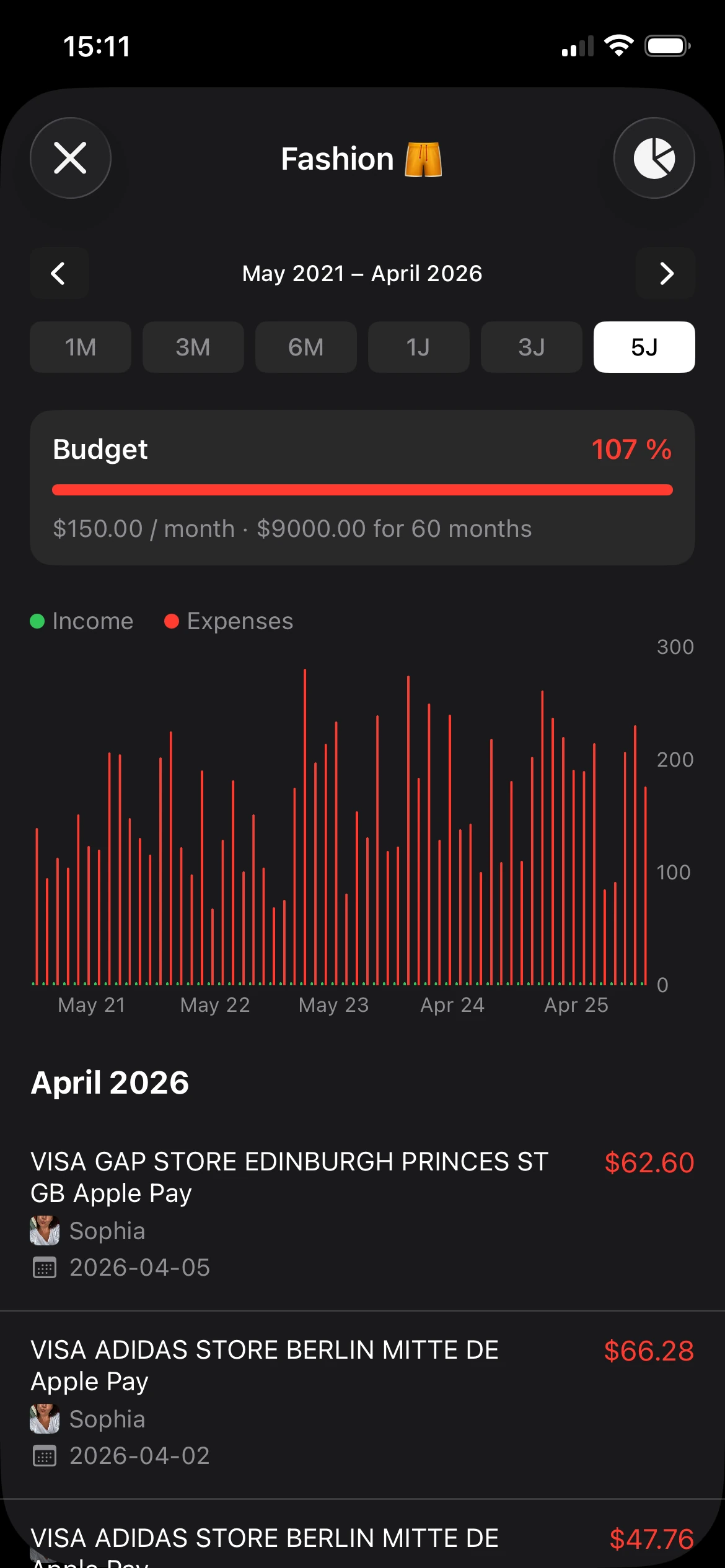
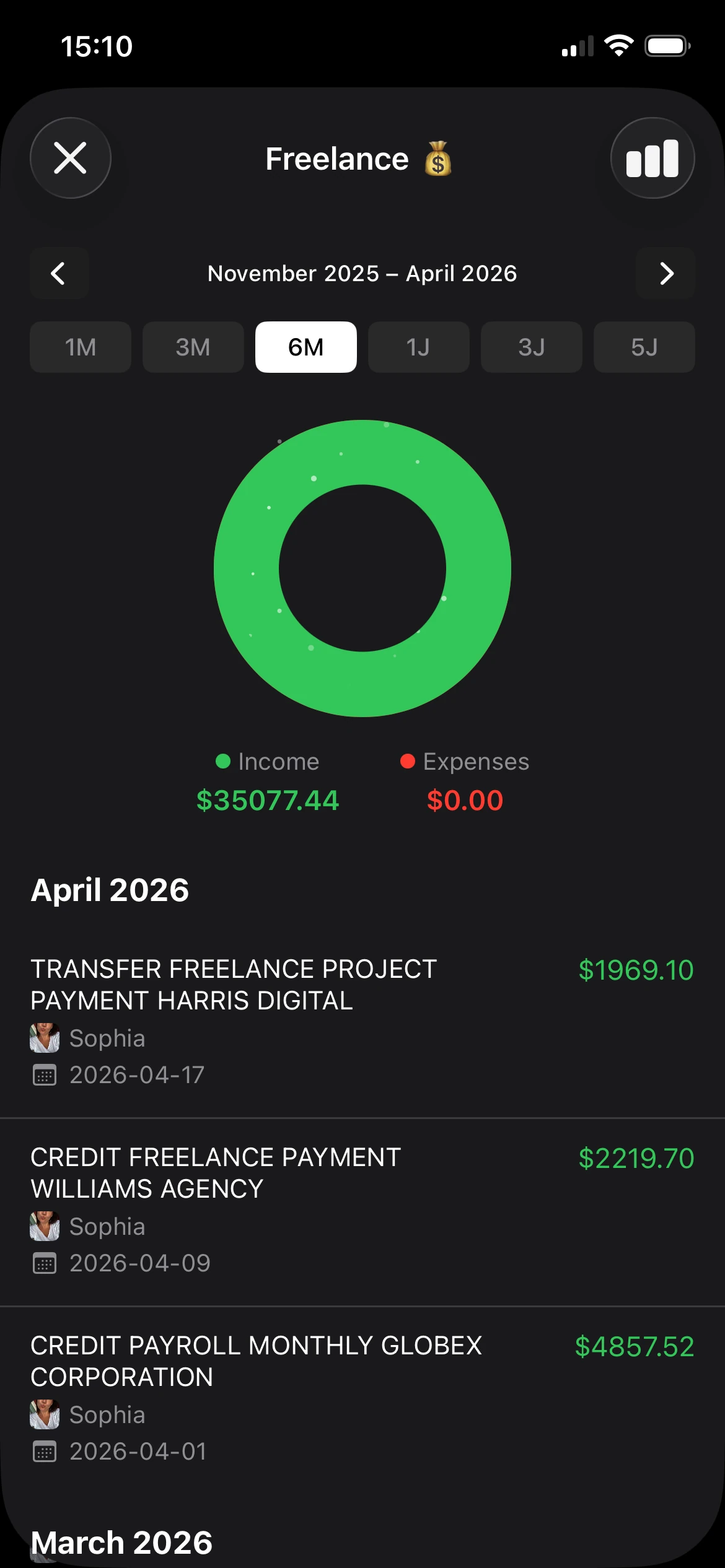
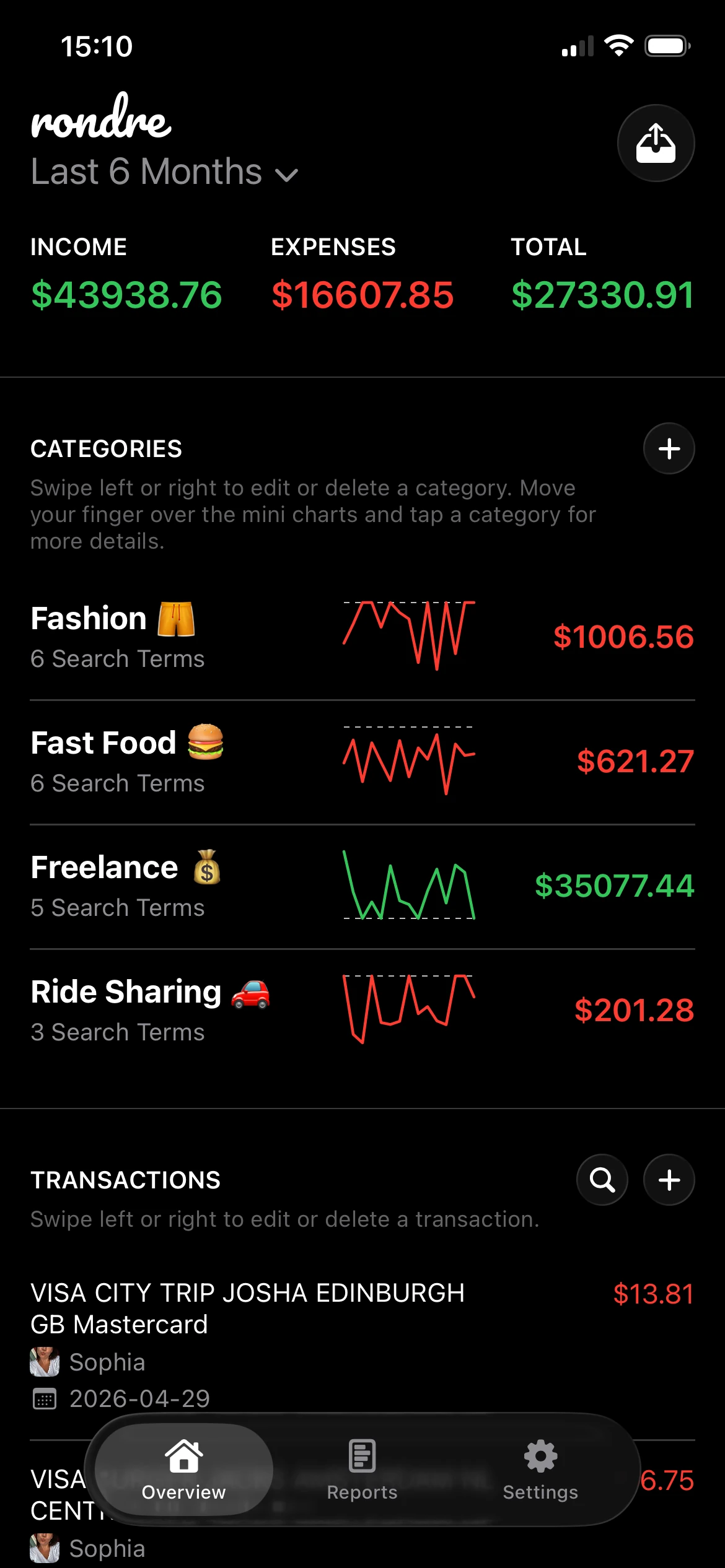
A privacy-first tool supports this well. rondre lets users create shared books, import CSV files and PDF bank statements, organize transactions with custom categories, and search spending quickly on iPhone. Couples can plan household money together while keeping separate personal systems where that feels healthier.
Use categories that answer real questions
Good categories make decisions easier. Weak categories hide them.
A simple structure based on needs, wants, and financial goals works well for most couples because it gives each dollar a job without turning the budget into a spreadsheet project. If you already discussed 50/30/20 earlier in the article, use that as a loose frame here. The point is not hitting a perfect formula. The point is seeing whether your current spending matches your shared priorities.
Use categories that are specific enough to act on:
- Needs: Housing, groceries, utilities, transportation, insurance, minimum debt payments
- Wants: Dining out, entertainment, hobbies, nonessential shopping
- Financial goals: Emergency savings, retirement, extra debt payments, travel, or another shared target
It also helps to separate spending into three lanes:
| Budget Area | What Goes There |
|---|---|
| Joint expenses | Shared bills and shared household purchases |
| Partner A personal | Individual spending not paid from the household pool |
| Partner B personal | Individual spending not paid from the household pool |
It's a point of immediate relief for many modern couples. Shared money stays clear. Personal money stays personal. That balance is often what makes the system feel fair enough to keep using.
Specific categories are easier to manage. “Groceries” and “dining out” lead to better choices than “food” and “miscellaneous.”
Turn the budget into a system you can keep up with
Once the categories are set, assign realistic targets. Start with the bills that must be covered, then add the spending that needs boundaries, then choose one savings priority.
A workable first pass looks like this:
- Set household categories first: Housing, food, utilities, transportation
- Add personal spending lanes: This reduces the feeling that every purchase needs partner approval
- Choose one savings priority: Emergency fund, debt reduction, or a specific near-term goal
- Review recurring charges: Subscriptions, auto-pay bills, and annual expenses that need a monthly placeholder
For couples who are brand new to budgeting, a simpler split can help. As noted earlier, some couples do better starting with a broad savings target and fewer detailed rules, especially if income changes month to month. You can always add more precision after a month or two of real use.
The best first budget is one both people can update without dread. If the setup takes too long to maintain, simplify it. If it feels too vague to guide decisions, add detail only where problems keep showing up. That trade-off is normal, and rondre’s shared books and custom categories make it easier to adjust without rebuilding the whole system.
Staying on Track Together
A budget only helps if it stays connected to real life. That means catching drift early, before a small miss turns into a monthly argument.
Most couples do better with a light rhythm than with intense reviews. A fast check-in keeps spending visible without making money the center of the relationship.

A simple weekly rhythm
A weekly review works because it keeps the budget current. It also lowers the emotional temperature. Fixing a small overspend feels manageable. Discovering a month of drift all at once usually doesn’t.
A workable routine:
- Log or import new transactions regularly: The shorter the gap, the less cleanup later.
- Review the biggest categories first: Housing, groceries, transportation, and discretionary spending.
- Scan for surprises: Duplicate charges, forgotten renewals, one-off splurges, or a category that’s starting to swell.
- Adjust before month-end: If dining out is running high, reduce another flexible category instead of pretending it will sort itself out.
This check-in doesn’t need to be long. It needs to be consistent.
How to handle mistakes without blame
Every couple overspends sometimes. The question is what happens next.
The budget works better when the data stays neutral. Instead of saying, “You always spend too much,” use language tied to the plan:
- “This category is running ahead of what we expected.”
- “Do we want to pull back elsewhere or update the target?”
- “Was this a one-time expense or is the category too low?”
That wording matters because it focuses on decisions, not character.
A few repair habits help:
- Name the issue quickly: Delayed resentment usually comes out harsher.
- Separate surprise from pattern: One unusual week is different from a recurring problem.
- Keep personal dignity intact: A budget should correct behavior, not shame the person.
If the same category goes over repeatedly, the first assumption should be that the budget needs work, not that one partner is failing.
For households with shared and personal spending, this is another reason a hybrid structure often lasts. Household categories can stay accountable, while personal spending can keep healthy boundaries. The couple still collaborates, but they don’t have to negotiate every coffee or hobby purchase.
If a check-in feels tense, it helps to end with one clear adjustment. Cancel one subscription. Move money from one category to another. Delay one discretionary purchase. The win isn’t perfection. It’s recovering together, fast.
Making Your Budget Last and Handling Curveballs
The budget that lasts isn't the one that predicts life perfectly. It's the one that bends without breaking when life changes.
That matters even more for households with uneven or unpredictable income. BECU reports that fluctuating income affects 36% of U.S. adults, and couples with variable earnings face 25% higher conflict rates if they don't use adaptive strategies such as budgeting from a lower-than-average month’s income.
When income changes month to month
For freelancers, gig workers, commission earners, and self-employed couples, the safest approach is usually income smoothing. That means building the budget around a conservative month instead of an optimistic one.
A practical version looks like this:
- Base fixed commitments on the lower month: Rent and other essentials shouldn't depend on a great month.
- Treat higher-income months as catch-up months: Extra income can refill savings, cover irregular costs, or accelerate goals.
- Keep wants flexible: Fixed needs should stay stable, while discretionary spending can expand or shrink.
This is also where category detail matters. If food spending has been hard to estimate, using a more specific framework helps. Couples who want a more focused starting point for groceries can use this guide on a monthly food budget for 2 as a practical reference point inside the broader household plan.
Review the system before it breaks
Budgets go stale after major life changes. A move, new job, reduced hours, debt payoff, side income, or childcare shift can make an old plan useless fast.
A strong habit is to review the budget after any major change and at regular intervals throughout the year. During that review, the couple should ask:
- Does our split still feel fair?
- Are shared categories realistic?
- Do we need more buffer in the plan?
- Are personal and household boundaries still working?
The strongest couple budgets have structure, but they also leave room for reality. Fairness may change. Income may change. Priorities may change. The system should be able to change with them.
A simple first step is enough to get started. Schedule one money date this week, choose one shared goal you’re both excited about, and build one clear view of your household spending. If a private, no-sign-up tracker would make that easier, rondre gives couples a way to track shared expenses, import statements, and organize categories without ads, accounts, or extra friction.