Deux personnes peuvent partager un logement, un calendrier, une liste de courses, et se sentir pourtant étonnamment incertaines face à l’argent. Un salaire arrive sur un compte, les factures sont prélevées sur un autre, l’un des partenaires suit chaque achat, tandis que l’autre suppose que tout va bien. C’est généralement à ce moment-là que les couples commencent à chercher comment mettre en commun leurs finances après le mariage.
Le plus difficile n’est pas d’ouvrir un compte joint. Le plus difficile est de construire un système qui semble équitable, clair et sûr pour les deux personnes. Une organisation viable doit correspondre à la relation, pas seulement aux chiffres. Elle doit aussi tenir compte des réalités que de nombreux guides passent sous silence, notamment les différentes habitudes de dépense, les anciennes angoisses liées à l’argent et les conséquences juridiques d’une mise en commun trop rapide.
Table des matières
- La conversation sur l’argent: aligner les valeurs avant les comptes
- Choisir votre système financier: commun, séparé ou hybride
- Construire votre budget commun et votre plan d’épargne
- Tout mettre en place avec rondre
- Comprendre les aspects juridiques, fiscaux et de confidentialité
- Votre fondation financière est une conversation, pas une feuille de calcul
La conversation sur l’argent: aligner les valeurs avant les comptes
La plupart des couples commencent par les comptes alors qu’ils devraient commencer par le sens. Avant tout virement, changement de titulaire ou budget commun, chacun doit comprendre ce que l’argent représente pour l’autre. Pour l’un des partenaires, l’argent signifie la liberté. Pour l’autre, il signifie la sécurité. Ce ne sont pas de petites différences.
Les recherches mises en avant dans le guide de Navicore sur la mise en commun des finances indiquent que les différences de philosophie de dépense, comme un profil épargnant avec un profil dépensier, créent plus de tensions que les simples écarts de revenus. C’est important, car beaucoup de couples essaient de résoudre un décalage émotionnel avec une solution technique.

Commencez par l’histoire financière, pas par les chiffres
Une meilleure première conversation ressemble moins à une réunion budgétaire qu’à un échange attentif. Demandez à chacun d’où viennent ses habitudes financières. Parlez de ce qui semblait rare en grandissant, de ce qui semblait stable, et de ce qui déclenche encore du stress aujourd’hui. Un partenaire qui paraît « contrôlant » sur les dépenses réagit peut-être à une instabilité passée. Un partenaire qui évite de regarder les relevés bancaires associe peut-être l’argent à la honte.
Règle pratique: Ne commencez pas par « Combien de dettes as-tu ? » Commencez par « Qu’est-ce que l’argent a représenté dans ta vie ? »
Ce départ plus doux mène généralement à davantage d’honnêteté. Il réduit aussi les réactions défensives, ce qui compte lorsque la conversation aborde ensuite les dettes, l’épargne, les obligations familiales ou le soutien aux parents et aux frères et sœurs.
Utilisez des questions qui font ressortir les valeurs
Les couples n’ont pas besoin d’être parfaitement alignés sur chaque catégorie. Ils ont besoin d’une définition commune de ce que signifie la réussite financière dans leur foyer. Cela implique de discuter des priorités avec des mots simples.
Voici une série de questions utiles:
- Sécurité: Qu’est-ce qui aide chaque personne à se sentir financièrement en sécurité ?
- Liberté: Quel montant de dépenses personnelles devrait pouvoir se faire sans explication ?
- Objectifs: Qu’est-ce qui compte le plus maintenant: rembourser des dettes, constituer une épargne, voyager ou préparer l’arrivée d’enfants ?
- Points de tension: Quels achats ont tendance à provoquer du jugement ou de l’anxiété ?
- Réparation: Si l’un des partenaires dépense trop ou oublie une facture, comment le couple devrait-il gérer la situation ?
Certains couples écrivent d’abord leurs réponses séparément, puis les comparent. Cela fonctionne souvent mieux que de réagir en temps réel. Cela donne à chacun le temps de réfléchir et réduit le risque que la personne la plus rapide ou la plus expressive domine la conversation.
Un système financier peut survivre à des revenus inégaux. Il a généralement plus de mal avec la peur, le ressentiment ou le secret non exprimés.
C’est aussi le bon moment pour définir ce que « commun » signifie. Commun ne veut pas toujours dire entièrement fusionné. Cela peut signifier une visibilité totale, un plan commun pour les factures et l’épargne, ainsi qu’une marge personnelle pour les dépenses discrétionnaires. Cette distinction aide de nombreux couples à construire la confiance sans avoir l’impression d’être absorbés par le processus.
Choisir votre système financier: commun, séparé ou hybride
Un couple peut être d’accord sur les valeurs et choisir malgré tout la mauvaise organisation.
Je le vois souvent. Deux personnes sont pleinement engagées l’une envers l’autre, mais l’une veut que chaque euro soit au même endroit parce que cela lui donne un sentiment de partenariat, tandis que l’autre veut garder une certaine marge financière parce que cela lui donne un sentiment de sécurité. Le système se fragilise lorsque la structure des comptes ignore ces motivations. Le bon choix est celui qui soutient la confiance, la logistique quotidienne et toute la complexité de votre foyer.
La tendance générale s’est éloignée des comptes entièrement communs. Selon les données SIPP du U.S. Census Bureau sur les comptes bancaires des couples mariés, 53% des couples détenaient tous leurs comptes conjointement en 1996, contre seulement 40% en 2023. Le même rapport indique que 23% n’avaient aucun compte joint en 2023, contre 15% en 1996. Le mariage plus tardif explique en partie cette évolution. Beaucoup de conjoints arrivent dans le mariage avec des comptes bancaires existants, des dettes, une activité indépendante ou des obligations de soutien, si bien qu’un modèle unique convient rarement.
Comparer les systèmes financiers pour les couples
| Type de système | Fonctionnement | Idéal pour | Pièges possibles |
|---|---|---|---|
| Entièrement commun | Les revenus arrivent sur des comptes communs et la plupart des dépenses sont payées depuis cette réserve | Les couples qui veulent de la simplicité, une forte transparence et une coordination quotidienne claire | Un partenaire peut se sentir surveillé ou limité. Les anciennes dettes ou les habitudes inégales peuvent rapidement créer des tensions |
| Entièrement séparé | Chaque partenaire garde ses comptes séparés et les factures sont réparties selon un accord | Les couples qui ont une forte préférence pour l’autonomie ou des obligations financières très distinctes | La visibilité peut facilement se perdre. Les objectifs communs peuvent devenir vagues ou insuffisamment financés |
| Hybride | Les comptes communs couvrent les factures du foyer et les objectifs partagés, tandis que les comptes personnels restent séparés | Les couples qui veulent fonctionner en équipe sans perdre toute indépendance | Les règles doivent être explicites. Des formules de contribution floues créent du ressentiment |
Pour beaucoup de couples, le modèle hybride est le point de départ le plus durable. Le guide de The Knot sur la mise en commun des finances décrit le modèle recommandé par la plupart des conseillers: un compte courant commun pour les factures du foyer, un compte d’épargne commun pour les objectifs partagés, et des comptes personnels séparés à côté. En pratique, cela fonctionne bien parce que cela répond à deux besoins concurrents à la fois. Le foyer dispose d’un système de fonctionnement visible, et chaque personne conserve tout de même une part de confidentialité et de liberté.
Ce compromis compte plus que les couples ne l’imaginent. Un système entièrement commun peut réduire la charge administrative et faciliter l’épargne, car tous les revenus et les factures passent par un seul endroit. Il peut aussi intensifier les conflits si l’un des conjoints surveille les achats de près, si une personne est entrée dans le mariage avec des dettes importantes, ou si la confiance est encore en cours de reconstruction. Les systèmes entièrement séparés protègent l’autonomie, mais ils créent souvent des angles morts autour de l’épargne inégale, des objectifs communs sous-financés et du ressentiment discret qui apparaît lorsqu’une personne se sent gestionnaire du foyer et l’autre comme un simple colocataire.
Les systèmes hybrides demandent davantage de règles au départ. Ils fonctionnent généralement mieux lorsque les couples définissent clairement trois choses: quelles dépenses sont communes, comment les contributions sont calculées, et quel montant de dépenses personnelles peut se faire sans discussion. Les contributions proportionnelles semblent souvent plus équitables lorsque les revenus diffèrent. Les contributions égales peuvent sembler plus simples, mais elles peuvent aussi mettre la pression sur la personne qui gagne le moins. Il n’existe pas ici de formule moralement supérieure. Il existe seulement une formule que les deux conjoints comprennent et acceptent.
La confidentialité mérite aussi une discussion directe. Certains couples entendent « comptes séparés » et pensent au secret. Ce sont deux choses différentes. Une confidentialité saine peut signifier que chaque personne dispose d’un espace de dépenses personnelles, tout en donnant aux deux conjoints une visibilité complète sur les factures, l’avancement de l’épargne et les objectifs convenus. Les outils qui centralisent la vue du foyer sans imposer une fusion totale des comptes peuvent aider à maintenir cet équilibre. Si vous voulez une structure qui relie les décisions financières quotidiennes aux priorités communes, un cadre de budget familial pour les couples aide à clarifier ce qui relève du système commun et ce qui peut rester personnel.
Les réalités juridiques et fiscales influencent aussi cette décision. Si l’un des conjoints possède une entreprise, a des enfants issus d’une relation précédente, perçoit des revenus irréguliers ou a apporté des actifs importants acquis avant le mariage, garder au moins certains comptes séparés peut rendre les justificatifs plus clairs. Cela peut aussi réduire la confusion si vous devez retracer des fonds hérités, documenter des dépenses professionnelles ou protéger de l’argent qui peut être traité différemment selon la législation locale. La structure des comptes ne remplace pas la planification juridique, mais elle peut la soutenir ou créer une confusion coûteuse.
Choisissez le système que vous pouvez expliquer en une minute et suivre dans la vraie vie. Si l’un des conjoints ne peut pas répondre à ces questions: où arrivent les revenus, comment les factures sont payées, comment l’épargne est constituée et quelles dépenses sont personnelles, alors l’organisation n’est pas encore terminée.
Construire votre budget commun et votre plan d’épargne
Un budget commun devrait répondre à trois questions. Que faut-il payer, qu’est-ce qui compte le plus, et qui est responsable de quoi. S’il ne répond pas aux trois, la confusion vient généralement combler le vide.
Un bon point de départ est le budget base zéro, où chaque euro reçoit une mission. Le guide de Northwestern Mutual pour les couples indique que cette approche est associée à une croissance du patrimoine net de 20% à 50% en 12 mois chez les couples qui l’appliquent sérieusement. Le mécanisme est simple. Additionnez le revenu net total, soustrayez les coûts fixes et discrétionnaires, puis donnez la priorité aux dettes à taux élevé et à l’épargne retraite automatisée.

Analysez d’abord, puis établissez le budget
La plupart des couples devinent où va leur argent. Cette estimation est généralement fausse. Avant de fixer des objectifs, rassemblez l’historique récent des transactions depuis les comptes courants, les cartes bancaires et les virements d’épargne. Un budget familial ne fonctionne que lorsqu’il reflète le comportement réel.
La méthode la plus rapide consiste à classer d’abord les dépenses en grandes catégories, puis à affiner:
- Coûts essentiels du logement: loyer ou prêt immobilier, assurance, charges
- Dépenses quotidiennes communes: courses, transport, fournitures ménagères
- Essentiels irréguliers: frais annuels, frais médicaux, réparations, cadeaux
- Dépenses personnelles: loisirs, vêtements, repas seul ou avec des amis
- Objectifs futurs: fonds d’urgence, voyages, projets pour le logement, investissements
Les couples qui souhaitent une démarche plus détaillée peuvent utiliser ce guide pratique sur la création d’un budget familial comme cadre complémentaire.
Définissez les règles de contribution avant que les tensions commencent
Le partage compte moins que la logique qui le sous-tend. Égal ne veut pas toujours dire équitable. Si l’un des partenaires gagne nettement plus, un partage strict à 50/50 peut laisser celui qui gagne le moins avec moins de marge de manœuvre et plus de pression. Cela se transforme souvent en ressentiment, même lorsque les deux personnes l’avaient accepté au départ.
Une méthode proportionnelle semble généralement plus stable. Chaque personne contribue selon sa part du revenu du foyer, tout en conservant une marge de dépenses personnelles convenue en dehors du système commun. C’est l’une des façons les plus pratiques de mettre en commun les finances après le mariage lorsque les revenus ne sont pas équivalents.
Une formule de contribution doit réduire le stress, pas prouver quelque chose.
Le budget a aussi besoin d’une règle de décision pour les dépenses discrétionnaires. Les couples n’ont pas besoin de demander la permission pour chaque café ou déjeuner. Ils ont besoin de savoir clairement ce qui relève d’une décision du foyer. Un simple seuil de discussion peut éviter des dizaines de petites disputes.
Automatisez les éléments importants
Les bonnes intentions ne sont pas fiables. L’automatisation l’est davantage. Une fois le budget commun établi, automatisez les virements vers le compte courant commun, le compte d’épargne commun et, le cas échéant, les comptes d’investissement. Cela transforme les priorités en comportement par défaut.
Un cadre de départ utile est la règle 50/30/20, adaptée à la vraie vie du couple. Les besoins passent en premier, puis les envies, puis l’épargne et le remboursement des dettes. Les catégories exactes comptent moins que la régularité et le suivi.
Un plan commun solide comprend souvent:
- Le financement mensuel des factures le jour de paie, afin que le logement et les charges soient couverts tôt.
- Des virements vers les objectifs sur une épargne commune pour les urgences ou les grosses dépenses à venir.
- Des remboursements de dettes ciblés volontairement, surtout lorsqu’il existe des soldes à taux d’intérêt élevé.
- Des cotisations retraite automatisées afin que la planification à long terme ne dépende pas de ce qui reste à la fin du mois.
Planifiez une courte vérification chaque mois. Comparez les dépenses prévues aux dépenses réelles. Si les courses sont toujours plus élevées que prévu, la réponse n’est pas un échec moral. La réponse est de mettre à jour la catégorie et de rendre le budget plus honnête.
Tout mettre en place avec rondre
Beaucoup de couples comprennent la théorie et restent pourtant bloqués au moment de la mise en place. Ils savent qu’ils veulent un système hybride, mais le travail pratique semble désordonné. Les transactions se trouvent dans différentes banques, l’un des partenaires reçoit les relevés de carte par e-mail, et personne n’a envie de créer une feuille de calcul à partir de zéro.
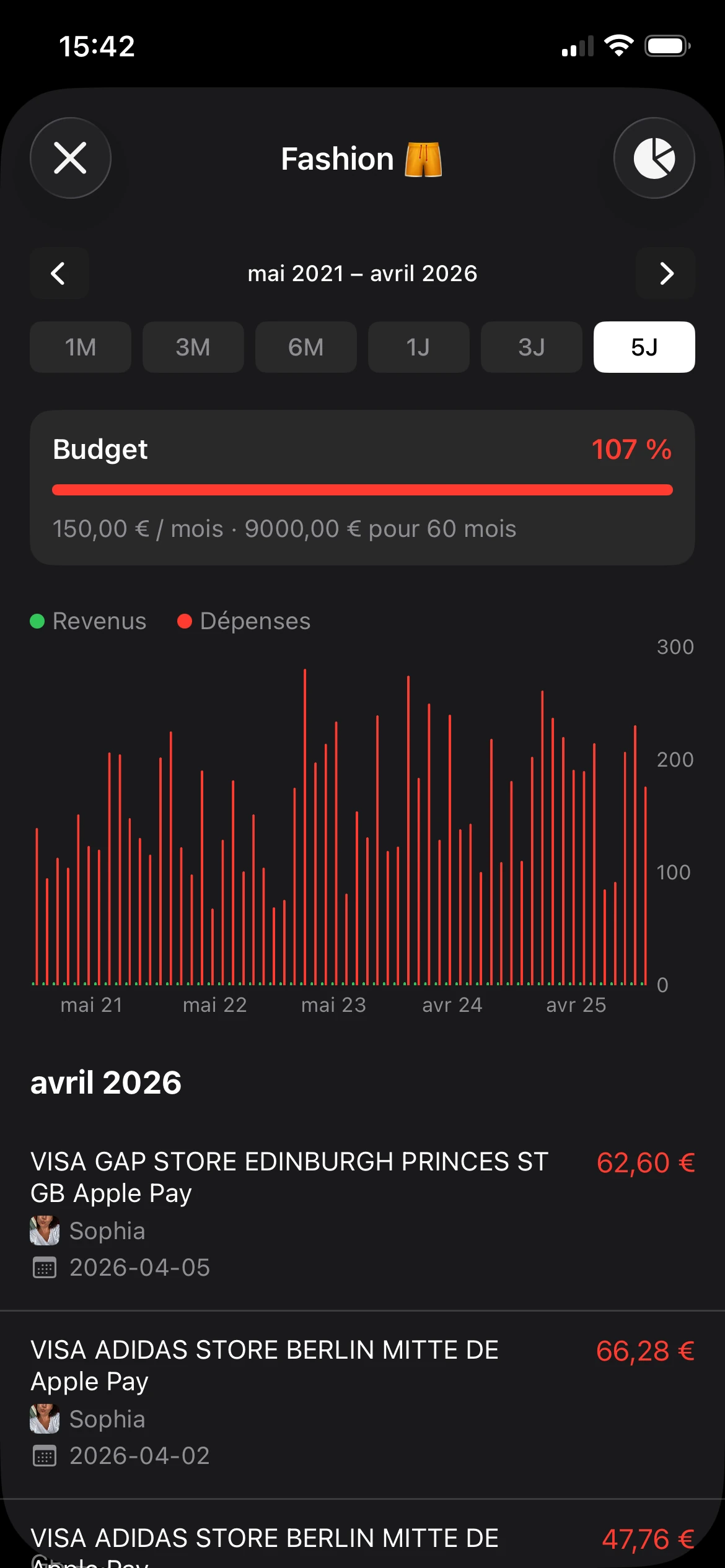
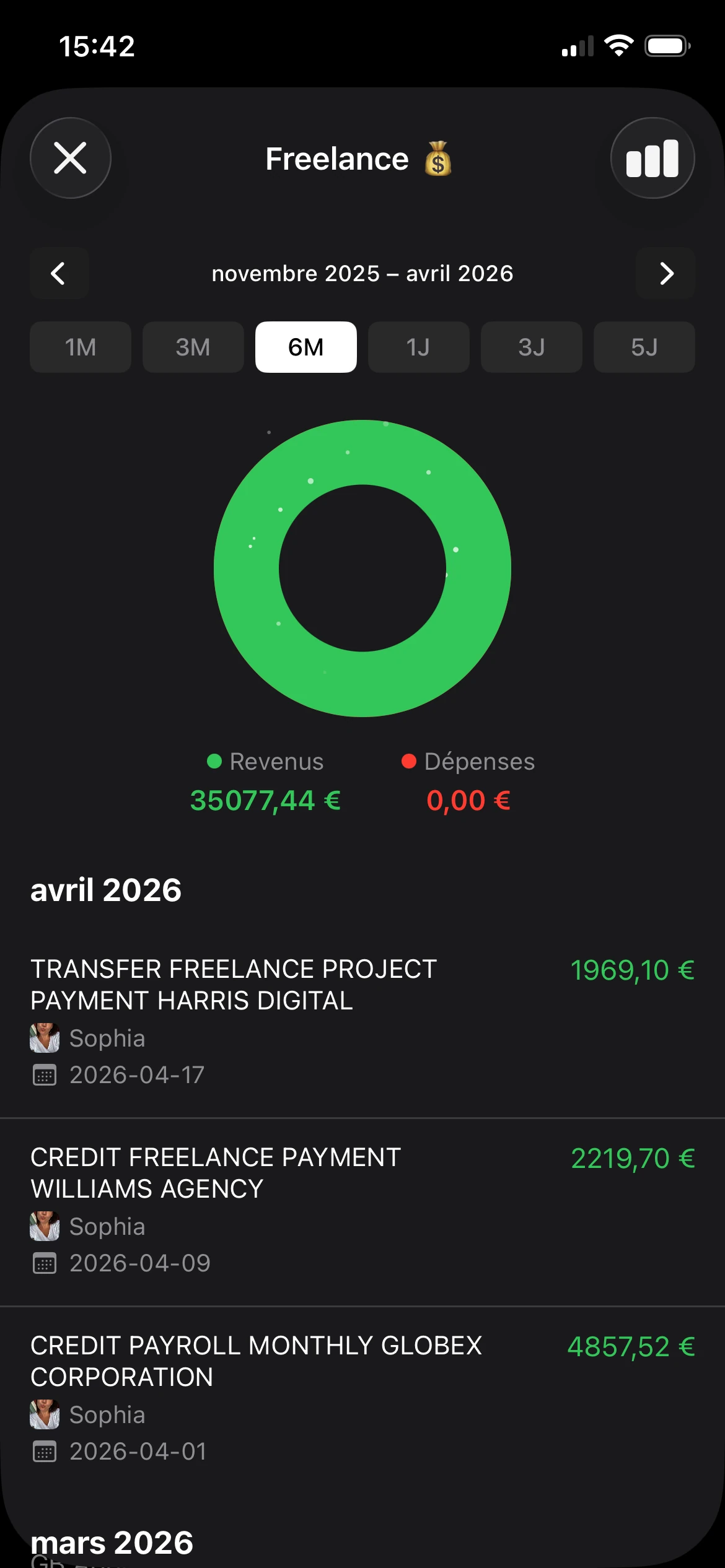
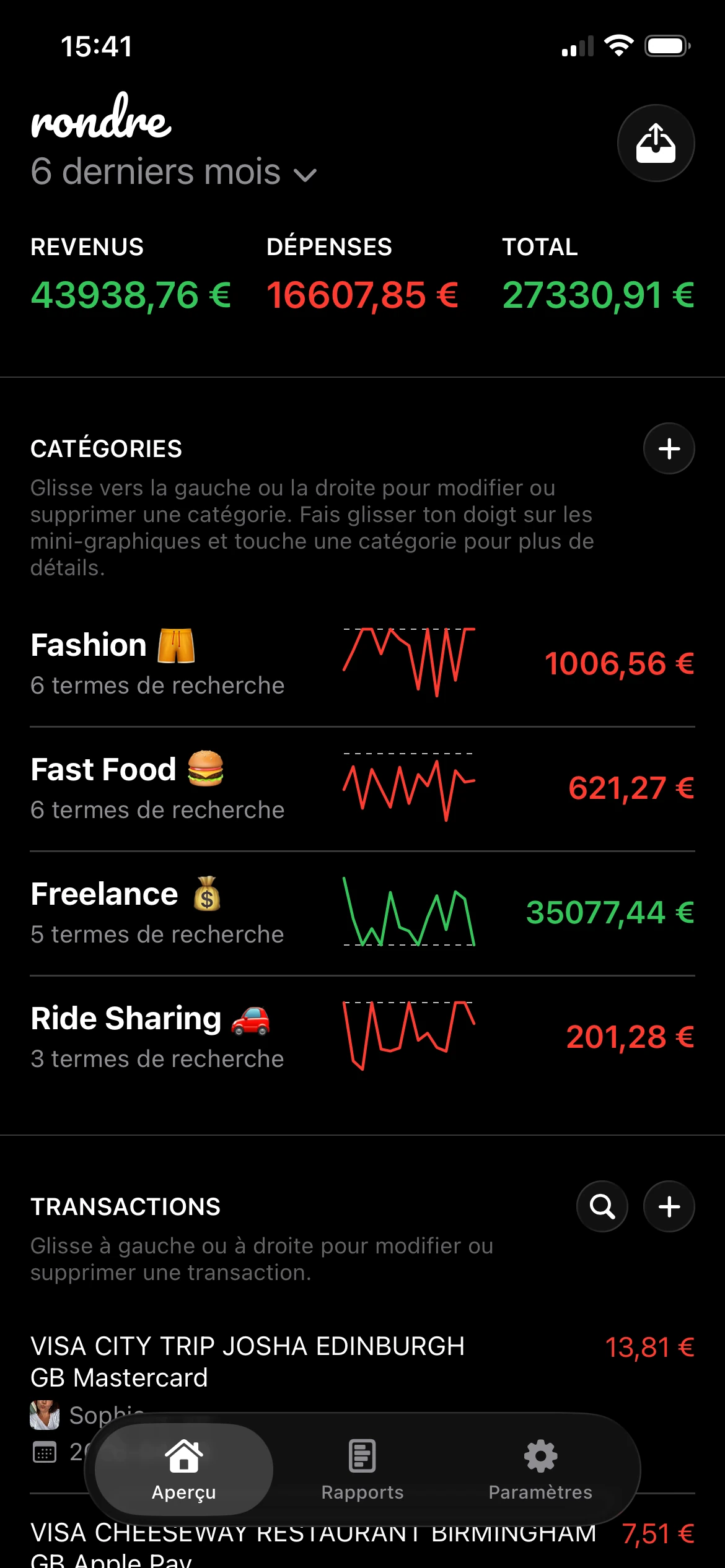
C’est là qu’un outil de suivi partagé aide. rondre est particulièrement utile ici parce qu’il permet aux couples de partager un livre, d’importer des données depuis des fichiers CSV et des relevés bancaires PDF, de créer des catégories personnalisées et d’examiner les dépenses ensemble sans avoir besoin de compte ni d’inscription.

Une organisation hybride simple en pratique
Une mise en œuvre claire ressemble généralement à ceci. Le couple crée un livre partagé appelé Foyer. Puis les deux partenaires importent l’historique bancaire et de carte récent lié à la vie commune: loyer, courses, services de streaming, assurances, charges et voyages communs.
À partir de là, les catégories font l’essentiel du travail:
- Maison: loyer ou prêt immobilier, électricité, internet, réparations
- Alimentation: courses, repas à emporter, repas partagés au restaurant
- Transport: carburant, transports en commun, stationnement, assurance auto
- Objectifs: virements vers le fonds d’urgence, épargne vacances, meubles
- Remboursements personnels: transactions payées individuellement mais qui appartiennent au foyer
Cette approche donne rapidement une base au couple. Elle réduit aussi la dispute classique dans laquelle une personne pense que le foyer va bien financièrement, tandis que l’autre sait que les dépenses ont dérivé.
Comment le suivi partagé réduit les suppositions
La meilleure utilisation de l’application n’est pas la surveillance quotidienne. C’est un rendez-vous régulier. Un couple peut s’asseoir chaque semaine ou chaque mois, ouvrir le livre partagé et consulter des mini-graphiques ou des graphiques en barres par catégorie. Cela change le ton de la conversation. Au lieu de « Pourquoi dépensons-nous autant ? », la meilleure question devient: « Que nous dit cette catégorie ? »
Le suivi partagé fonctionne mieux lorsque les deux personnes conviennent que l’outil sert à apporter de la clarté, pas à contrôler.
La conception axée sur la confidentialité compte aussi. Certains couples veulent une visibilité sur l’argent du foyer sans connecter chaque compte personnel ni exposer chaque achat individuel. Un livre partagé résout cela simplement. Il permet de collaborer autour de l’argent qui concerne les deux personnes, tout en laissant de l’espace pour une sphère personnelle séparée si cela fait partie du système.
Cet équilibre explique pourquoi l’outil convient particulièrement bien au modèle hybride. Le couple dispose d’un seul endroit pour suivre les factures, catégoriser les dépenses, rechercher instantanément des transactions et examiner les tendances sans transformer la gestion de l’argent en projet à temps plein.
Comprendre les aspects juridiques, fiscaux et de confidentialité
Le budget attire l’attention. La structure juridique détermine souvent le risque. Le mariage modifie les options de déclaration fiscale, la planification successorale, les questions de responsabilité et les conséquences liées à la propriété des comptes. Les couples qui ignorent cet aspect construisent parfois un budget propre sur une situation juridique confuse.
La plupart des guides de finances personnelles abordent à peine ce sujet. La discussion de Johnson Financial Group sur la fusion des finances après le mariage note que les conséquences juridiques et fiscales varient selon la juridiction, et que dans les États de communauté de biens, la mise en commun des finances peut modifier le traitement fiscal et la responsabilité du conjoint pour les dettes.

La structure juridique change les enjeux
Quelques actions devraient figurer sur la liste de vérification de chaque couple récemment marié:
- Revoir les bénéficiaires: Les comptes retraite et l’assurance-vie ne suivent pas toujours un testament. Les désignations de bénéficiaires priment souvent.
- Vérifier les intitulés des comptes: Comprenez quels actifs sont individuels, communs, payables au décès ou détenus avec d’autres instructions.
- Clarifier l’exposition aux dettes: Les dettes avant le mariage, les nouvelles dettes et les dettes communes peuvent être traitées différemment selon le lieu de résidence du couple.
- Parler fiscalité: La déclaration commune et la déclaration séparée peuvent produire des résultats différents selon les revenus, les déductions, la propriété d’une entreprise et les questions liées aux prêts étudiants.
Un planificateur financier, un fiscaliste ou un avocat en droit de la famille peut apporter une vraie valeur. Pas parce que la relation est en difficulté, mais parce que les suppositions dans ce domaine coûtent cher.
La confidentialité reste importante dans le mariage
Mettre les finances en commun ne nécessite pas d’effacer les limites. En réalité, une certaine confidentialité est saine. Cela peut signifier des comptes personnels séparés, des catégories convenues pour les dépenses personnelles ou l’utilisation d’un système partagé qui ne suit que l’activité du foyer.
Les couples s’en sortent généralement mieux lorsqu’ils définissent volontairement leurs règles de confidentialité. Les questions utiles incluent:
- Quelles informations sont entièrement partagées ?
- Qu’est-ce qui reste personnel mais est communiqué à un niveau général ?
- Quels achats doivent être discutés à l’avance ?
- Comment les mots de passe, les documents et l’accès d’urgence seront-ils gérés ?
Une bonne règle est simple. Ne rien cacher d’important. Garder un certain espace personnel. Ces deux idées ne sont pas opposées. Elles font partie d’une structure financière mûre.
Votre fondation financière est une conversation, pas une feuille de calcul
Un couple peut partager tous ses comptes et se disputer pourtant chaque mois à propos d’argent. Un autre couple peut garder certains comptes séparés et gérer le foyer calmement pendant des années. La différence ne vient généralement pas de la feuille de calcul. Elle vient de la capacité à parler clairement d’argent sans reproches, sans défense excessive et sans suppositions.
C’est important parce que le mariage change avec le temps. Les revenus augmentent ou diminuent. L’un des partenaires réduit son activité professionnelle après l’arrivée d’un enfant. Une prime disparaît. Un parent a besoin d’aide. Une personne est épargnante. L’autre dépense pour soulager le stress. Si le système ne fonctionne que pendant les périodes stables, il se brisera lorsque la vie deviendra coûteuse ou émotionnellement chargée.
C’est pourquoi mettre les finances en commun fonctionne mieux comme une conversation sur les valeurs d’abord, puis comme une décision de comptes ensuite.
Ce qui tient dans la vraie vie
Dans mon travail avec les couples, les systèmes qui durent ont généralement quatre choses en commun.
- Des rôles clairs: Les deux personnes savent ce qui est commun, ce qui est personnel et quel compte gère chaque facture.
- Un critère d’équité: Les contributions reflètent les revenus, le travail de soin, le niveau de dette ou une autre méthode que le couple juge équitable.
- Une marge de révision: L’organisation peut changer lorsque le mariage change, sans que l’un des partenaires considère cette évolution comme un échec.
- Un processus de révision sans honte: Les dépenses sont discutées comme des comportements et des priorités, pas comme la preuve qu’un partenaire est irresponsable.
Les couples s’en sortent aussi mieux lorsqu’ils cessent de traiter les tensions financières comme un simple problème de calcul. Les dépenses excessives sont parfois liées au stress. Le refus de fusionner les comptes est parfois lié à un contrôle passé ou à une instabilité familiale. Éviter les réunions budgétaires relève souvent de la peur, pas de la paresse. Si ces sujets restent non exprimés, même un système bien conçu devient difficile à maintenir.
Une structure commune peut malgré tout être saine et renforcer le lien. Comme indiqué plus haut, les recherches évoquées dans cet article suggèrent qu’une coordination financière quotidienne plus poussée peut réduire les conflits chez certains couples. En contrepartie, plus de partage exige aussi plus de confiance, plus de transparence et de meilleures limites autour de la confidentialité.
Les couples n’ont pas besoin d’un système parfait. Ils ont besoin d’un système que les deux comprennent, auquel les deux font confiance et qu’ils sont prêts à réexaminer.
Une étape à faire aujourd’hui
Réservez une heure cette semaine. Rassemblez des relevés récents, listez les factures récurrentes et répondez par écrit à ces trois questions.
- Qu’est-ce qui aide chaque personne à se sentir en sécurité avec l’argent ?
- Quelles dépenses appartiennent au foyer, sans débat ?
- Quel système convient le mieux à cette étape de vie: commun, séparé ou hybride ?
Ces réponses révèlent généralement plus qu’une application supplémentaire ou un autre compte bancaire. Une fois les valeurs claires, la mécanique devient plus simple.
Si vous voulez une façon simple de mettre cette conversation en pratique, rondre est un bon point de départ. Il offre aux couples un livre privé partagé pour les revenus et les dépenses du foyer sans nécessiter une fusion financière complète. Vous pouvez importer des transactions récentes, classer les dépenses communes par catégories et examiner les chiffres ensemble, tout en préservant un espace personnel lorsque cela a du sens.