Para de te perguntar para onde vai o dinheiro. O salário entra, as contas são pagas, fazem-se umas compras pequenas ao longo da semana e, no fim do mês, sobra muito menos do que o esperado. Este padrão é comum, sobretudo quando os gastos se distribuem por cartões, contas bancárias, subscrições, despesas partilhadas do agregado familiar e aquelas compras por impulso que, na altura, pareciam inofensivas.
A solução raramente é mais uma promessa vaga de "gerir melhor o dinheiro". É um sistema que torna os gastos visíveis a tempo de os mudar. Os melhores tips save money só resultam quando são fáceis de aplicar no dia a dia. Se um método exige demasiado esforço, é geralmente abandonado ao fim de alguns dias.
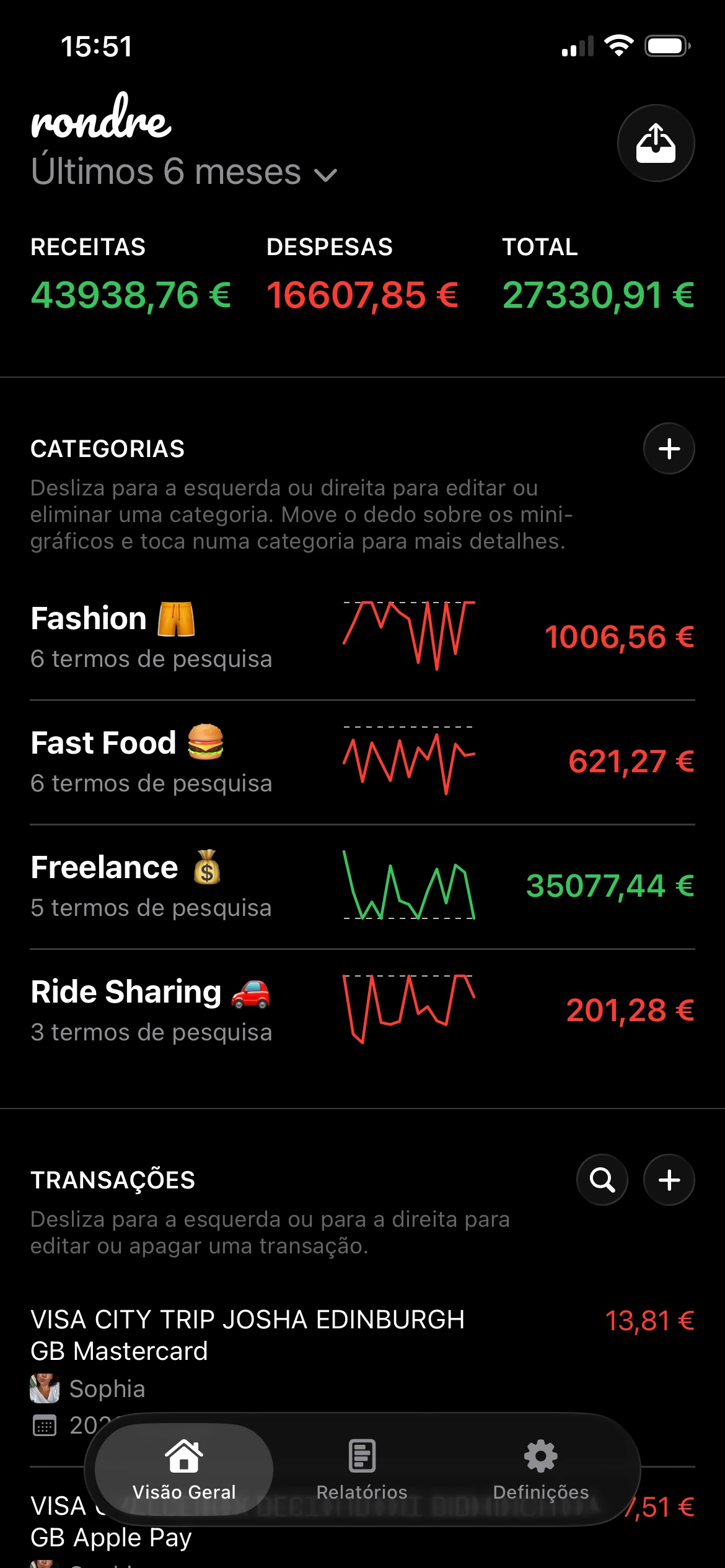
Um registo simples no telemóvel ajuda porque reduz a fricção. As transações podem ser registadas rapidamente, as categorias podem ser organizadas depois e as tendências tornam-se visíveis antes de o mês inteiro desaparecer. É aqui que uma aplicação leve como o rondre encaixa naturalmente. Permite registar receitas e despesas, organizar transações com categorias inteligentes, importar ficheiros CSV e extratos bancários em PDF e até partilhar um livro com um parceiro ou família — tudo sem criar uma conta.
A lista abaixo centra-se em hábitos práticos que perduram, além de mostrar exatamente como os pôr em prática com uma aplicação privada e gratuita, em vez de um caderno confuso ou uma folha de cálculo abandonada.
Índice
- 1. Regista Cada Transação em Tempo Real
- 2. Aplica a Regra Orçamental 50/30/20
- 3. Usa Contas Separadas para Diferentes Objetivos Financeiros
- 4. Automatiza Poupanças e Pagamento de Contas
- 5. Monitoriza e Reduz Subscrições e Cobranças Recorrentes
- 6. Categoriza os Gastos para Identificar Padrões de Desperdício
- 7. Constrói e Mantém um Fundo de Emergência
- 8. Aproveita as Importações CSV e a Análise de Extratos Bancários
- 9. Partilha Orçamentos com Parceiros e Família
- 10. Revê e Ajusta o Orçamento Mensalmente com Dados Visuais
- Comparação dos 10 Tips para Poupar Dinheiro
- O Teu Primeiro Passo para Poupar Mais Hoje
1. Regista Cada Transação em Tempo Real
O hábito financeiro mais útil é também o menos glamoroso. Regista cada despesa e cada entrada de dinheiro o mais próximo possível do momento em que acontece. Quando os gastos se tornam visíveis, o mistério desaparece e as melhores escolhas ficam mais fáceis.

Um freelancer pode separar os rendimentos de clientes dos gastos pessoais. Um casal pode registar supermercado, renda e serviços num único livro partilhado. Um jovem profissional consegue finalmente perceber se são os cafés, as apps de entregas ou os táxis que estão a drenar a semana.
Tornar o registo sem fricção
O rondre funciona bem aqui porque não obriga a criar conta antes de começar. Podes abrir a aplicação, criar categorias e começar a registar transações de imediato. Se o registo manual falhar, os ficheiros CSV e os extratos bancários em PDF podem preencher as lacunas mais tarde.
Para quem está a criar o hábito, a velocidade importa mais do que a perfeição. Registar dentro de um dia geralmente é suficiente para manter os detalhes precisos. A categoria pode ser organizada durante uma revisão semanal.
Regra prática: Se uma transação não é registada, é fácil repeti-la sem dar por isso.
Uma configuração simples costuma funcionar melhor:
- Usa algumas categorias principais: Supermercado, restaurantes, transportes, habitação, contas, compras e poupanças são suficientes para começar.
- Adiciona termos de pesquisa inteligentes: Se um comerciante aparece com frequência, deixa o rondre ordenar automaticamente.
- Revê uma vez por semana: Uma verificação rápida deteta cobranças estranhas e padrões de gastos duplicados.
Os leitores que queiram um processo de configuração mais organizado podem usar o guia do rondre sobre como registar despesas. Entre todos os tips save money que os artigos costumam oferecer, este é o que mais importa porque todas as decisões seguintes dependem da qualidade dos dados.
2. Aplica a Regra Orçamental 50/30/20
Algumas pessoas desistem de fazer orçamento porque as categorias se tornam demasiado detalhadas. A estrutura 50/30/20 mantém-se útil porque é simples o suficiente para se manter. As necessidades ficam com uma parte, os desejos com outra, e as poupanças mais o pagamento de dívidas ganham um lugar definido em vez de serem tratados como sobras.

O valor desta regra não está em que todos os agregados familiares a cumpram à letra. A renda pode ser elevada, o rendimento pode variar ou a creche pode dominar o orçamento. O valor está em dar estrutura aos gastos. Sem estrutura, "tentar poupar" resume-se normalmente a reagir a contas e esperar que sobre algum dinheiro.
Transformar objetivos amplos em categorias visíveis
O Bank of America recomenda registar todas as despesas, categorizar os gastos e, eventualmente, tentar poupar até 20% do rendimento, conforme indicado na orientação verificada acima. Esta abordagem ajuda porque transforma a poupança numa parte definida do rendimento, em vez de um ato ocasional de contenção.
No rondre, podes tornar isto concreto agrupando as categorias em três blocos:
- Necessidades: Renda, serviços, supermercado, seguros, transportes
- Desejos: Restaurantes, entretenimento, compras, passatempos
- Poupanças: Fundo de emergência, fundos específicos, pagamentos extra de dívidas
Uma família pode descobrir que as suas "necessidades" estão a absorver demasiado do salário líquido porque comer fora se tornou, gradualmente, uma despesa alimentar habitual. Um trabalhador independente pode usar uma versão personalizada nos meses de mais rendimento e uma versão mais contida nos meses mais fracos.
A regra funciona melhor como painel de controlo, não como teste moral.
Esta mentalidade importa. Se os números não baterem certo, o orçamento não está a falhar. Está a revelar onde são necessários ajustes.
3. Usa Contas Separadas para Diferentes Objetivos Financeiros
A poupança muitas vezes estagna quando todo o dinheiro extra fica num único montante. Um saldo único parece flexível e o dinheiro flexível tende a ser gasto. Separar os objetivos cria uma pequena resistência, que muitas vezes é suficiente para proteger o progresso.

Isto nem sempre exige abrir várias contas bancárias novas. Na prática, livros separados dentro de uma aplicação de registo podem fazer grande parte do mesmo trabalho. Um livro para o fundo de emergência, um para viagens, um para reparações em casa, um para despesas profissionais. A separação muda o comportamento porque cada objetivo se torna visível.
Dar a cada objetivo o seu espaço
Um casal pode manter um livro partilhado do agregado familiar e, ao mesmo tempo, manter livros pessoais separados. Um freelancer pode separar rendimentos relacionados com impostos, custos profissionais e gastos pessoais. Uma família pode registar as despesas escolares num único lugar sem perder de vista o orçamento geral.
O principal benefício é a clareza. Quando aparece uma reparação no carro, deixa de parecer que "correu tudo mal". Torna-se uma utilização planeada de uma categoria ou objetivo dedicado.
Para os utilizadores que queiram mais ideias sobre poupança orientada a objetivos, os exemplos de sinking fund examples do rondre são um ponto de partida prático.
Alguns hábitos tornam este sistema mais sólido:
- Dá nomes claros aos livros: "Fundo de Emergência", "Reparações em Casa" e "Férias" são melhores do que rótulos vagos.
- Revê o progresso mensalmente: Saldos pequenos crescem a motivação quando são fáceis de ver.
- Partilha só o que precisas de partilhar: Os objetivos conjuntos podem ficar visíveis para ambos os parceiros, enquanto os gastos pessoais ficam separados.
Este é um dos tips save money mais subestimados que os leitores podem usar, porque evita que um objetivo de poupança esteja constantemente a roubar de outro.
4. Automatiza Poupanças e Pagamento de Contas
As boas intenções são pouco fiáveis nas semanas mais atribuladas. A automatização resolve isso ao eliminar o momento de decisão. O dinheiro é transferido antes de se misturar com os gastos do dia a dia, e as contas são pagas sem o frenesim mensal.
O U.S. Department of Labor aconselha as pessoas a "pagarem a si próprias primeiro", transferindo automaticamente dinheiro para poupanças antes de o gastar, de acordo com a orientação verificada fornecida. Este conselho perdurou porque funciona em todos os níveis de rendimento e estilos de orçamento.
Construir poupanças antes de gastar
A automatização é especialmente útil para quem não quer que o orçamento se torne uma tarefa mental diária. Um trabalhador com rendimento estável pode programar uma transferência logo após o dia de pagamento. Um freelancer com rendimento irregular pode automatizar um hábito baseado em percentagem, transferindo parte de cada pagamento para poupanças assim que este chega.
No rondre, as transações automatizadas tornam-se mais úteis quando são registadas na sua própria categoria ou livro. Isso facilita verificar se a transferência aconteceu, se as contas estão a subir e se as poupanças planeadas estão a ser protegidas.
A poupança automatizada transforma "se sobrar alguma coisa" em "isto já aconteceu".
As contrapartidas importam aqui. A automatização total pode sair pela culatra se os saldos das contas forem baixos e o calendário não for preciso. Uma transferência programada demasiado cedo pode gerar descobertos ou obrigar a retirar dinheiro das poupanças.
A versão mais segura tem este aspeto:
- Automatiza primeiro as contas essenciais: Renda, serviços, seguros e pagamentos mínimos de dívidas
- Começa a poupar pouco se o fluxo de caixa for reduzido: A consistência importa mais do que a ambição
- Verifica o calendário: Programa em função da data real de entrada do rendimento, não da data desejada
Quando os tips save money parecem difíceis de seguir, a automatização é muitas vezes a funcionalidade que os torna duradouros.
5. Monitoriza e Reduz Subscrições e Cobranças Recorrentes
As cobranças recorrentes são traiçoeiras porque deixam de parecer decisões. Uma vez que um pagamento está em piloto automático, funde-se com o fundo. As pessoas notam imediatamente uma compra pontual avultada. Muitas vezes ignoram um conjunto de cobranças recorrentes mais pequenas durante meses.
É por isso que as auditorias de subscrições funcionam tão bem. A poupança vem de eliminar gastos que já não trazem muito valor, não de cortar algo essencial.
Pesquisar primeiro, cancelar depois
A pesquisa de transações do rondre torna isto mais fácil do que percorrer extratos linha a linha. Podes pesquisar o nome de um comerciante, verificar repetições mensais ou aceder a categorias que incluem streaming, software, assinaturas, armazenamento na nuvem, renovações de apps e serviços digitais.
Um jovem profissional pode encontrar serviços de entretenimento sobrepostos. Uma família pode perceber que tem assinaturas duplicadas para o mesmo fim. Um freelancer pode detetar ferramentas de software antigas ainda a debitar muito depois de o projeto que as exigiu ter terminado.
O National Iron Bank refere que fazer uma lista de compras e comprar apenas o que está nela "pode poupar mais de 200 dólares ao longo de um ano" nas suas orientações de poupança em National Iron Bank's money-saving tips. Este exemplo importa porque mostra como pequenos hábitos repetidos criam poupanças anuais reais. A limpeza de subscrições funciona da mesma forma.
Um método de auditoria prático é simples:
- Pesquisa repetições mensais: Procura cobranças que caem na mesma data ou perto dela.
- Classifica cada uma pela utilização: Manter, reduzir, pausar ou cancelar.
- Regista o resultado: Coloca o valor libertado em poupanças em vez de o deixar desaparecer nos gastos gerais.
As pessoas costumam focar-se demasiado em pequenos ganhos com cupões e ignoram os custos recorrentes de base. Na maioria dos orçamentos, as cobranças recorrentes merecem atenção em primeiro lugar.
6. Categoriza os Gastos para Identificar Padrões de Desperdício
Registar sozinho ajuda. Categorizar transforma entradas brutas numa história. Uma lista de transações mostra o que aconteceu. As categorias mostram que tipo de vida o dinheiro está a construir.
Muitas pessoas finalmente distinguem "gastos necessários" de "gastos por hábito". Uma conta do supermercado pode ser razoável. Uma categoria alimentar combinada que inclua supermercado, take-away, taxas de entrega e cafés pode contar uma história bem diferente.
Focar nas categorias que movem o orçamento
O erro é ter demasiadas categorias. Demasiados rótulos criam confusão e as pessoas deixam de usar o sistema. Uma estrutura mais pequena costuma produzir melhores decisões: habitação, alimentação em casa, refeições fora, transportes, subscrições, filhos, saúde, compras, poupanças e despesas profissionais se necessário.
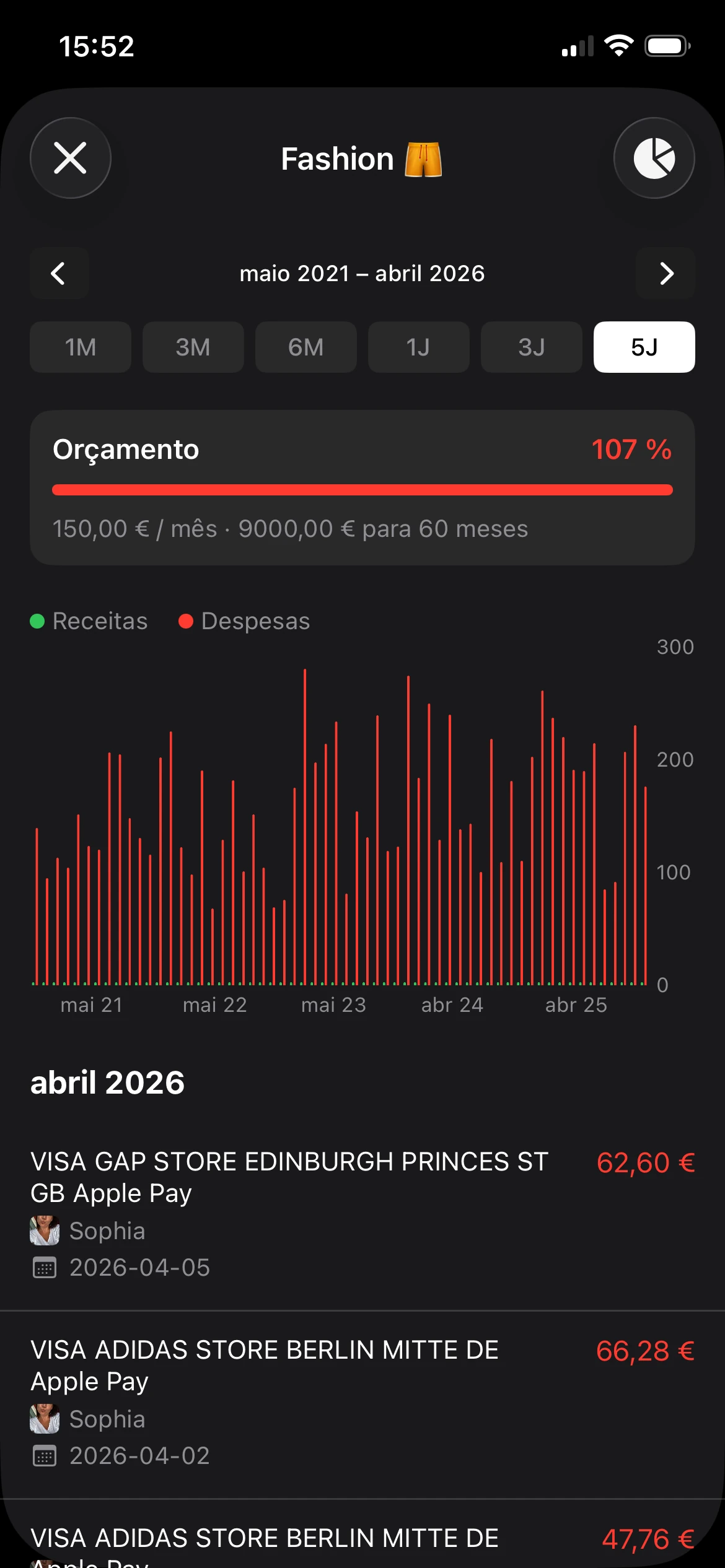
As categorias inteligentes do rondre são úteis porque os comerciantes habituais podem ser ordenados automaticamente com termos de pesquisa personalizados. Poupa tempo e torna os gráficos mais fiáveis. Um agregado familiar pode comparar barras mês a mês e ver rapidamente se uma categoria está a crescer continuamente.
A orientação da NerdWallet, refletida no resumo verificado, faz um ponto importante. Nem todas as táticas de poupança têm o mesmo peso, e reduzir despesas de base supera muitas vezes as pequenas táticas estilo cupão ao longo do tempo, especialmente quando os orçamentos já estão a ser pressionados por custos fixos. A lição fundamental é encontrar as categorias que movem o orçamento e trabalhar aí primeiro, como discutido no guia da NerdWallet sobre como poupar dinheiro.
Alguns gastos não são desperdício porque parecem supérfluos. São desperdício porque continuam a acontecer sem uma decisão consciente.
É por isso que a revisão de categorias funciona. Não envergonha os gastos. Revela a repetição.
7. Constrói e Mantém um Fundo de Emergência
Poupar fica mais fácil quando há um propósito claro. Um fundo de emergência dá um objetivo às poupanças. Protege contra interrupções no emprego, contas médicas, viagens urgentes, reparações no carro e imprevistos na habitação — sem forçar novas dívidas ou drenar objetivos a longo prazo.
O objetivo não precisa de ser inventado do zero. Os especialistas recomendam habitualmente manter três a seis meses de despesas em reserva e, em 2024, 55% dos adultos norte-americanos afirmaram ter guardado dinheiro para pelo menos três meses de despesas num fundo de emergência ou reserva para imprevistos, de acordo com o relatório da Federal Reserve sobre o bem-estar económico dos agregados familiares norte-americanos em 2024. Isso torna a poupança de emergência um padrão generalizado, não um hábito de nicho.
Definir um objetivo ligado a despesas reais
O ponto de partida certo são as despesas essenciais mensais, não o total do estilo de vida. Habitação, alimentação, serviços, seguros, pagamentos mínimos de dívidas e custos de transporte essenciais são o que mais importa. Assim que esta base mensal estiver clara, o objetivo torna-se menos abstrato.
No rondre, um fundo de emergência funciona bem como livro próprio ou, pelo menos, como categoria própria. Isso mantém as contribuições visíveis e separadas do dinheiro para férias, despesas anuais ou poupanças gerais.
Esta abordagem ajuda diferentes agregados familiares de formas diferentes:
- Freelancers: Uma reserva de liquidez maior ajuda a suavizar um rendimento irregular.
- Casais: O registo partilhado mantém ambas as pessoas alinhadas sobre o que conta como "emergência".
- Famílias: Uma reserva reduz a necessidade de recorrer ao crédito quando surgem várias despesas ao mesmo tempo.
As pessoas costumam pensar que poupar começa por cortar todas as compras opcionais. Na prática, poupar muitas vezes só se torna sustentável depois de o fundo de emergência começar a crescer. Essa almofada visível reduz o pânico e melhora a tomada de decisão em todo o orçamento.
8. Aproveita as Importações CSV e a Análise de Extratos Bancários
O registo manual é útil, mas poucas pessoas inserem todas as transações de forma perfeita e para sempre. É aqui que as importações importam. Fecham a diferença entre a intenção e a realidade.
Uma exportação CSV ou um extrato bancário em PDF pode expor padrões de gastos que a memória não capta. Taxas de entrega, renovações anuais, cobranças duplicadas, levantamentos em ATM e compras esporádicas ficam mais fáceis de detetar quando o historial completo está num único lugar.
Usar dados passados para corrigir hábitos atuais
O rondre suporta importações CSV e carregamento de extratos bancários em PDF, o que é especialmente útil para quem começa tarde. Um casal pode importar meses de histórico de conta conjunta. Um freelancer pode conciliar rendimentos profissionais com levantamentos pessoais. Uma família pode consolidar várias contas numa imagem mais clara.
Esta funcionalidade também torna um dos tips save money mais eficazes muito menos intimidante. Em vez de começar do zero, o utilizador começa com o histórico real de transações.
Uma boa revisão de importação segue habitualmente esta ordem:
- Verifica os duplicados primeiro: Isto importa quando os dados vêm de mais do que uma fonte.
- Limpa as categorias a seguir: Os termos de pesquisa inteligentes facilitam a ordenação de comerciantes habituais.
- Procura padrões por último: Taxas recorrentes, picos de gastos e despesas sazonais destacam-se assim que a linha temporal completa fica visível.
Para quem se sente atrasado, este é muitas vezes o caminho mais rápido para ganhar impulso. Uma tarde de importações pode revelar mais do que meses de suposições.
9. Partilha Orçamentos com Parceiros e Família
A tensão em torno do dinheiro vem muitas vezes de informação incompleta, não de má intenção. Uma pessoa acha que os gastos estão controlados. A outra vê a fatura do cartão e parte do princípio do pior. A visibilidade partilhada reduz esse ciclo.
Um orçamento partilhado funciona melhor quando substitui acusações por factos. Em vez de discutir se o supermercado está "demasiado caro", ambas as pessoas podem olhar para a mesma categoria e decidir o que mudar.
A visibilidade partilhada reduz a tensão financeira
Os livros partilhados do rondre são úteis para orçamentos domésticos porque permitem a parceiros ou familiares registar despesas conjuntas num único lugar, mantendo ainda livros separados para gastos pessoais se necessário. Este equilíbrio importa. A transparência financeira total nem sempre é necessária. A visibilidade clara das obrigações partilhadas geralmente é.
Uma configuração partilhada prática pode incluir renda, supermercado, despesas escolares, serviços, transportes e subscrições domésticas num único livro. Compras pessoais, presentes, passatempos ou despesas profissionais podem ficar noutro sítio.
As pessoas que gerem o dinheiro em conjunto beneficiam muitas vezes de uma breve revisão recorrente:
- Revejam as categorias partilhadas juntos: Foca nos factos, não na culpa.
- Combinem as regras das categorias: Decidam onde termina o supermercado e começa o restaurante.
- Mantém o objetivo visível: Poupar para estabilidade ou uma compra partilhada é mais fácil quando ambas as pessoas conseguem ver o progresso.
Para os casais que querem estruturar este processo, o artigo do rondre sobre a best budgeting app for couples oferece um modelo útil.
Um orçamento partilhado não funciona porque ambas as pessoas gastam da mesma forma. Funciona porque ambas as pessoas conseguem ver a mesma realidade.
10. Revê e Ajusta o Orçamento Mensalmente com Dados Visuais
Um orçamento que nunca é revisto torna-se pensamento desejoso. A vida real muda com demasiada frequência para que um plano definido de uma vez funcione. Os preços do supermercado sobem, as contas de serviços aumentam, surgem custos escolares e um mês caro pode distorcer o seguinte se ninguém ajustar.
É por isso que uma revisão mensal importa. O objetivo não é julgar o mês. O objetivo é aprender com ele rapidamente.
Usar gráficos para decidir mais depressa
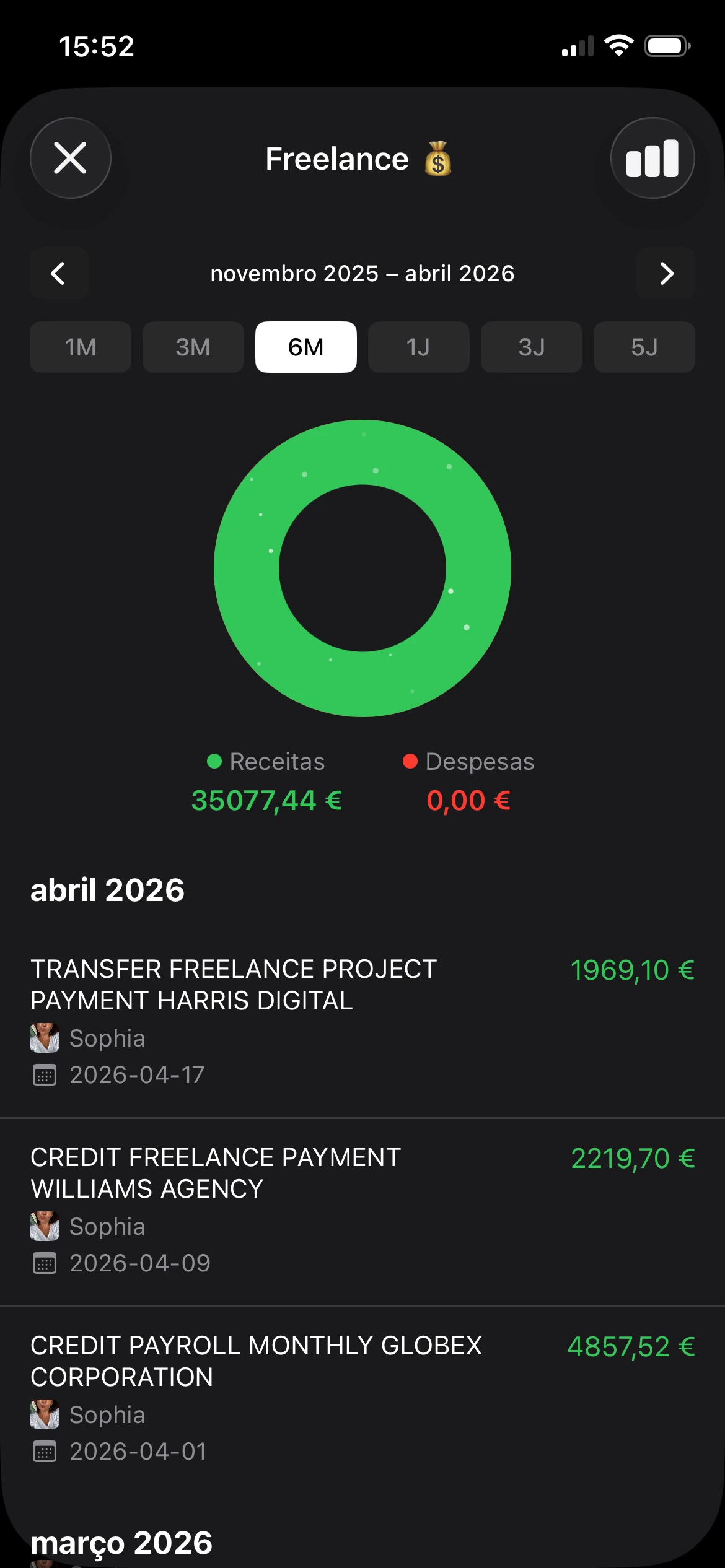
Os mini-gráficos, gráficos de barras e gráficos de donut do rondre ajudam porque reduzem o trabalho de interpretação. Podes ver se uma categoria está a expandir, se as poupanças estão a diminuir ou se os desejos estão a suplantar o essencial — sem ler um longo registo de transações.
A revisão deve manter-se simples. Escolhe um momento recorrente cada mês. Compara os gastos reais com o orçamento. Depois decide o que mudar no mês seguinte, não o que lamentar do mês anterior.
Algumas perguntas de revisão costumam revelar as questões importantes:
- Qual categoria cresceu mais? Isso aponta muitas vezes para um hábito em mudança ou uma rubrica em falta no orçamento.
- Qual categoria pode realisticamente encolher? Nem todo o gasto a mais tem uma solução fácil.
- A poupança aconteceu automaticamente ou só se sobrou dinheiro? Essa resposta diz muito sobre o sistema.
Para trabalhadores com rendimento baixo ou variável, objetivos de poupança mensais rígidos podem ser irrealistas. A abordagem mais prática é muitas vezes a micropoupança — usando contas separadas sem encargos, ferramentas de arredondamento e poupando inesperados ou rendimentos extra quando chegam —, o que se alinha com a orientação refletida no resumo verificado desta discussão sobre poupança com rendimento baixo no YouTube. A revisão mensal ajuda porque consegue adaptar-se a fluxos de caixa irregulares em vez de fingir que todos os meses são iguais.
Comparação dos 10 Tips para Poupar Dinheiro
| Item | Complexidade de implementação | Recursos necessários | Resultados esperados | Casos de uso ideais | Principais vantagens |
|---|---|---|---|---|---|
| Regista Cada Transação em Tempo Real | Moderada, requer registo consistente ou automatização | Tempo diário ou importações automatizadas, app de registo | Visibilidade total dos gastos, identificação mais rápida de fugas | Utilizadores detalhistas, freelancers, casais a dividir custos | Informações imediatas, ajustes precisos ao orçamento |
| Aplica a Regra Orçamental 50/30/20 | Baixa, alocação simples por percentagem | Ferramenta básica de orçamento ou folha de cálculo | Gastos equilibrados e alocação automática de poupanças | Iniciantes, agregados com rendimento estável, quem quer estrutura | Fácil de seguir, reduz a fadiga de decisão |
| Usa Contas Separadas para Diferentes Objetivos Financeiros | Moderada, múltiplas contas/livros para gerir | Múltiplas contas ou subcontas, possíveis encargos | Progresso claro por objetivo, menos mistura de fundos | Poupadores com várias prioridades, casais, empresários | Separação psicológica, acompanhamento visual de objetivos |
| Automatiza Poupanças e Pagamento de Contas | Baixa a moderada, configuração inicial depois passiva | Integrações bancárias/app, fluxo de caixa fiável | Poupanças consistentes, menos encargos por atraso, menos stress | Profissionais ocupados, quem gasta de forma irregular, casais | Consistência sem esforço, menos pagamentos em falta |
| Monitoriza e Reduz Subscrições e Cobranças Recorrentes | Baixa, esforço periódico de auditoria | Ferramentas de revisão de transações, tempo para cancelar serviços | Poupanças mensais rápidas, redução de desperdício recorrente | Agregados com muitas subscrições, famílias, freelancers | ROI elevado com pouco esforço, impacto mínimo no estilo de vida |
| Categoriza os Gastos para Identificar Padrões de Desperdício | Moderada, requer categorias significativas e manutenção | Tempo para categorizar, ferramenta de análise ou gráficos | Reduções direcionadas, análise comportamental dos gastos | Utilizadores que buscam mudança de comportamento, casais, planeadores | Revela hábitos inconscientes, permite cortes direcionados |
| Constrói e Mantém um Fundo de Emergência | Baixa, disciplina constante ao longo do tempo | Tempo, conta poupança separada (preferencialmente com juro) | Resiliência financeira, menor risco de dívida em crises | Trabalhadores independentes, famílias, quem precisa de estabilidade | Rede de segurança, reduz o stress financeiro |
| Aproveita as Importações CSV e a Análise de Extratos Bancários | Moderada, configuração técnica e gestão de ficheiros | Exportações CSV/PDF do banco, ferramenta de importação ou folha de cálculo | Visibilidade histórica completa das transações, tempo poupado | Utilizadores com múltiplas contas, freelancers, contabilistas | Dados em massa precisos, reduz erros de inserção manual |
| Partilha Orçamentos com Parceiros e Família | Moderada, coordenação e configuração de permissões | Ferramenta de orçamento multiutilizador, categorias acordadas | Objetivos alinhados, menos conflitos, responsabilidade partilhada | Casais, famílias que gerem finanças conjuntas | Transparência, tomada de decisão colaborativa |
| Revê e Ajusta o Orçamento Mensalmente com Dados Visuais | Moderada, processo de revisão recorrente | Tempo mensal, ferramentas de visualização/relatório | Otimização contínua, correções de curso antecipadas | Orçamentadores ativos, poupadores orientados a objetivos, famílias | Mudanças baseadas em dados, evita desvios no orçamento |
O Teu Primeiro Passo para Poupar Mais Hoje
Poupar dinheiro começa normalmente muito antes do que as pessoas pensam. Começa antes de a folha de cálculo do orçamento estar perfeita, antes de todas as categorias estarem otimizadas e antes de todos os maus hábitos estarem corrigidos. Começa com a consciência.
Isto importa porque a maioria dos problemas com os gastos não é causada por uma falta total de disciplina. É causada pela invisibilidade. Um agregado familiar não pode ajustar os gastos em restaurantes se esses gastos estiverem misturados com o supermercado. Um casal não pode corrigir os gastos excessivos partilhados se uma pessoa nunca vê as transações. Um freelancer não pode construir poupanças estáveis se os gastos pessoais e o fluxo de caixa profissional continuam entrelaçados. A consciência transforma todos esses problemas em questões resolúveis.
A medida mais prática hoje é simples. Regista todas as compras nos próximos sete dias. Não tentes cortar tudo de uma vez. Não redesenhes o orçamento inteiro esta noite. Apenas regista o que entra e o que sai.
Essa janela de uma semana é suficiente para expor padrões que costumam ficar ocultos. Cafés, gastos por conveniência, cobranças recorrentes, compras no supermercado irregulares, renovações de apps esquecidas e compras por impulso de baixo valor ficam todos mais fáceis de detetar quando estão à frente do utilizador num único lugar. Depois disso, o passo seguinte fica mais claro. Algumas pessoas precisam de automatização. Outras precisam de organização de categorias. Outras precisam de uma visão partilhada do agregado familiar. Outras precisam de um objetivo para o fundo de emergência ligado a despesas essenciais reais.
Uma ferramenta simples torna tudo isto muito mais fácil. O rondre é uma opção relevante porque é gratuito, privado e não requer conta nem registo. Os utilizadores podem registar transações manualmente, criar categorias inteligentes, importar ficheiros CSV e extratos bancários em PDF e partilhar um livro com um parceiro ou família se necessário. Essa combinação elimina grande parte da fricção que faz poupar parecer mais difícil do que precisa de ser.
O maior erro é esperar pela motivação. Os bons sistemas vencem a motivação quase sempre. Os tips save money mais fortes são habitualmente os que são visíveis, repetíveis e fáceis de manter numa terça-feira normal em que ninguém se sente especialmente inspirado.
A conclusão prática é direta. Escolhe um método desta lista e começa hoje, mas faz do registo o primeiro. Sete dias de visibilidade clara costumam ser suficientes para mostrar exatamente onde virá o próximo euro poupado.
Se uma forma simples e privada de registar os gastos soa útil, o rondre vale a pena experimentar. É gratuito no iPhone, não requer conta e facilita o registo de transações, a sua organização com categorias inteligentes, a importação de dados bancários e a partilha de um livro de orçamento com um parceiro ou família.